Argentina’s Energy Firms Beat the State Back to Global Debt Markets
Markets
Key Facts
—The trend. Argentina’s private energy firms are borrowing abroad again, led by producers tied to the Vaca Muerta shale basin.
—The benchmark. Pampa Energía reopened a 2037 bond in May, taking it to $950m and its tightest-ever spread of 315 basis points.
—The peers. Tecpetrol raised $750m in New York and YPF completed about $1.2bn in international financing.
—The gap. The state itself still lacks market access, with country risk hovering around 500 basis points and bonds mostly paid in cash.
—The tenor. Pampa’s 12-year maturity is the longest achieved by a private Argentine company.
A quiet role reversal is under way in Argentine finance, as a wave of Argentina corporate bonds lets private energy firms borrow abroad on terms the state itself still cannot obtain.
For two decades the rule in Argentina was simple: the government borrowed first, and companies followed on worse terms. That order has flipped, and the reason sits under the Patagonian desert.
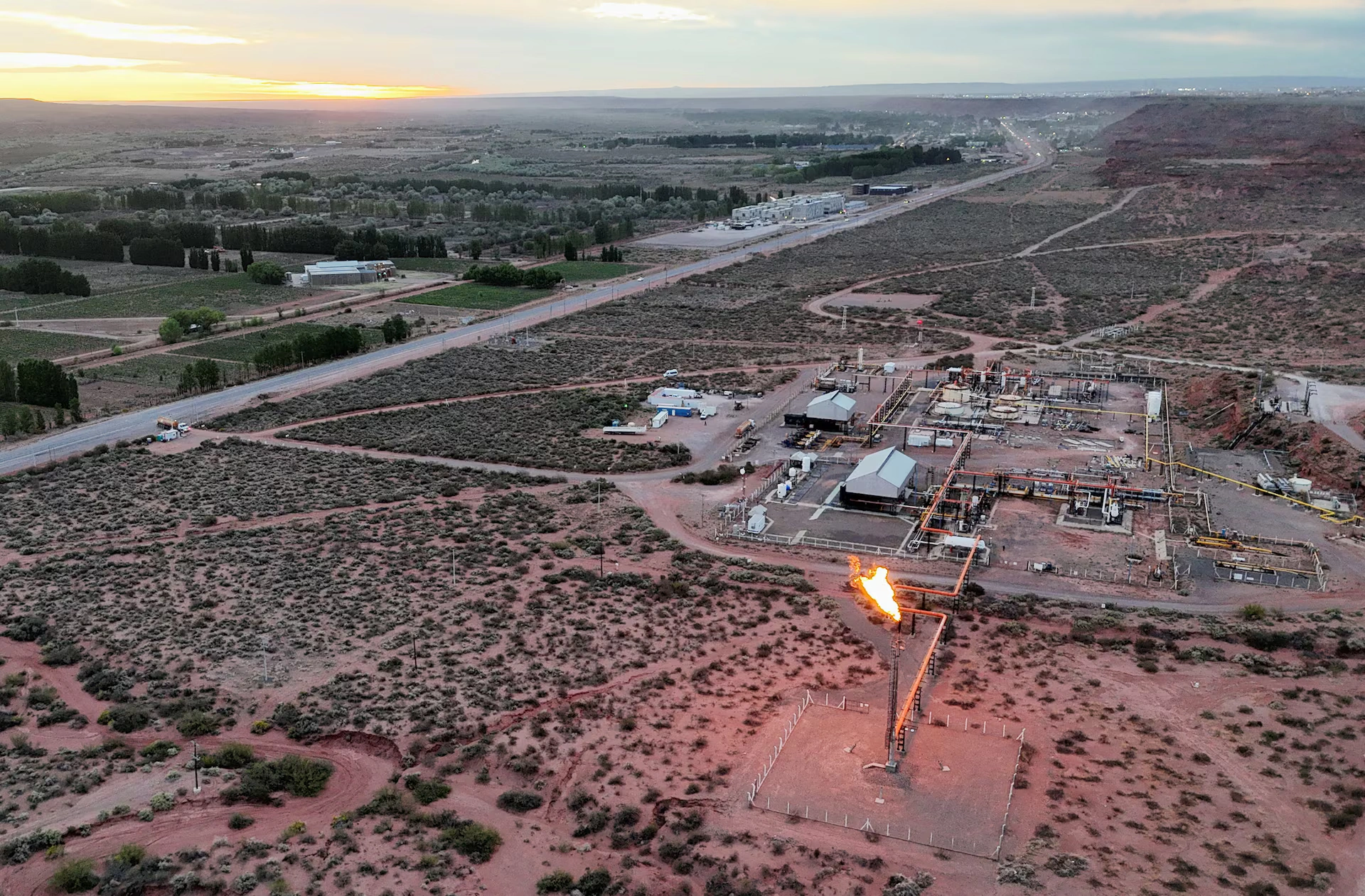
Vaca Muerta, one of the world’s largest shale formations, has turned a handful of Argentine energy producers into names international investors will lend to for a decade or more, even while they keep the sovereign at arm’s length.
What the Argentina corporate bonds boom looks like
The clearest marker came in May, when Pampa Energía reopened a bond maturing in twenty thirty-seven and raised another five hundred million dollars. Orders topped a billion, and the deal lifted the bond’s total size to nine hundred and fifty million.
More telling than the size was the price. Pampa placed the paper at a spread of three hundred and fifteen basis points over the risk-free rate, the tightest financing in the company’s history, on a maturity of twelve years that is the longest ever managed by a private Argentine firm.
It is not alone. Tecpetrol, part of the Techint group, raised seven hundred and fifty million dollars in New York, while the state-controlled YPF completed around one and a fifth billion dollars of international financing, all of it aimed at scaling shale output.
The company-versus-country gap
Here is the striking part for a foreign reader. While these firms tap Wall Street at single-digit yields, the Argentine state still cannot, with its country-risk gauge stuck near five hundred basis points and its own bonds mostly repaid in cash rather than refinanced.
Country risk measures the extra return investors demand to hold a nation’s debt over safe United States Treasuries. Argentina’s remains far above neighbours such as Brazil, Chile and Uruguay, a legacy of repeated defaults.
That the best companies can now leapfrog the sovereign is a sign of how investors are learning to separate a specific cash flow, shale oil sold in dollars, from the broader Argentine risk that still deters them from the government’s paper.
The ratings agencies are catching up to the story. In May, Fitch lifted Pampa’s foreign and local currency ratings a notch to a still-sub-investment-grade level, citing strong cash generation and the promise of its Rincón de Aranda shale block.
Demand has been the other tell. Pampa’s reopening drew orders well above the amount on offer, and its earlier local placements were oversubscribed several times over, a pattern of appetite that let the company stretch maturities and cut coupons in successive deals.
Why it matters beyond Buenos Aires
The corporate bond wave is a real vote of confidence, but a narrow one. It is concentrated in energy, funded by a single geological windfall, and vulnerable to the swings in oil prices and global risk appetite that have already jolted Argentine assets this year.
The forward signal to watch is whether the state can follow its own companies back to the market. If country risk breaks durably below five hundred basis points, the government could refinance rather than drain reserves, and the gap between company and country would finally start to close.
Why are Argentina corporate bonds doing better than the state’s?
Because investors can tie the debt to a specific dollar cash flow from Vaca Muerta shale, they will lend to top energy firms at single-digit yields and long maturities, even while they still shun the Argentine government’s bonds.
How big was the Pampa Energía deal?
Pampa reopened its twenty thirty-seven bond in May for five hundred million dollars, lifting the total to nine hundred and fifty million at a record-tight spread of three hundred and fifteen basis points over the twelve-year maturity.
What is the risk to this trend?
The borrowing is concentrated in energy and depends on a single shale windfall, so a sustained fall in oil prices or a global risk-off move could quickly reprice Argentine corporate debt, as market swings this year have shown.
More: Argentina news in English, every day from The Rio Times.
What milestone did Pampa Energía achieve with its 2037 bond?
Pampa Energía reopened its 2037 bond in May, raising an additional $500 million and bringing the total size to $950 million. The deal priced at a spread of 315 basis points, the tightest ever achieved by the company, with orders exceeding $1 billion.
How have other private Argentine energy firms participated in international bond markets?
Tecpetrol raised $750 million in New York, while YPF completed approximately $1.2 billion in international financing. These deals reflect a broader wave of Argentine corporate borrowing driven by producers tied to the Vaca Muerta shale basin.
Why can private Argentine energy firms borrow internationally when the government cannot?
Argentina's state still lacks market access, with country risk hovering around 500 basis points and its bonds mostly paid in cash. By contrast, Vaca Muerta's status as one of the world's largest shale formations has made a handful of energy producers creditworthy enough for international investors to lend to for a decade or more, reversing a two-decade pattern in which the government always borrowed first.
Connected Coverage
Argentina’s Stock Market Extends Rally as YPF Tops $50
Argentine Assets Fall as Risk Index Climbs Back to 523 Basis Points
Argentina’s Economy Explained: What It Means for Brazil and Investors
Frequently Asked Questions
This article was produced by The Rio Times’ automated newsroom system. How we use AI · Report an error · Editorial responsibility: Matthias Camenzind, Editor-in-Chief
In depth