Politics
Key Facts
—The resignation. Michelle Bolsonaro, Brazil’s former first lady, quit the national leadership of the women’s wing of the Liberal Party on June 30.
—The response. Party chief Valdemar Costa Neto then abolished the national post entirely, leaving only state-level branches.
—The trigger. A public row with her stepson, Senator Flávio Bolsonaro, over an electoral alliance in the state of Ceará.
—The candidate. Flávio is the party’s presidential pre-candidate for the October vote, with Jair Bolsonaro barred and under house arrest.
—Her own base. Michelle is still tipped for a Senate run in the capital district, where she polls above 30%.
A public quarrel inside Brazil’s best-known political family has opened a visible Brazil right fracture just as the opposition tries to settle on a single candidate for October’s election.
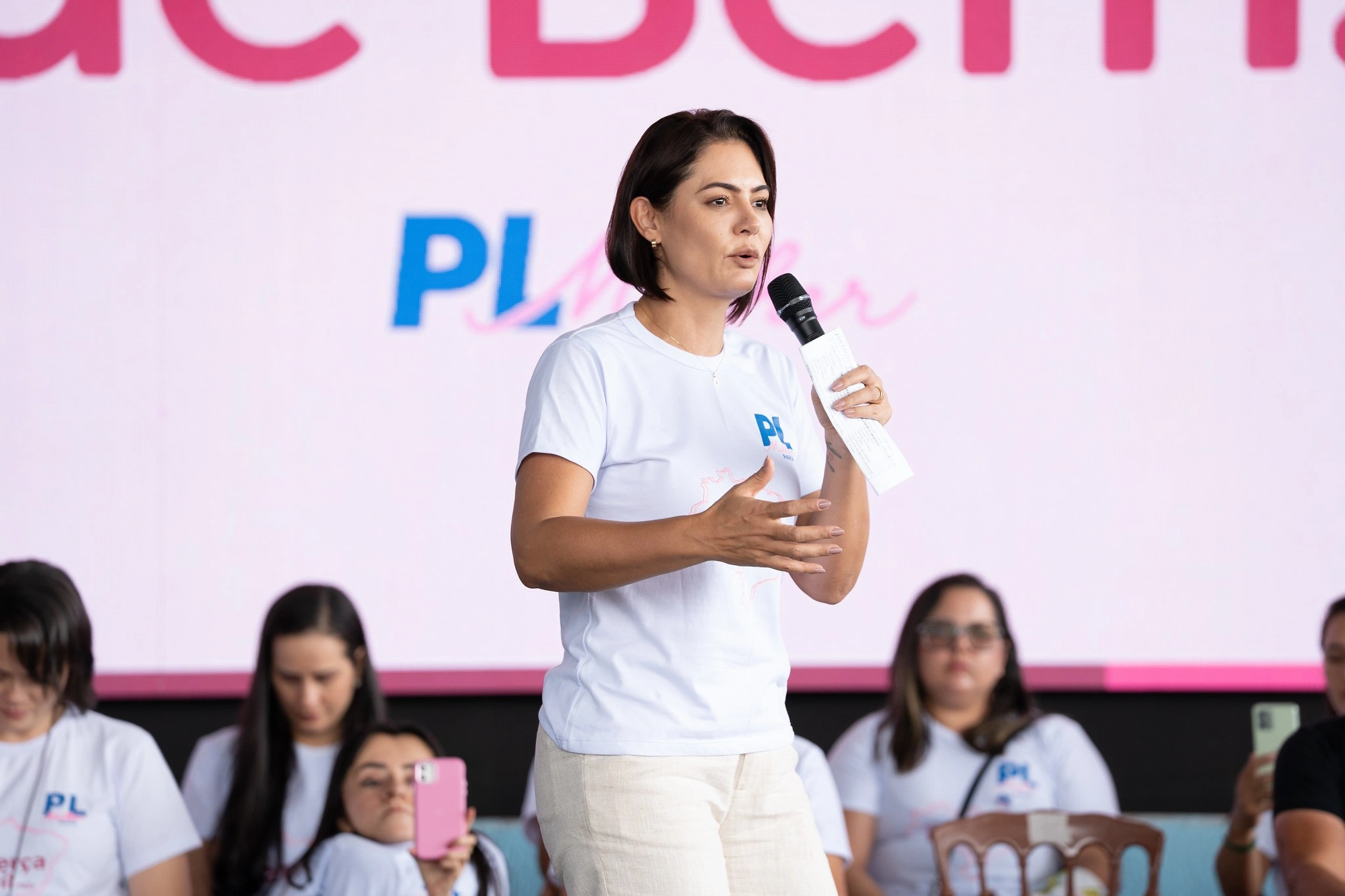
Michelle Bolsonaro, the former first lady, announced on the evening of June thirtieth that she was leaving the national leadership of the women’s wing of the Liberal Party. The party, known by its initials PL, is the political home of former president Jair Bolsonaro.
She framed the move as a family decision, saying she wanted to care for her husband, who is under house arrest, and their daughter. The timing told a different story, coming a week after she released video messages accusing her stepson of treating her with contempt.
What the Brazil right fracture is really about
The dispute traces back to a single Senate seat in the north-eastern state of Ceará. Michelle backed an ally from the party’s women’s wing, while the leadership chose to build a slate around an alliance with the veteran politician Ciro Gomes.
Ciro Gomes was for years a rival of the Bolsonaro camp, which is why the deal stung. For a reader abroad, the detail matters less than the pattern: the party is behaving like an electoral machine run by backroom deals, not the ideological movement its supporters imagine.
Her stepson, Senator Flávio Bolsonaro, is the party’s presidential pre-candidate. That is what turns a family spat into a governing question, because the clash was with the very man meant to carry the movement into the election.
A leadership post erased
The party’s national chairman, Valdemar Costa Neto, responded in striking fashion. Rather than name a successor, he abolished the national leadership of the women’s wing altogether, leaving only branches at the state level answering to the central party.
He said no replacement could match Michelle’s standing and that everyone would have wanted the role. The practical effect is that a wing she had built into a base of more than a thousand elected women in twenty twenty-four now has no national head.
Party figures cast the exit as temporary and stressed that Michelle remains a prized campaigner. She is still expected to run for the Senate in the Federal District, where early polls put her support above thirty per cent.
For foreign investors watching Brazil, the episode is a useful window into how the opposition actually works. The conservative bloc has spent two years searching for a leader to replace the barred Jair Bolsonaro, and it still has not found one who unites the movement.
The son inherits the family name but not the father’s command over it. A public rebuke from the former first lady, aired in videos rather than settled quietly, signals that his pre-candidacy rests on contested ground.
That uncertainty matters for markets because the shape of the opposition helps set the odds of the October race. A divided right is generally read as easing the path for President Lula, while a united one would sharpen the contest.
The forward question is whether the party can convert its state-level machine and its polling strength into a single, credible ticket before the campaign formally begins. On this evidence, that work is not yet done.
Why does the Brazil right fracture matter for the election?
It shows that the presidential pre-candidacy of Flávio Bolsonaro does not automatically unite the conservative camp, since resistance is coming from within his own family and party rather than from an outside rival.
Who leads Brazil’s right into the 2026 vote?
Jair Bolsonaro is barred from office and under house arrest, so his son Flávio is the Liberal Party’s presidential pre-candidate, though the camp remains divided over whether he is the strongest choice.
What happens to Michelle Bolsonaro now?
She has left her party post but is still seen as a leading conservative figure and a likely Senate candidate in the capital district, where she holds a strong polling lead.
Connected Coverage
Brazil 2026 Elections: Guide to Candidates, Polls and Key Dates
Brazil’s 2026 Senate Gamble: Bolsonaro’s House-Arrest War Room
Flávio Bolsonaro Asked Jailed Banker Vorcaro for R$134 Million
Frequently Asked Questions
Why did Michelle Bolsonaro leave her party role?
She quit as national leader of the Liberal Party's women's wing on June 30 after a public fight with her stepson, Senator Flávio Bolsonaro, over a Senate alliance in Ceará that brought in veteran politician Ciro Gomes, a longtime rival of the Bolsonaro camp. She publicly framed the move as wanting to care for her husband and daughter.
What happened to the women's wing after she resigned?
Party chief Valdemar Costa Neto abolished the national leadership post entirely rather than appoint a replacement, leaving only state-level branches reporting to the central party. He said no one could match Michelle's standing in the role.
What is Michelle Bolsonaro doing next in politics?
She is still expected to run for the Senate in the Federal District, where early polls put her support above 30%. She remains a party campaigner even though she no longer holds a national leadership position.
This article was drafted with automated assistance and reviewed before publication. How we use AI · Report an error · Editorial responsibility: Matthias Camenzind, Editor-in-Chief