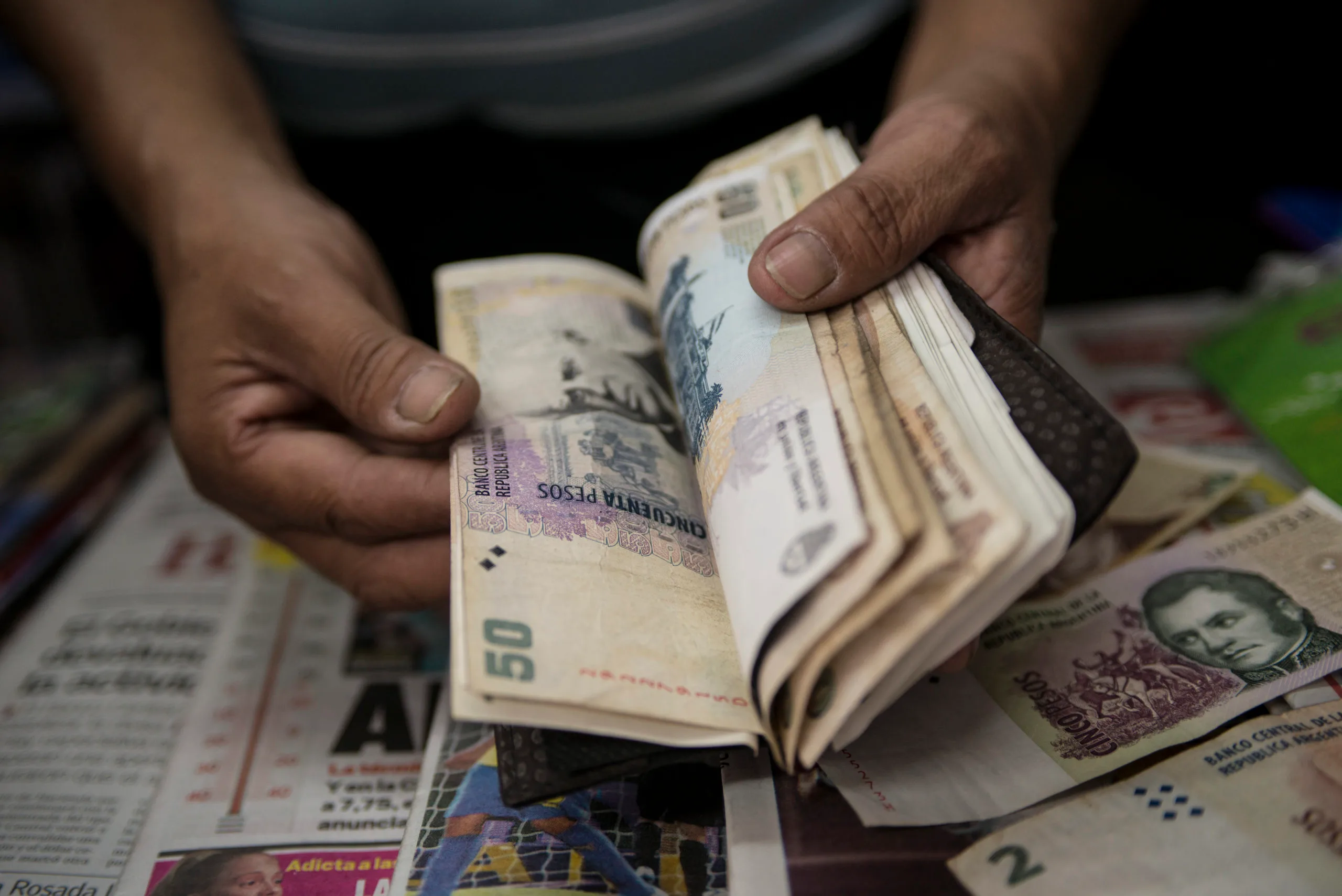
In the unfolding narrative of Argentina’s economy, May 2024 marks a critical juncture. The nation’s gross public debt swelled to $435.674 billion—a 17.5% climb since January.
Reports from the Finance Secretariat reveal that nearly all of this, about $433.222 billion, remains under manageable payment conditions.
Notably, 41% of the debt is in Argentine pesos and 59% in foreign currencies.
This situation presents a steep $65 billion surge from the previous December, with a notable $21 billion uptick just from April to May.
The Finance Secretariat highlighted a monthly rise of $21.606 billion in debt under regular payment conditions, an increase of 5.25%.
These dynamics are partly due to a $1.825 billion reduction in foreign currency debt. This is offset by a substantial $23.431 billion increase in peso-denominated obligations.
Analysts link this upsurge to strategic Treasury Bills issued, aimed at bolstering the Central Bank of Argentina’s finances.
Compounding this is the gradual devaluation of the peso, proceeding at a slow 2% monthly rate.
Argentina’s financial health impacts global markets, influencing investor confidence and regional economic stability.
Background
Recently, the International Monetary Fund (IMF) revised its economic forecast for Argentina.
It now anticipates a sharper contraction of 3.5 percent for 2024, marking an increase from earlier projections.
Additionally, this significant revision follows the approval of the eighth review under the Extended Fund Facility agreement.
This agreement has been managing a debt of $44.5 billion since March 2022.
Moreover, the IMF offers a spark of optimism by lowering its inflation predictions to 140 percent annually.
More: Argentina news in English, every day from The Rio Times.
This article was produced by The Rio Times’ automated newsroom system. How we use AI · Report an error
In depth
Read More from The Rio Times