Antofagasta’s Copper Output Drops 9.5% in First Half on Lower Ore Grades
Chile · Mining
Key Facts
—Output drop Antofagasta’s copper production fell 9.5% year-on-year to 285,000 tonnes in H1 2026, directly reducing Chile’s export revenue and government royalties.
—Key causes Lower ore grades, scheduled pipeline maintenance at Los Pelambres, and reduced throughput at Centinela concentrators drove the decline, signaling structural supply limits.
—Cost pressure Cash costs before credits jumped 17% to $2.61/lb, partly on a stronger Chilean peso, squeezing miner margins when converted to local-currency expenses.
—Guidance maintained Full-year guidance of 650,000–700,000 tonnes was kept, implying a steep H2 ramp-up that will test mining performance and domestic logistics.
—Peso read-through Persistent supply weakness from Chile supports global copper prices, which can strengthen the Chilean peso further and hurt domestic purchasing power.
Antofagasta’s H1 copper output fell 9.5% to 285,000 tonnes, pressured by lower ore grades and scheduled maintenance at its largest Chilean mines.
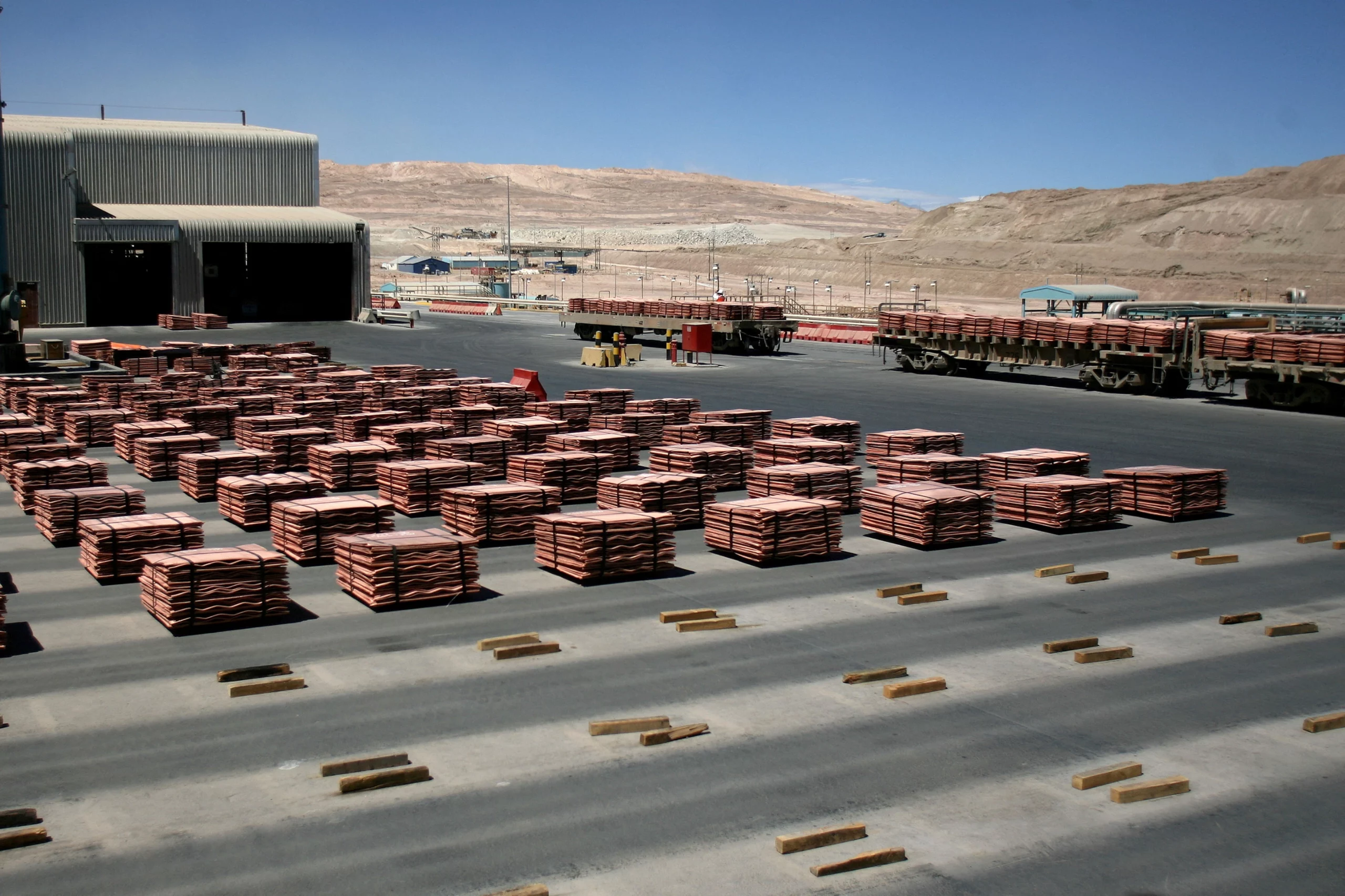
How far production fell and why
Chilean mining group Antofagasta Minerals, the London-listed unit of Antofagasta plc, produced 285,000 tonnes of copper in the first half of 2026. That represents a decline of roughly 9.5% compared with the 314,900 tonnes delivered in the same period of 2025.
The drop was driven mainly by lower processing rates and thinner copper grades at the Los Pelambres and Centinela concentrators, aligned with the company’s mine plan.
A second quarter output of 142,000 tonnes came in 1% below the first quarter’s 143,000 tonnes, with weaker performance at the Antucoya mine. At Los Pelambres, extended concentrate pipeline maintenance left about 7,000 tonnes of copper in plant inventory that will be booked as filtered production in the second half of the year, partially softening the reported H1 fall.
Costs climb on inputs and a stronger Chilean peso
Cash costs before by-product credits reached $2.61 per pound in the first half, 17% higher than a year earlier. CEO Iván Arriagada cited persistently higher prices for key consumables such as diesel and explosives, alongside appreciation of the Chilean peso, as factors pushing unit costs up at their Chilean operations.
The company also flagged rising sulfuric acid prices, a critical input for Chile’s copper processing, linked to shipping tensions in the Strait of Hormuz disrupting Middle East sulfur supply.
Antofagasta adjusted its full-year cost guidance to a range of $2.40–$2.60 per pound, reflecting the stubborn fuel and consumable inflation. For expatriates and investors earning or holding assets in pesos, the dynamic is twofold: a tighter physical copper market reinforces the metal’s price but a stronger peso lifts miners’ local-currency costs, adding to the daily cost of living in Chile.
Live Market IntelligenceChile — Live Market Board
Rio Times · Live Market Intelligence
Chile — Live Market Board
-0.02%
205,430.33
+0.54%
67,663.29
+1.31%
10,969.16
-0.02%
2,848,932
-0.35%
2,577.69
-0.11%
60,210.69
-0.11%
| Instrument | Last | Change | YoY | Prev. | High | Low | Volume |
|---|---|---|---|---|---|---|---|
| IPSA | 10,969.16 | -0.02% | — | 10,971.88 | 11,210 | 10,984 | 1,513,213,483 |
| USD/CLP | 913.98 | +0.04% | -5.67% | 913.65 | 915.11 | 906.68 | — |
| COPPER | 6.61 | +0.03% | +46.70% | 6.61 | 6.71 | 6.61 | 39,543 |
| SQM-B | 65,305 | -0.84% | +49.03% | 65,860 | 66,949 | 64,978 | 76,539 |
| COPEC | 5,964 | -1.09% | -11.70% | 6,030 | 6,100 | 5,960 | 634,331 |
| BSANTANDER | 78.37 | -2.28% | +35.94% | 80.20 | 81.69 | 78.34 | 36,288,711 |
| FALABELLA | 6,334 | -1.48% | +23.28% | 6,429 | 6,450 | 6,300 | 26,085,814 |
| ENELAM | 87.09 | +0.10% | -10.13% | 87.00 | 87.40 | 86.50 | 13,106,417 |
| CENCOSUD | 1,946 | -2.19% | -35.30% | 1,990 | 2,010 | 1,945 | 966,528 |
| CMPC | 1,020 | -1.96% | -29.10% | 1,040 | 1,050 | 1,015 | 3,526,677 |
| BANCO CHILE | 184.96 | -1.01% | +32.87% | 186.85 | 189.99 | 184.33 | 18,101,240 |
| LATAM AIR | 24.08 | -1.11% | +16.61% | 24.35 | 24.59 | 23.88 | 573,612,753 |
| SOUTHERN COPPER | 193.97 | -0.26% | +104.01% | 194.48 | 199.36 | 192.59 | 367,102 |
The wider Chilean supply picture
Antofagasta’s output aligns with a broader national trend. Chile, the world’s largest copper producer, posted its lowest monthly output in almost nine years in February 2026, at 378,554 metric tons, with rolling 12-month production declining for seven straight months.
State-owned Codelco, the top global producer, saw its El Teniente mine produce approximately 26,400 tonnes in Q1 2026 (down 26% from ~35,700 tonnes a year earlier), after a fatal collapse in mid-2025 disrupted operations.
Industry data show Chile’s overall Q1 mine output fell 5.8% to 1.21 million tonnes. Miners such as BHP have already flagged a 2027 output decline for Escondida, explicitly citing forecast grade erosion.
For foreign residents and investors, slowing supply from a globally essential copper basin reinforces a structural floor under prices but raises the risk of a peso that stays stronger for longer, affecting dollar earners’ local budgets.
Guidance bets on a second-half rebound
Despite the weak opening half, Antofagasta reiterated its full-year 2026 copper production guidance of 650,000–700,000 tonnes. The company expects quarterly output to rise sequentially through the remainder of the year, supported by higher processing rates and improving ore grades at Los Pelambres.
Arriagada said the group is focusing on securing supply chains for materials amid ongoing disruptions in oil and other feedstock markets.
Achieving the mid-point of guidance would require roughly 380,000 tonnes in the second half, a pace sharply above the 285,000 tonnes delivered so far. Investors are watching the ramp-up closely; Antofagasta’s London-listed shares fell about 5.2% after the H1 figures were released, showing market skepticism about whether operational hurdles will allow the promised catch-up.
Why it matters for expats and investors in Chile
For anyone living in Chile or exposed to the peso, copper is the economy’s anchor. Production taxes and state-owned mining revenues fund public spending, while copper exports set the underlying tone for the CLP.
When Chilean output falters and the global market tightens—Comex copper futures have hit record levels near $6.69 per pound—the peso often appreciates, raising the dollar cost of housing, education, and daily goods for expats.
Antofagasta’s H1 fall, echoed by declines at Codelco and BHP, suggests the trend of thinning grades and aging mines will persist. That could keep copper elevated, but also leave the peso structurally firmer. Investors holding Chilean equities or local-currency bonds need to weigh a boost from commodity revenues against the erosion of real returns for dollar-based earners.
Outlook and key dates
Antofagasta expects to recover some of the delayed copper in the second half as it releases pipeline inventory from Los Pelambres and ramps up throughput. Full-year cost and production guidance, including a sharp volume increase, remains intact but depends on smooth execution and no further supply-chain shocks.
Market attention will focus on the next quarterly production report and any update on the fiscal impact of Chile’s prolonged mining slowdown. For expatriates, exchange-rate moves around copper data releases will remain a practical bellwether for monthly living costs.
More: Chile news in English, every day from The Rio Times.
Frequently Asked Questions
Why did Antofagasta’s copper output fall in the first half of 2026?
Lower ore grades at the Los Pelambres and Centinela concentrators, reduced processing rates, and scheduled concentrate pipeline maintenance at Los Pelambres were the main drivers behind the 9.5% decline to 285,000 tonnes.
Is Antofagasta still hitting its full-year copper target?
Yes. The company has maintained its 2026 production guidance of 650,000–700,000 tonnes, forecasting a sequential output increase in the second half as ore grades and processing rates improve.
How does weaker Chilean copper supply affect the peso and living costs?
Tighter global supply supports high copper prices, which tends to strengthen the Chilean peso. For expats and dollar earners, a stronger peso makes local rents, school fees and everyday expenses more costly in US-dollar terms.
Sources: Antofagasta H1 2026 production drops 9.5%, uptick seen ahead, Antofagasta maintains guidance despite 9.5% drop in first-half copper output, Q1 2026 Production Report – Antofagasta plc, Antofagasta Q2 2026 production report, Chile copper output hits nine-year low, adding to supply concern, BHP copper output to slide in 2027 on Chilean grade decline
Connected Coverage
LATAM Targets Record 410-Jet Fleet, Upsizes Aircraft for World Cup Final
Chile’s Senate Narrowly Passes President Kast’s Economic Overhaul
This article was produced by The Rio Times’ automated newsroom system. How we use AI · Report an error · Editorial responsibility: Matthias Camenzind, Editor-in-Chief
In depth
Copper in Latin America
- Copper in Latin America 2026: Mines, Prices and Politics
- What Is Codelco? Chile’s State Copper Giant, Its Debt and the El Teniente Crisis
- Peru Copper Mining Explained: Output, Big Mines, Exports and Risks in 2026
- Peru Natural Resources Explained 2026