Chile · Mining
Key Facts
—Project pushback Codelco’s Maricunga lithium project is now eight years from production, moving from a 2030 government target to 2034, affecting Chile’s timeline for becoming a top lithium producer.
—Output decline Antofagasta’s copper production fell 9.5% to 285,000 tonnes in the first half of 2026, driven by maintenance and lower ore grades, though full-year guidance remains intact.
—Sector-wide delays Chile’s copper production growth has been cut to 1.5% for 2025, and Codelco’s own peak output target of 6 million tonnes has been postponed from 2027 to 2034.
—Funding commitment Rio Tinto will invest up to US$850 million in the Maricunga joint venture, signaling strong international appetite despite local operational setbacks.
—Labor risk Chile needs 37,000 additional skilled workers over the next decade to execute a US$104.5 billion mining investment pipeline, posing a risk to project timelines.
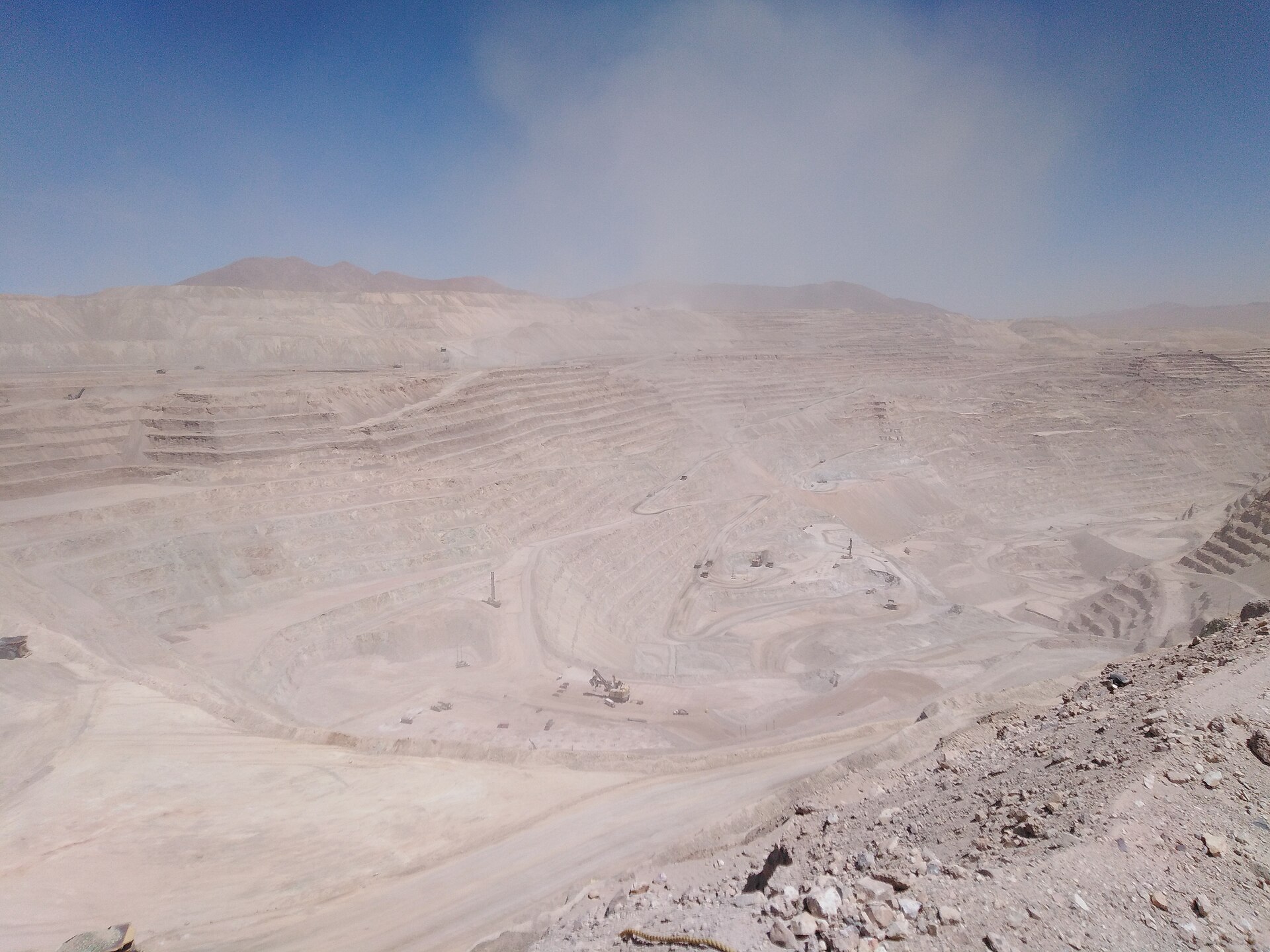
Chilean state copper miner Codelco delays Maricunga lithium project to 2034 while Luksic-family copper group Antofagasta reports a 9.5% drop in first-half copper output, highlighting mounting operational and timeline setbacks in the country’s flagship mining sector.
Codelco pushes Maricunga lithium to 2034
Codelco chairman Bernardo Fontaine confirmed on July 15, 2026, that the state-owned company’s lithium project in the Salar de Maricunga “remains eight years away,” implying a production start in 2034. This extends the timeline from Chile’s previous government target of first production by 2030.
The Maricunga project is held through Codelco’s subsidiary Maricunga SpA. Rio Tinto has signed binding agreements to acquire a 49.99% interest in the subsidiary by funding studies and development costs.
Under the joint venture terms, Rio Tinto will provide US$350 million for studies up to a final investment decision, followed by another US$500 million toward construction once a decision is made to proceed.
For readers unfamiliar with brine-based lithium extraction, the process involves pumping lithium-rich saltwater from underground aquifers into vast evaporation ponds. Over many months, the sun concentrates the brine until lithium carbonate can be recovered.
This method is far slower to set up than hard-rock mining, which helps explain why a project first discussed years ago still faces such a long runway.
Antofagasta copper output falls 9.5%
Antofagasta plc, the Chilean copper mining group controlled by the Luksic family, reported first-half 2026 copper output of 285,000 tonnes, a 9.5% decline year-over-year. The company attributed the drop largely to lower production at two key mines and scheduled maintenance at the Los Pelambres mine.
Despite the weaker first half, Antofagasta maintained its full-year copper production forecast. The company expects output to pick up in the second half of 2026 as maintenance and operational issues ease. In a recent first quarter, Antofagasta posted 143,000 tonnes of copper, an 8% reduction year-on-year, with net cash costs down 30% to US$1.08 per pound.
Lower ore grades are a natural challenge for aging mines. As a deposit matures, the concentration of copper in the rock declines, meaning more material must be processed to yield the same amount of metal.
This is a structural issue across Chile’s copper belt, not a temporary blip, and it forces companies to invest heavily just to maintain current output levels.
Broader mining sector challenges
Chile’s mining sector faces multiple headwinds. The state copper commission Cochilco cut its 2025 copper production growth forecast to 1.5%, down from 3%, citing operational challenges at major mines such as Escondida and Collahuasi, safety incidents including a collapse at El Teniente, declining ore grades, and water scarcity.
Codelco’s own production outlook has weakened. BNP Paribas research notes the company forecasts 5.6 million metric tonnes of copper production, up just 0.8% in 2026, and its expected copper production peak of 6 million tonnes has been pushed from 2027 to 2034.
Water scarcity deserves special attention. Chile’s Atacama Desert hosts the world’s largest copper and lithium reserves, yet it is one of the driest places on Earth.
Mines compete with local communities and agriculture for limited water, and desalination plants are increasingly required, adding cost and complexity to every new project.
Why this matters
For expatriates and investors in Chile, the twin setbacks signal a critical period of execution risk for the Andean nation’s mining-dependent economy. Delays in lithium and copper projects can pressure public finances, weaken the Chilean peso, and slow job creation in northern mining regions where many foreign professionals live.
The need for nearly 37,000 additional skilled workers over the next decade to support a US$104.5 billion mining investment pipeline also presents both an opportunity and a bottleneck. Labor shortages could drive up wages in the sector but also risk delaying projects, with brine-based lithium operations requiring about seven years from investment decision to first production.
Copper alone accounts for roughly half of Chile’s total exports. When production forecasts slip, the ripple effects touch everything from the national budget to the exchange rate that determines how far a foreign salary stretches in Santiago.
Lithium, while a smaller share today, is the mineral Chile is betting on for its next growth chapter, making the Maricunga delay particularly significant for long-term planning.
Maricunga capacity and timeline details
Industrial Info reports the Maricunga project aims for 55,000 tons per year of lithium carbonate equivalent (LCE) capacity, executed in two phases, targeting that output level by 2033. Bearing Resources data for the broader Maricunga area cites total resources of 2.1 million tonnes of LCE, comprising 0.8 million tonnes measured and 1.3 million tonnes indicated.
Codelco received an updated Special Contract for Lithium Operations (CEOL) from the Chilean government for Maricunga. The Rio Tinto joint venture transaction is expected to close by the end of the first quarter of 2026, subject to regulatory approvals.
What to watch next is whether the regulatory approvals arrive on schedule and whether Rio Tinto’s involvement accelerates the timeline or simply locks in the 2034 date. Another open question is how Antofagasta’s second-half recovery unfolds and whether the company can offset the first-half decline strongly enough to meet its full-year guidance without further cost pressures.
More: Chile news in English, every day from The Rio Times.
Frequently Asked Questions
Why is Codelco delaying the Maricunga lithium project to 2034?
Codelco chairman Bernardo Fontaine stated the project “remains eight years away,” citing the long lead times typical for brine-based lithium projects, which require extensive permitting, studies, and technical work. A binding joint venture with Rio Tinto is expected to close by early 2026, with an initial US$350 million funding for further studies.
How much did Antofagasta’s copper output fall and why?
Antofagasta’s copper output fell 9.5% in the first half of 2026 to 285,000 tonnes, mainly due to lower production at two key mines and scheduled maintenance at its Los Pelambres mine in Chile. The company expects output to recover in the second half and maintained its full-year guidance.
What does the Codelco delay mean for investors in Chile’s lithium sector?
The delay pushes Chile’s timeline for new lithium supply further out, which can support global lithium prices in the medium term but signals execution risk for state-led projects. The Rio Tinto joint venture and US$850 million in committed funding indicate international confidence in the project’s long-term viability.
Sources: Mining.com – Codelco pushes Maricunga lithium project start to 2034, Investing.com – Antofagasta copper output fell 9.5% in H1 2026, MiningWeekly – Antofagasta’s first-half copper output drops 9.5%, BNP Paribas – Chile: political transition and structural challenges in the mining sector, Seeking Alpha – Antofagasta affirms full-year guidance after H1 copper production drops 9.5%, UPI – Chile faces mining labor shortage amid investment boom
Connected Coverage
This article was produced by The Rio Times’ automated newsroom system. How we use AI · Report an error · Editorial responsibility: Matthias Camenzind, Editor-in-Chief
In depth
Lithium in Latin America
- Lithium in Latin America 2026: Inside the Lithium Triangle
- Bolivia’s Lithium Explained for 2026
- Chile Lithium 2026: Deals, Policy Shift and Race to Stay No. 2
- Argentina Natural Resources Explained 2026