Analysis: Qualified Brazilians have a hard time entering the Portuguese market
The profile of Brazilians in Portugal is changing, as are the challenges facing the community. They are still predominantly workers, but they are now more skilled. Among the main difficulties of this public arriving at the Casa do Brasil in Lisbon are the validation of the diploma and the entry into the profession.
In 2021, 39,406 new residence permits were issued to Brazilians. Almost half (44.7%) were work permits.
There is no official survey of the profile of Brazilians living in Portugal. Through its work with the community – which includes running a professional placement office – Casa do Brasil serves as a thermometer for this public.
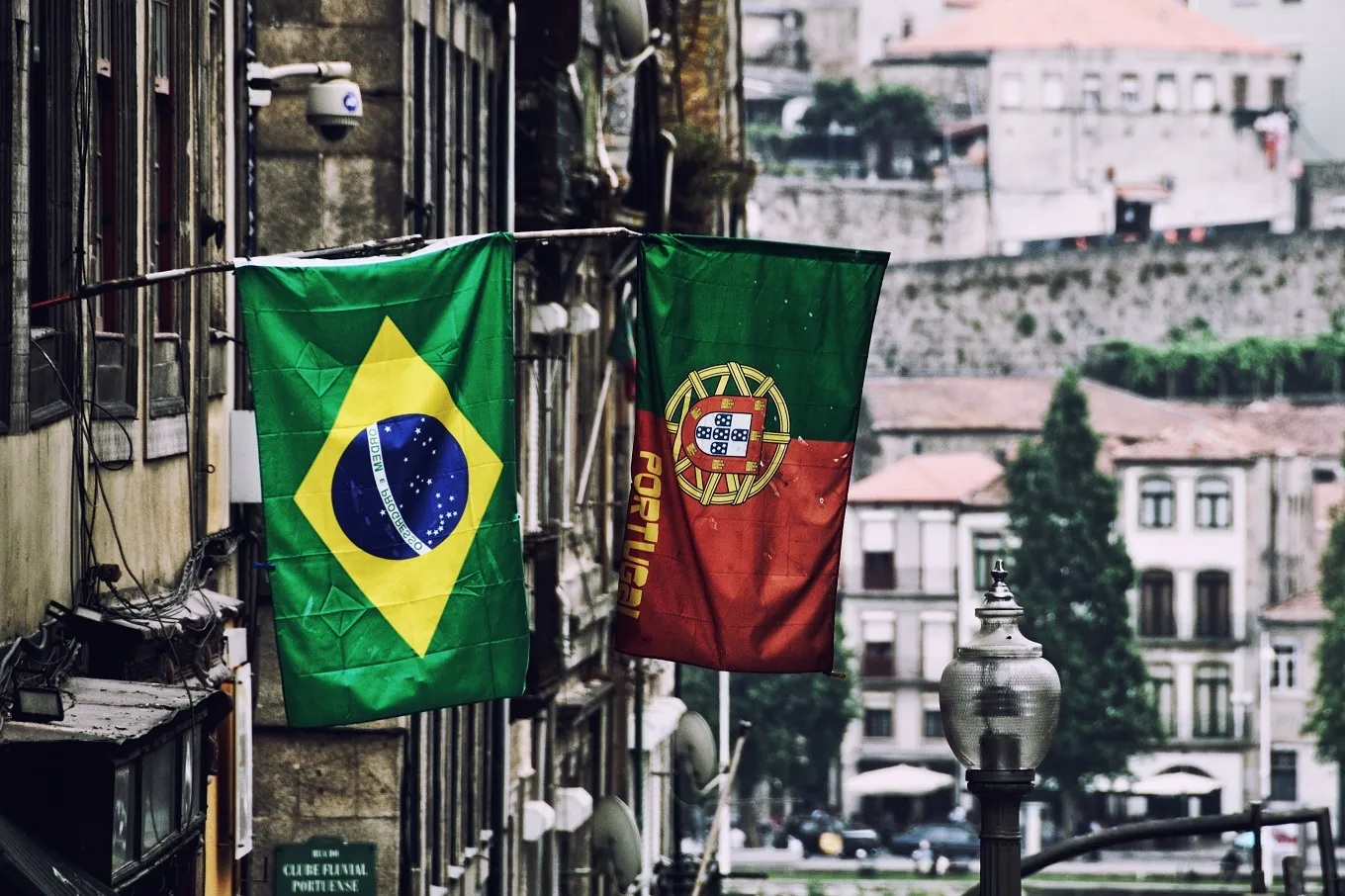
The nonprofit was founded in 1992 by Brazilians living in the country. It advocates for egalitarian policies for immigrant communities.
In an interview with Poder360, the NGO’s president, Cyntia de Paula, outlined a profile of Brazilians coming to the European country. “At the moment, we feel it is a mixture of profiles,” she said.
According to de Paula, the ouster of former President Dilma Roussef (PT) in August 2016 and the government of conservative President Jair Bolsonaro (PL) in 2019 were turning points. Many Brazilians are emigrating because they cannot identify with what we are experiencing in Brazil on a social and political level.”
De Paula pointed out the increase in the number of more qualified people. The arrival of whole families, which was very common in the past, has decreased. Migration has also become predominantly female.
“Students continue to come, and we already represent an essential part of Portuguese universities,” she added. They are joined by retirees and small and medium-sized business people.
DIFFICULTIES
As the profile changes, so do the difficulties. “Portugal has a big deficit of skilled jobs for everyone, not just immigrants. In the end, immigration suffers for other reasons,” de Paula said, citing entry into professional associations as one of the main obstacles.
The OAB (Brazilian Bar Association) and Confea (Federal Council of Engineering and Agronomy) have signed bilateral agreements with their Portugal counterparts. A reciprocity agreement allows Brazilian and Portuguese professionals to register and practice in their partner countries.
“For other [professions that require registration], it’s much more difficult for people to get permission to practice,” she said.
“Many are almost impossible, others are very time consuming, and still others have a whole series of problems until you get the license to practice. In some cases, we still feel a lot of protectionism in the orders, presence, and retention of foreign professionals.”
The very high prices for the recognition of diplomas are also an obstacle for Brazilians in Portugal. According to the association’s president, the document can cost more than €500 (US$500)
De Paula also mentioned an old problem: “There are social challenges, one of which is xenophobia. We know it exists, and we cannot deny it. It is not everywhere, but it can also exist.”
These factors contribute to pushing people with professional skills into sectors with a labor shortage. “Because the service market is very high, this place is occupied by the Brazilian community; you only have to go down the street and go to restaurants to see that. The construction sector is another sector that has absorbed many Brazilians,” she said.
The president of Casa do Brasil pointed out many reports of poor working conditions in these sectors: longer working hours, payment of the minimum wage (€705), and work without a contract are some examples.
LABOR MARKET
At the same time as the lack of vacancies for everyone and the excess of bureaucracy for immigrants, the Portuguese labor market also suffers from a shortage of skilled workers.
A survey conducted by ManpowerGroup Portugal, an HR consulting firm, found that 85% of Portuguese employers have difficulty hiring qualified professionals. Click here to read the full study in Portuguese.
The shortage of qualified workers is felt in all sectors analyzed in the survey. The difficulty in finding a professional is more pronounced in the “banking, finance, insurance and real estate” category (88%), followed by “wholesale and retail trade” (87%), “industry and manufacturing” (86%), “bars and restaurants and hotels” (86%), “information technology, telecommunications, communications and media” (84%) and “construction” (84%).
The positions most in demand by employers are: “IT and Data” (26%), “Industry and Production” (21%), “Operations and Logistics” (20%), “Marketing and Sales” (19%), and “Human Resources” (19%).
According to the Portuguese Statistics Institute INE (Instituto Nacional de Estadística), the unemployment rate in Q2 2022 was estimated at 5.7%.
BRAZILIANS IN PORTUGAL
The number of Brazilians living in Portugal reaches a new record every year. In 2021, there were 204,694 (29.3% of all foreigners in the country), according to the latest report from the Foreigners and Border Guard Service – the Portuguese agency responsible for issuing visas and residence permits. The increase was 11.3% compared to 2020.
It is estimated that this figure is much higher, as it does not consider those who have the nationality of an EU country, nor immigrants who are in an irregular situation.
In 2021 alone, 39,406 new residence permits were issued to Brazilians. Almost half (44.7%) were for professional reasons. This was followed by family reunification (31.1%), study (10.8%), permanent residence (9.3%), and other (4.1%).
These numbers are expected to increase when the new visa modalities approved in July – such as those for seeking employment – come into effect.
Under the new law, Brazilians who want to work in Portugal can leave Brazil with this visa. They have 120 days to find a job and apply for residency – with the possibility of an extension for another 60 days.
Today, most Brazilians travel as tourists and try to legalize their status on Portuguese soil. This process can take years.
The president of Casa do Brasil expects to improve migration conditions with the new visas. “It’s good for everybody. It’s good for them [people who migrate to Portugal to work]; it’s good for the country.”
“In terms of numbers, Portugal needs immigration; that’s a fact. Not only for work but also for other areas: for demographics, to contribute to social security, and many other areas. Not least because a country with diverse people is much richer culturally and in many different ways.
When the new visas come into force, the Association for the Support of Migrants hopes that the conditions for migration will improve. On the other hand, he cautions that immigrants should not just “plug a hole in the country’s labor needs.”
“It is not only a visa that we must demand, but also that people with a migrant background have decent working conditions, that is fundamental. That their rights are guaranteed so they can live a dignified life,” the NGO president concluded.
With information from Poder360
More: Brazil news in English, every day from The Rio Times.
Editorial responsibility: Matthias Camenzind, Editor-in-Chief · Editorial standards · Report an error