Analysis: Lithium triangle – Argentina, Bolivia and Chile – monopolize global investments

By Natalia Vera Ramírez
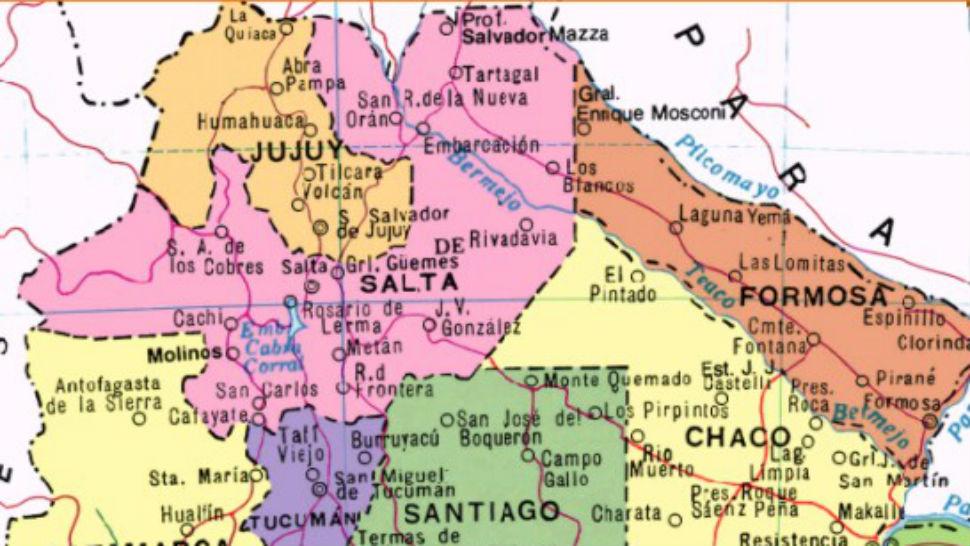
RIO DE JANEIRO, BRAZIL – Jujuy, Salta and Catamarca. Three provinces in northwestern Argentina have become an essential enclave for the extraction and production of lithium. The abundance of this metal in the area is so great that the governors of these provinces signed an interprovincial agreement in early October to create the Lithium Mining Region.
“In this way, we are moving forward so that the three provinces offer the same opportunities to those who want to invest, with clear rules, legal certainty, and predictability,” said the governor of Salta, Gustavo Saenz, after announcing the creation of this region.
The Salta authority knows that time is money when electric mobility is stepping on the gas pedal in the world.
Thus, in recent months, this province has managed to attract significant investments, as in the case of the world’s largest lithium company, the Chinese Ganfeng Lithium, which has announced an investment of US$580 million to carry out the Mariana project in the salt flats of Llullaillaco, in the southwest of the department of Los Andes in Salta.
In the neighboring province of Catamarca, another Chinese giant, this time Zijin Mining, one of the largest gold and copper producers in the Asian country, recently announced an agreement to acquire Neo Lithium fully, a Canadian company focused on exploiting its Tres Quebradas lithium mine. The value of the transaction: US$740 million.
To date, Argentina has a portfolio of 20 lithium projects, and the progress of these projects varies. Investors come not only from the mining sector but also from the automotive and technology sectors.

Toyota has confirmed a $400 million investment to increase lithium carbonate production for battery manufacturing through Sales de Jujuy. Toyota Tsusho holds a 25% stake and mining company Orocobre (66.5%) and Jujuy state-owned Jemse (8.5%).
BMW signed a US$334 million contract with U.S. mining company Livent in March 2021 for the purchase of lithium from the company’s project in the Salar del Hombre Muerto in Catamarca. With this agreement, Argentina will become the German automaker’s second-largest lithium supplier in 2022, after Australia.
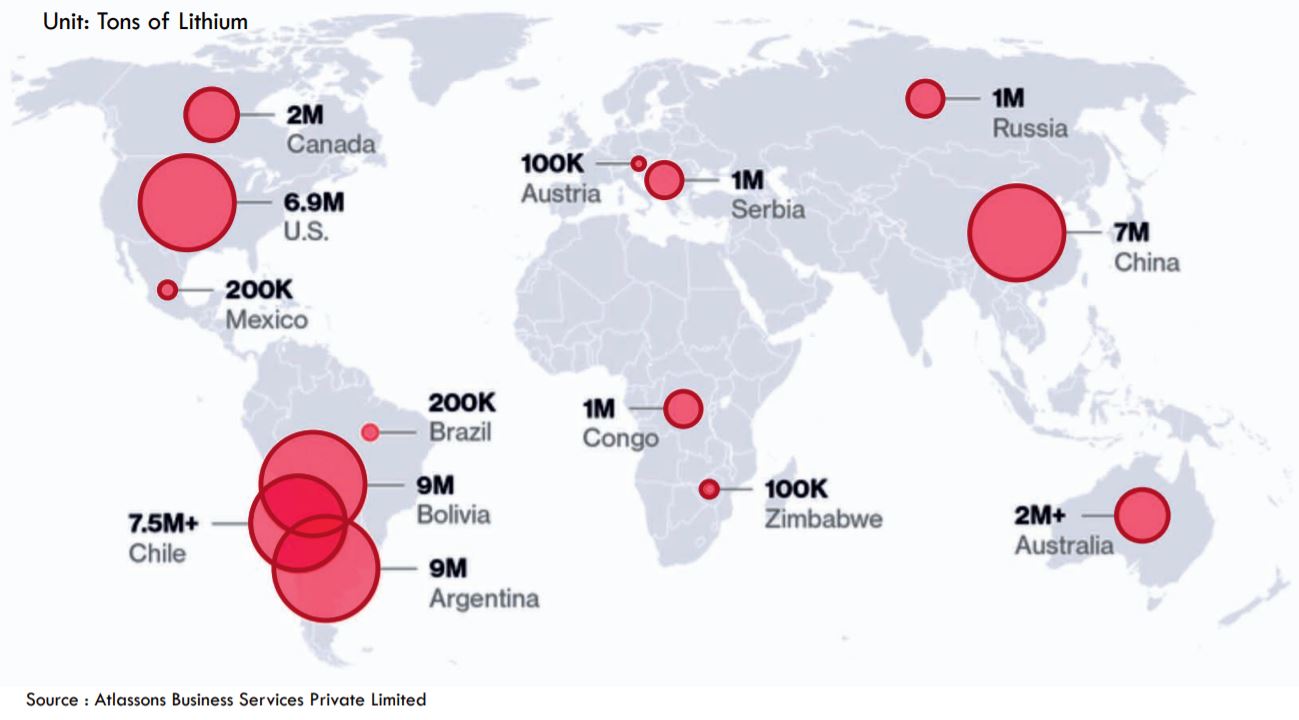
Argentina, which belongs to the famous Lithium Triangle, a region where more than 50% of the world’s lithium deposits are concentrated and which also includes parts of Chile and Bolivia, is becoming one of the few countries capable of satisfying the growing demand for this raw material for the production of rechargeable lithium-ion batteries, which are a vital element in the operation of electric vehicles.
Chile and Bolivia also fit this profile, although the latter has the largest reserves in the world (21 million tons) and has not yet managed to extract them.
THE DREAM OF ELECTROMOBILITY COME TRUE
Before the pandemic, electromobility sounded like a distant dream. It is replacing a gasoline-powered vehicle with a car that runs on electricity, in a world where there is still no charging infrastructure to guarantee its operation, and where the price, which can be up to 100% higher than that of a conventional car, is not the best incentives for choosing an electric vehicle.
Today, the outlook is different. The pandemic quarantine gave the global vehicle fleet some breathing space, and reductions in fossil fuel consumption led to significant improvements in air quality, prompting many countries to take their electric mobility plans seriously, which would translate into greater demand for electric cars and other efforts to mitigate ongoing climate change.
According to a report by consulting firm Ultima Media for Swiss-based ABB, the projected global battery production capacity in 2030 will not be enough to meet demand from the auto industry. That’s because electric cars will surpass internal combustion cars by 2036, when 80 battery factories are in operation worldwide.
“There is data and concrete evidence that shows there is a strong and accelerating trend of cannibalization of electric mobility over the internal combustion engine in the transportation industry. Being one of the largest industries in the world, this technological mutation will bring unimaginable changes in our lives and civilization. For all these reasons, I think the enthusiasm on this subject is justified and even timid,” says Jaime Alée, president of ESK Consulting.
For Chris Berry, founder, and president of consulting firm House Mountain Partners, while interest in electric mobility is at an all-time high and electric vehicle sales continue to rise, this increased demand for electric cars has implications for the automotive industry’s production systems.
“Recent data on clogged supply chains and a shortage of semiconductor chips for all cars show that this is beginning to impact automotive sales in general and could affect electric vehicle sales in the future until supply chains can operate efficiently again. It could take more than a year to solve the problem,” he says.
And although the lithium supply chain in Latin America has not yet reached the stage of battery production, let alone vehicle production, all the experts interviewed for this report agree that the great optimism about the high demand for electric vehicles is well-founded and that now is the time for the countries of the Lithium Triangle to take advantage of this boom and become strategic suppliers, especially for the future automotive industry.
As a result, lithium supply security has become a priority for U.S. and Asian technology companies. Strategic alliances and joint ventures between technology and exploration companies (such as those mentioned above in Argentina) have been formed in recent months to ensure a reliable and diversified supply of lithium for battery suppliers and vehicle manufacturers.
For Patricia Vasquez, Global Fellow at the Wilson Center, there is no time to lose. “Optimism for the lithium triangle and other countries like Peru, Mexico, and Brazil are well-founded, especially for countries like Argentina and Chile that are already very advanced. Countries like the United States and Europe have made a strong commitment to electromobility. Latin America is well-positioned to meet some of that demand over the next 10 to 15 years. While it is true that lithium is abundant and many countries are searching for it at the bottom of the ocean, the technology to extract it must first be developed, investments must be made, and that takes a very long time. Therefore, the opportunity for the Lithium Triangle is now, before the competition starts,” she says.
According to the U.S. Geological Survey (USGS), identified lithium resources worldwide have increased significantly and currently total about 86 million tons. The Lithium Triangle alone accounts for 47 million tons, with Bolivia holding the most significant amount at 21 million tons.
“The Lithium Triangle will always be attractive from a cost perspective as it has some of the largest and lowest-cost lithium resources in the world. Recent lithium deals in Argentina with China’s CATL, which bought Millennial Lithium, and Zijin Mining, which acquired NeoLithium, are two examples of the attractiveness of Argentina’s lithium deposits. In addition, Sigma Lithium is building the first phase of its hard rock lithium mine in Brazil, with the first production scheduled for late 2022. They have signed offtake agreements with Mitsui and L.G. Energy Solution, which are among the best partners in the world. South America will remain an important part of the lithium supply chain for many years to come,” says Chris Berry.
In addition, countries should take advantage of reasonable lithium prices to attract more investment, especially when lithium carbonate prices are at their highest. Benchmark Mineral Intelligence, the global research and price intelligence agency for the battery supply chain, reported that lithium carbonate rose 170% year-to-date to 142,000 yuan per ton (US$22,000) last September in China (the top lithium consumer), the highest level since April 2018.
In other markets, the price of lithium rose from US$17,500 per ton in early September to US$19,000 in the first half of September. A year ago, when the Covid-19 pandemic brought lithium mining to a halt and mining activity in general to a halt, the value of the metal fell below US$7,600 per ton.
“Lithium will either stay at this value over the long term or decline. There will probably be some volatility in supply and demand adjustments, but the trend is that there will be no shortage of supply, and prices will adjust,” says Jaime Alée.
FROM TRIANGLE TO SQUARE
While many countries worldwide have started exploring lithium, some Latin American countries have already made some progress, although they are still far behind the lithium triangle.
Such is the case in Peru, where Canadian company Plateau Energy discovered a lithium deposit called the Falchani lithium project in the Andean region of Puno in 2017. This year, another Canadian company, American Lithium, completed the acquisition of its Canadian counterpart, the parent company of Macusani Yellowcake, the mining company that operates and manages Falchani.
“The new owner, American Lithium, is bringing a lot of movement to the project. It will restart exploration so that the resources can be defined once and for all, which is good news. This will verify and quantify the quality of the proven reserves. The company also operates in Nevada, USA, while the previous owner was a junior mining company,” says Rómulo Mucho, former president of the Institute of Mining Engineers of Peru (IIMP).
Peru’s Ministry of Energy and Mines (Minem) estimates that 23,000 tons of lithium carbonate can be extracted annually at Falchani. In addition, Mine estimates that Falchani has a useful life of 26 years.
“Lithium exists everywhere globally, but not in the concentration of more than 3,000 parts per million as in Peru. That’s a fantastic value and well above the 500 parts per million found in Bolivia’s salt flats. In the case of Peruvian lithium, which is contained in the rock and requires a different process for extraction, the concentration is up to six times higher. Thus, Peru, which has significant reserves, could be added to the lithium triangle. I see a great future for the project, considering that it is a commitment to switch to renewable energy,” says Rómulo Mucho.
Mexico is another country making news, not only because of its lithium clay project in the state of Sonora, which is in the hands of the British company Bacanora Lithium, but also because of the way the government of Andrés Manuel López Obrador wants to manage it.
From copying the Bolivian model and taking over the entire lithium production chain to the controversial constitutional reform proposal in which the Mexican president wants to put total control of the electricity sector in the hands of the state-run Federal Electricity Commission (CFE), abolish regulators, eliminate permits, and guarantee state control over valuable lithium reserves.
This has raised alarm bells among potential investors, and even the Mexican Chamber of Mines (Camimex) has already warned that this regulation would make several projects unprofitable. What is certain is that the lithium project is attracting a lot of interest.
Bacanora Lithium has Gangfeng Lithium as a joint venture partner that owns half of the project and is bidding for 100%. The Chinese company, a supplier to Tesla, has already announced that it will build a facility in Sonora to recycle electric car batteries, an essential process for producing and introducing these vehicles in America.
The conditions for the Sonora lithium project could not be better, considering the large automotive industry in the North American country and its proximity to the United States, an economy that is driving demand for electric cars and which, along with Canada, has signed the T-Mec agreement, a trade agreement that requires 75% of the content used in the automotive industry to come from the region, encouraging investment in this area.
“Imitating the Bolivian model or nationalizing lithium is a purely political discourse that makes no practical or economic sense. In Bolivia, Evo Morales invested nearly US$500 million in the development of lithium batteries. The result is that he has created a company that has not sold a single gram of lithium, even though it has one of the largest reserves. This shows that there is a big difference between the existence of reserves and their production. The national lithium industry has only gobbled up money. Mexico is likely to produce batteries and electric cars because its main industry is led by American companies with their factories there,” says Jaime Alée.
Politics could also play against Chile, the world’s second-largest lithium producer. “In this country, we don’t know what will happen with the change in the constitution. Although Chilean production is higher than Argentina’s, the country has a larger project portfolio despite the economic and political ups and downs that characterize it. In Argentina, there are currently fewer barriers to investment. At the same time, Chile requires companies to form a joint venture with the national company and give up 25% of production, as lithium is considered strategic in that country,” says Patricia Vásquez.
The country, whose lithium industry is dominated by SQM and Albemarle, knows that it has lost competitiveness in recent years, giving some advantage to its competitors. Last week, Chile announced an auction process to award operating contracts to explore and extract 400,000 tons of lithium metal for batteries to boost production and meet global demand.
“Our country, which was the world’s leading lithium producer until 2012, has been overtaken by Australia and China is expected to displace us in third place by the end of this decade,” Chile’s Ministry of Mines and Energy acknowledged in its statement.
For Chris Berry, Latin American governments must be careful not to “kill the goose that lays the golden egg” by increasing royalties, taxes, or regulations. “They need to strike a balance between allowing companies to operate in the country and doing it responsibly so that everyone can benefit. Chile is rewriting its constitution, and the upcoming presidential election in Brazil are two events to keep an eye on in South America,” he says.
Source: America Economia
More: Argentina news in English, every day from The Rio Times.
Editorial responsibility: Matthias Camenzind, Editor-in-Chief · Editorial standards · Report an error