Air Europa Doubles Down on Argentina as Open Skies Bite
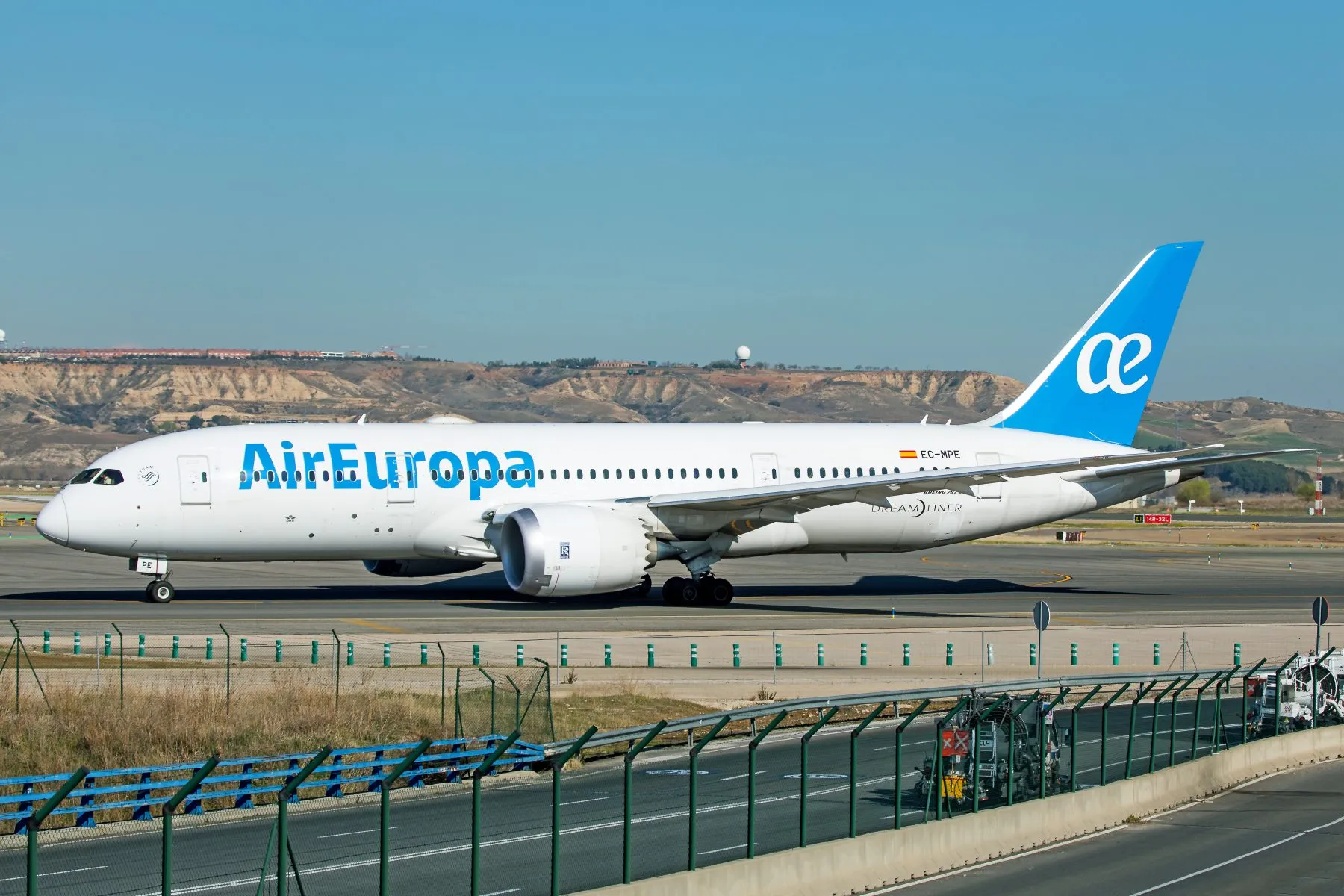
Companies · Aviation
—The move. Air Europa, Spain’s third-largest airline, is speeding up its expansion in Argentina.
—Packed planes. The carrier says its Buenos Aires to Madrid route is running above 90% full.
—New cities. It is studying links to three more Argentine destinations: the wine hub of Mendoza, the river city of Rosario and the Iguazú falls.
—The product. The push comes with a new service brand, “Air Europa ON,” aimed at lifting the passenger experience.
—The driver. Argentina’s open-skies deregulation has loosened the market and drawn a wave of foreign carriers.
—Scale. Air Europa carried more than 13 million passengers across its network and is part of Spain’s Globalia tourism group.
The Air Europa Argentina push is a small story with a big signal attached: a Spanish carrier is so confident in a once-closed market that it is eyeing flights deep into the country’s interior, not just its capital.
Why the Air Europa Argentina bet is growing
Air Europa is the third-largest airline in Spain, after Iberia and Vueling, and part of the Globalia tourism group. Its commercial director, Imanol Pérez, told Argentine business daily El Cronista that the country is one of the airline’s main gateways to Europe and is always on its radar for expansion.
The headline figure is occupancy. The carrier says its Buenos Aires to Madrid service has been running with more than nine in every ten seats filled, a level that signals strong demand and gives the airline confidence to add more.
Across its whole network the airline has carried over thirteen million passengers. That scale matters because it lets a carrier spread costs and justify opening thinner routes that a smaller operator could not sustain.
The three cities under study
What makes this notable is where the airline is looking. Beyond Buenos Aires, it is weighing service to Mendoza, Rosario and Iguazú, three places that sit well outside the usual capital-to-capital corridor.
Mendoza is Argentina’s wine country, nestled against the Andes and a magnet for tourists. Rosario is a major river port and industrial city, while Iguazú is home to one of the world’s most famous waterfalls on the border with Brazil.
Reaching for those cities is a sign of ambition. Carriers usually defend the busy main route first, so a move toward secondary destinations suggests the airline believes demand runs deeper than the capital alone.
What open skies changed
The backdrop to all of this is deregulation. Argentina has loosened the rules that once tightly controlled who could fly where and at what price, a policy often called open skies.
For a foreign reader, the practical effect is simple. Foreign airlines can now add routes and set fares far more freely, which has turned the Buenos Aires to Madrid corridor into one of the most contested air links between Europe and South America.
Air Europa is not the only one chasing the opportunity. Spanish rivals have piled onto the same corridor, with one new entrant launching its own Madrid to Buenos Aires flights this year and another planning a Madrid to Rosario link.
What it means for the market
More competition tends to be good news for travellers. Extra seats and rival carriers usually push fares down and widen choice, even if the airlines themselves face thinner margins as they fight for passengers.
For Argentina, the influx is also a vote of confidence. Foreign carriers do not add long-haul routes to a country they expect to shrink, so the expansion reads as a bet that travel demand and tourism will keep rising.
The open question is whether the corridor can carry everyone. With several airlines adding capacity at once, the next year will test whether demand is deep enough to keep all those packed planes profitable.
A crowded corridor and a new service brand
The Buenos Aires to Madrid link has become one of the most fought-over long-haul routes in the Americas. Spain’s flag carrier, a second Spanish airline and Argentina’s own national carrier all crowd the same corridor, each adding frequencies to grab share.
Air Europa’s answer is to compete on more than price. The new “Air Europa ON” brand is the airline’s way of dressing up the onboard experience and frequent-flyer perks, hoping that service quality keeps passengers loyal even as fares fall.
Belonging to the Globalia group gives the carrier a useful edge. Globalia is a large Spanish tourism conglomerate, so the airline can lean on travel agencies and holiday packages to fill seats rather than relying on ticket sales alone.
For the executive class in London and Munich, the practical upshot is more ways to reach Argentina and, in time, possibly its interior. A wine trip to Mendoza or a visit to the Iguazú falls may soon involve fewer connections and more direct options from Europe.
More: Argentina news in English, every day from The Rio Times.
Frequently Asked Questions
What is the Air Europa Argentina expansion?
It is the Spanish airline’s plan to grow in Argentina on the back of very full flights between Buenos Aires and Madrid. The carrier is studying new links to Mendoza, Rosario and Iguazú and has launched a service brand called Air Europa ON.
Why are so many airlines flying to Argentina now?
Argentina has deregulated its air market under a policy known as open skies, letting foreign carriers add routes and set fares freely. That has turned the Buenos Aires to Madrid corridor into one of the busiest between Europe and South America.
Will this make flights cheaper?
More carriers and more seats usually push fares down and widen choice for travellers. The risk for the airlines is thinner margins if too much capacity chases the same passengers on one route.
Connected Coverage
Plus Ultra Adds Madrid-Buenos Aires Flights, 4th on Route
Iberia Expands in Brazil as Azul and Latam Cut Flights on Fuel
This article was produced by The Rio Times’ automated newsroom system. How we use AI · Report an error · Editorial responsibility: Matthias Camenzind, Editor-in-Chief