Agro advances, and Brazil has nowhere to store “a whole Argentina” of grains
By Marcos Tosi
This year, when Brazil is expected to surpass the 300 million tonnes mark for the first time, a logistic bottleneck will be accentuated, reaching an equally historical level: 120 million tonnes will not have storage space.
This is more than the entire crop of Argentina, which faces a third consecutive year of drought and will harvest only 75 million tonnes, against an initial estimate of 122 million tonnes.
The Food and Agriculture Organization of the United Nations (FAO) recommends that countries have storage structures to hold at least 1.2 times the size of their harvests.

The Brazilian gap has been growing since 2000 when the country still had silos to store all the crops for a year, if necessary.
According to Conab (National Supply Company), since 2010, grain production has increased 82% – from 149 million tonnes to 271 million tonnes in 2022, possibly reaching 310 million this year – but storage capacity has grown only 35%, from 136 million tonnes to 183 million tonnes.
Thus, it is possible that, for the first time, the country’s silo structure will not even cope with the summer crop, estimated at 188 million tonnes – which counts only the main products, such as soybeans, rice, and corn.
“Not having a warehouse in the field costs the farmer and society more. Everyone pays this bill.”
“85% of the storage structure is in urban and industrial centers or the ports, and then the trucks get in lines, without a warehouse, dryer or sufficient structure to receive this production.”
“The product starts to lose quality, and the freight price ends up exploding; it’s a very serious vicious cycle”, points out Paulo Bertolini, president of the Sector Chamber of Grain Storage of the Brazilian Association of Machines and Equipment Industry (Abimaq).
ABIMAQ DEFENDS THE TRIPLING OF CREDIT LINES FOR WAREHOUSES
Reducing this logistic bottleneck through more credit lines to producers interests the industry for its potential to move the economy.
Exporters of the silo and warehouse structures, Brazilian manufacturers see a sleeping giant in the domestic market.
Abimaq calculates that to zero out the deficit of warehouses in the country would require investments of R$80 billion.
The request made to the Ministry of Agriculture is to at least triple the amount destined to finance the structures, currently around R$5 billion per year.
With R$15 billion, says Abimaq, it would be possible to add 10 million tonnes per year of storage capacity.
In 2021, the Bolsonaro government issued a decree to qualify 124 Conab warehouses for auction, but the bureaucratic process was not completed before the change of government.
And now it is likely that the auctions will never take place.
The current government is moving in the opposite direction, and president Lula and his ministers have declared that the intention is to resume the purchase of products by Conab to build public stocks and regulate the market.
Currently, Conab warehouses represent about 1% of the static capacity installed in the country.
STATE WAREHOUSES ARE MORE EXPENSIVE AND INEFFICIENT
“If the government does it, it will be more expensive. And you will continue to have the structures in the city, with the same 85% storage profile available today.”
“It doesn’t innovate at all. And it involves public money buying production one moment and selling it another. All with public money, not private money,” says Bertolini.
“If it is a line of credit for the farmer, he will pay, he will return this money, and when it comes time to store, he will know what is interesting to dose to sell at the most appropriate time.”
“We have to mirror what is working well around the world. The United States doesn’t have this, and they are a model that we need to follow in this respect”, he adds.
The National Confederation of Agriculture and Cattle Raising (CNA) considers that there is a worrying and growing gap in the grain storage structures in the country, but not to the point of requiring a static capacity of 370 million tonnes, as FAO’s projections would lead us to believe.
“We don’t face the harsh winter in the United States, we have the safrinha, and we can store two or three times a year using the same structure. 370 million tonnes of static capacity is a number that doesn’t make sense”, says Elisângela Pereira Lopes, technical advisor of the National Confederation of Agriculture and Cattle Raising (CNA).
She recognizes, however, that the deficit is worrying.
“It starts to frighten when you go from an 85 million tonnes deficit to a 122 million tonnes deficit, from one harvest to the next.”
“If we continue to grow exponentially, we will have problems,” she points out.
The situation is more critical above the 16th parallel, which divides the country in half.
“When we look at the regions that produce the most, which are Mato Grosso and Matopiba, the deficit is already reaching 60 million tonnes.”
“This is half of Brazil’s deficit”, highlights Elisângela.
She emphasized that a policy promoting the construction of warehouses needs to look at these less structured regions.
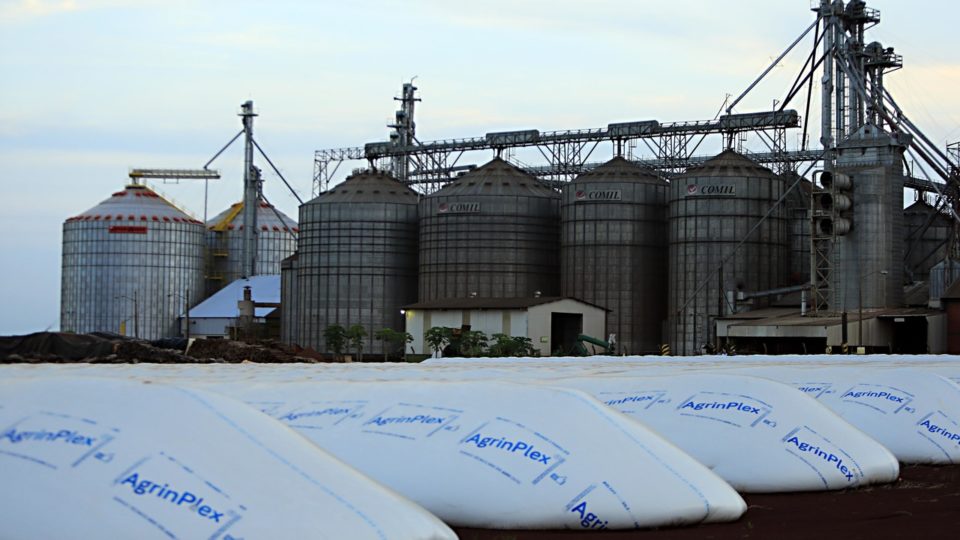
THE COUNTRY HAS FEW WAREHOUSES INSIDE THE PROPERTIES
On another front, Abimaq points out that it is necessary to pulverize the current credit lines.
Today most of the resources are going to industries and cooperatives, which helps explain the percentage of warehouses built on farms, which has been stagnant at 15% since 2010.
“It is necessary to direct the Program for the Construction and Expansion of Warehouses (PCA) to farms, not to industries and cooperatives, which have access to other lines.”
“There is an interest of the banks in centralizing the money in a large borrower; it is much cheaper for the bank than spraying.”
“But for the country, due to the needs of the Brazilian agribusiness, this investment should happen inside the farms”, emphasizes Bertolini.
The on-farm storage deficit is recognized by the cooperatives, which, however, understand that they should not be seen under the same prism as other industries, also large borrowers.
“We can’t look at the cooperative as a CNPJ only. Today 71% of the Brazilian agricultural cooperatives comprise thousands of family farmers and small producers.”
“And they need to be looked at in a special way when formulating public policies because in isolation they would not be able to structure robust investments and be competitive,” says João Prietto, coordinator of the Agro sector of the Organization of Brazilian Cooperatives (OCB).
ON-FARM STORAGE REQUIRES MANAGERIAL SKILLS
Besides requiring heavy investment, the decision to install a silo on the property demands that the farmer is willing to enter practically into a new business.
The producer Sérgio Fortis, from Goioerê (PR), says that the family planned to take this step for fifteen years.
The return on investment in a complex with the capacity to store 250 thousand sacks should take another ten years.
“We see the warehouse as another company. There is the company-farm and the company-warehouse.”
“There is a whole complexity of drying, cleaning, and storing the harvest.”
“It’s like another business, with new employees, other skills, different management,” Fortis explains.
“Today, the successful farmer is considered a rural entrepreneur.”
“That caboclo farmer, who carries an agenda, is being left behind.”
“To manage a farm, you have to take care of the details and the cost thoroughly, like a business,” he says.
WITH HIS OWN SILO, A PRODUCER CAN AVOID HUMIDITY DISCOUNTS
Fortis is only in his second year of operation with his own silos.
He highlights two reasons that were decisive for the investment.
First, logistics:
“Our region is very strong in the harvest of corn, and at harvest time, the cooperatives are full of trucks and cannot receive the crop. The truck stays the whole day to unload,” he says.
The second reason is explained with a calculator in hand:
“This year, we started harvesting, and it was raining.”
“When we managed to get into the field, we harvested soybeans with 25% of the grains burnt.”
“If I sent it to the cooperative, it would give an 8% tolerance and discount me the other 17%.”
“By keeping it in my silo, I mix it with the other grains, which normally only have 1% of damaged grains, and I don’t get any discount.”
“With the handling, I maintain the classification standard. That’s what the cooperatives do.
“They mix and don’t get a discount,” he emphasizes.
However, he observes that having a significant volume of grains is necessary to compensate for the investment.
And be prepared for the seasonalities of agriculture.
“An amazing thing happened in these two soybean harvests we received.”
“Last year’s first one was extremely low because of the worst drought in 40 years.”
“And this year’s will be the best harvest ever,” he says.
Not without reason, in agriculture, it is not recommended to account for losses and gains over a single harvest but to assess the economic sustainability of the business over several years.
Argentina, for example, is facing its third consecutive year of crop failures due to a lack of rain.
Rio Grande do Sul has already suffered two consecutive losses.
With information from Gazeta do Povo
More: Brazil news in English, every day from The Rio Times.
Read More from The Rio Times