Africa Intelligence Brief — Tuesday, August 25, 2026
Executive Summary
Africa Intelligence Brief for August 25: Tanzania's vice president quit on cue, DR Congo's Ebola outbreak passed 100 days, and Egypt banked $15 billion.
Rio Times · Africa Intelligence Brief August 25, 2026
Africa Intelligence Brief — Tuesday, August 25, 2026
The Continent That Stopped Waiting
Key Facts
- The resignation. Tanzania’s vice president, Emmanuel Nchimbi, resigned this morning, effective September 4, saying he is satisfied the president “desires change.”
- The newspaper. The daily MwanaHALISI had its licence suspended for six months on August 19 over a report that Nchimbi was under pressure to quit. He has now quit.
- The outbreak. Ebola in DR Congo has reached 5,514 confirmed cases and 2,642 deaths in a hundred days, the fastest event of its kind on record, with barely a third of cases believed detected.
- The currency. Ghana’s cedi trades at 11.175 to the dollar today (from 11.00 on Monday) with the central bank holding its rate at 14%.
- The challenge. In Nigeria, opposition figure Atiku Abubakar presented an economic programme this morning and the presidency answered within hours.
- The customer. Egypt drew 15 billion dollars of foreign investment in 2025, the continent’s largest share, and Türkiye’s exports to Africa have reached 13.3 billion dollars.
Read the continent this morning and one word keeps returning: decide. Dodoma is deciding who serves, Kinshasa is deciding how to fight an epidemic alone, Addis Ababa is deciding whose rules govern a river.
Read in English, French, Arabic, Portuguese and Swahili, across the continent’s largest outlets and our own Africa desk.
Tanzania: The Vice President Who Kept His Promise
A resignation written a year in advance
Emmanuel Nchimbi wrote to President Samia Suluhu Hassan this morning to resign as vice president, effective September 4. He cited a promise made on August 27 last year: that he would vacate the office the day she wanted someone else in it.
“I am fully satisfied, without any doubt, that Her Excellency the President desires change, and thus I have decided to fulfil my promise,” he wrote. He is the first vice president in Tanzania’s history to leave the office voluntarily.
The newspaper that reported it early
Six days ago the regulator suspended the newspaper MwanaHALISI for six months over an article reporting that Nchimbi had rejected pressure to resign. The paper was faulted for not securing his comment.
The report has turned out to be directionally true. A licence suspended for saying on Wednesday what the state confirmed on Tuesday is a message to every editor in the country: accuracy is not a defence.
What the manner of the exit tells you
Nchimbi took office in November after an election the ruling party won with nearly 98% of the vote, a result the opposition says was enforced with a crackdown that left hundreds dead. His departure is courteous, constitutional and entirely managed.
That is the temperament of the state on display: nothing improvised, nothing contested in public, and the script honoured to the letter.
DR Congo: A Hundred Days, And The World Is Elsewhere
The fastest outbreak of its kind
The Ebola outbreak centred on Ituri reached 5,514 confirmed cases and 2,642 deaths by the weekend, according to the European Centre for Disease Prevention and Control’s August 25 update. The Africa CDC estimates that only 30 to 40% of cases are being detected at all.
The World Health Organization describes it as the fastest event of its kind on record, on a trajectory beyond the 2014 West Africa epidemic. Sunday marked one hundred days since the outbreak was declared.
The helpers are being attacked
The Red Cross counted eleven violent attacks on response teams between August 17 and 19 in Beni, Rungu and Aru, with twelve people injured. Fear is outrunning the vaccine.
Uganda, next door, declared its own related outbreak over on July 28. The contrast says less about the virus than about the state: one government could afford a functioning response and the other is fighting a war and an epidemic at once.
Ethiopia: From A Dam To A Rulebook Of Its Own
An update to yesterday’s defiance
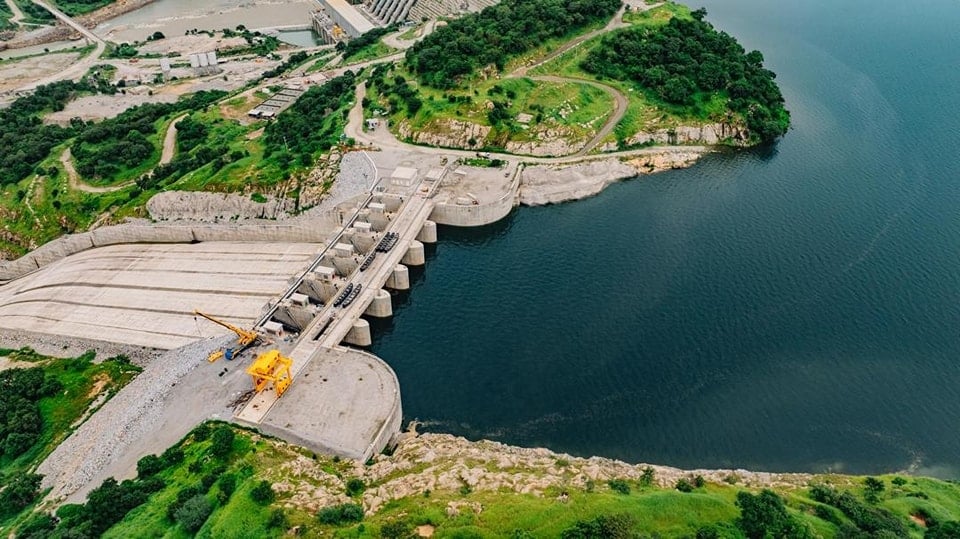
Yesterday we led with Addis Ababa’s statement that it needs nobody’s permission to develop its rivers. The new development is institutional: Ethiopia is pressing to make the Nile Basin Commission fully operational under the Cooperative Framework Agreement, which six basin states have ratified.
Egypt and Sudan refuse to join. Cairo’s reply this week was that Addis Ababa “recycles unfounded claims,” which is the language of a capital that senses the argument moving from water to legitimacy.
Whose institution counts
A commission that Egypt will not join would still let six upriver states set the river’s house rules among themselves. The dispute is no longer about one dam; it is about who gets to call a decision official.
Ghana: Defending The Cedi, Extending The Day
The line holds at a price
The cedi traded at 11.175 to the dollar today, against 11.00 on Monday, with the central bank holding its main rate at 14%. Accra is choosing a dear currency defence over cheap money, and paying for it in credit that small businesses cannot afford.
A campaign promise with opening hours
President Mahama has begun rolling out his 24-hour markets programme, turning the slogan of a round-the-clock economy into stalls that stay lit past midnight. It is retail politics in the literal sense, and it is popular.
Nigeria: The 2027 Argument Has Begun
The opposition presents, the statehouse answers
Atiku Abubakar presented an economic programme this morning, and the presidency’s reply arrived within hours, personal and dismissive. The election is eighteen months away and the campaign has, in practice, started today.
The backdrop is a government that three weeks ago raised soldiers’ pay by 30 to 80%, effective September 1. States raise military pay when they intend to be obeyed, and when they are not entirely sure they would be.
Two prices for one naira
A dollar cost 1,410 naira on the parallel market this morning against 1,346.98 at the official window, a spread of about 63 naira (roughly four cents at the official rate, all figures August 25). The gap is the honest poll of confidence, and it refuses to close.
South Africa: Who Gets To Belong
Fired for being foreign
Workplace checks and street enforcement against foreign nationals are intensifying again, documented this week under the telling headline “Fired for Being Foreign.” Pretoria preaches a borderless continent at the African Union and polices a bordered one at home.
Four men were arrested yesterday over the murder of the former boxing champion Zolani Tete. The country is debating who belongs in it while burying one of its own.
North Africa: Egypt Sells Certainty
The customer of choice
Egypt drew 15 billion dollars of foreign direct investment in 2025, the largest share on the continent, according to figures aired by Ahram Online today. Gulf money is buying what Cairo sells, which is the appearance of predictability on a river it cannot control.
Türkiye’s exports to Africa have reached 13.3 billion dollars, with Morocco and Egypt the largest markets. Ankara is rebuilding, container by container, an influence it last held a century ago.
A government that suspends a newspaper for reporting a resignation six days early is not defending the truth. It is defending the schedule.
What This Means From Latin America
The genre is familiar to this hemisphere. The loyal deputy who exits on cue was perfected by Mexico’s old ruling party, and the Brazilian reader will recognise the choreography of a transition in which everyone smiles.
The invisibility is familiar too. Haiti’s collapse vanished from the world’s front pages the week the Gulf caught fire, and Congo’s epidemic is learning the same lesson: a crisis without cameras is a budget line, not an emergency.
And the oil shock splits Africa the way it splits us. Nigeria and Angola earn from it, as Guyana and Brazil do; everyone else pays for it, as Central America does.
The Bigger Picture
Africa today is a set of states fortifying what they can control. Tanzania is managing a succession, Ethiopia a river, Ghana a currency, Nigeria an army, South Africa a border.
What none of them can control is attention. The fastest Ebola event on record passed its hundredth day while the world watched a strait between Iran and Oman.
A francophone business daily phrased the mood this week: Africa is not waiting to be chosen. That is not defiance but arithmetic, a continent that has priced in being on its own and is behaving accordingly.
Africa Intelligence Brief August 25, 2026: What We Are Watching
- Who Samia appoints — the successor will reveal what the change is actually for.
- MwanaHALISI — whether the six-month suspension is challenged in court.
- Detection in Ituri — whether the share of cases found rises above 40%.
- The Nile commission — whether six ratifications can operate over Cairo’s refusal.
- The cedi at 11.175 — whether a 14% rate is enough to hold the line.
- Abuja’s temper — Atiku’s programme as the opening bid of 2027.
More from the Rio Times Intelligence Desk on August 25, 2026: Asia · Europe · USA & Canada. For how these stories developed, see the Africa Intelligence Brief for August 24 and August 23.
The competition for African resources and the money behind it runs through our pillar coverage of Africa: The New Scramble.
Frequently Asked Questions
Why did Tanzania’s vice president resign?
Emmanuel Nchimbi wrote to President Samia Suluhu Hassan on August 25 resigning effective September 4, saying he was satisfied the president desires change. He had promised a year earlier to vacate the office whenever she asked, and is the first Tanzanian vice president to leave voluntarily.
What happened to the newspaper MwanaHALISI?
Tanzania’s Information Services Department suspended its publishing licence for six months on August 19 over an article reporting that Nchimbi had rejected pressure to resign, faulting the paper’s sourcing. The resignation it anticipated has now happened.
How severe is the Ebola outbreak in DR Congo?
The European Centre for Disease Prevention and Control counted 5,514 confirmed cases and 2,642 deaths by August 23, one hundred days into the outbreak. The Africa CDC estimates only 30 to 40% of cases are detected, and response teams have been attacked repeatedly in Ituri and neighbouring districts.
Why do Egypt’s investment figures matter?
Egypt drew 15 billion dollars of foreign direct investment in 2025, the continent’s largest share, mostly Gulf money buying predictability. Türkiye’s exports to Africa reached 13.3 billion dollars with Egypt and Morocco as the largest markets.
Sources: The Standard, Nation Africa, allAfrica, The Kenya Times, ECDC, Africa CDC, IFRC, Ahram Online, Financial Afrik, IPS · 19-25 August 2026.
This article was produced by The Rio Times’ automated newsroom system. How we use AI · Report an error · Editorial responsibility: Matthias Camenzind, Editor-in-Chief
LatAm Markets: Live Signals → — real-time movers, turnover leaders and FX across Latin America.