Inside the US$5 Billion Plan to Keep Africa’s Cotton Jobs in Africa
Pan-African · TRADE
Key Facts
—Investment target: Roughly USD 5 billion over ten years is needed for spinning, textiles and garment production in the C4+ countries.
—Jobs projection: The World Trade Organization’s Partnership for Cotton and the International Trade Centre project around 500,000 direct jobs in West and Central Africa.
—Raw exports: About 98% of cotton from Benin, Burkina Faso, Chad and Mali is currently exported as raw fibre.
—Processing goal: The World Trade Organization aims to process up to 25% of Africa’s cotton domestically within the next decade, up from about 2% today.
—Benin anchor: The Glo-Djigbé Industrial Zone involves more than USD 500 million in textile and garment facilities, including three projects worth USD 523 million.
—Cameroon project: A XAF 180 billion integrated cotton project will create Camtext SA and about 15,000 jobs across two sites.
A US$5 billion cotton industrialisation plan backed by the World Trade Organization and African financiers aims to keep textile jobs on the continent by processing up to 25% of Africa’s cotton locally within a decade.
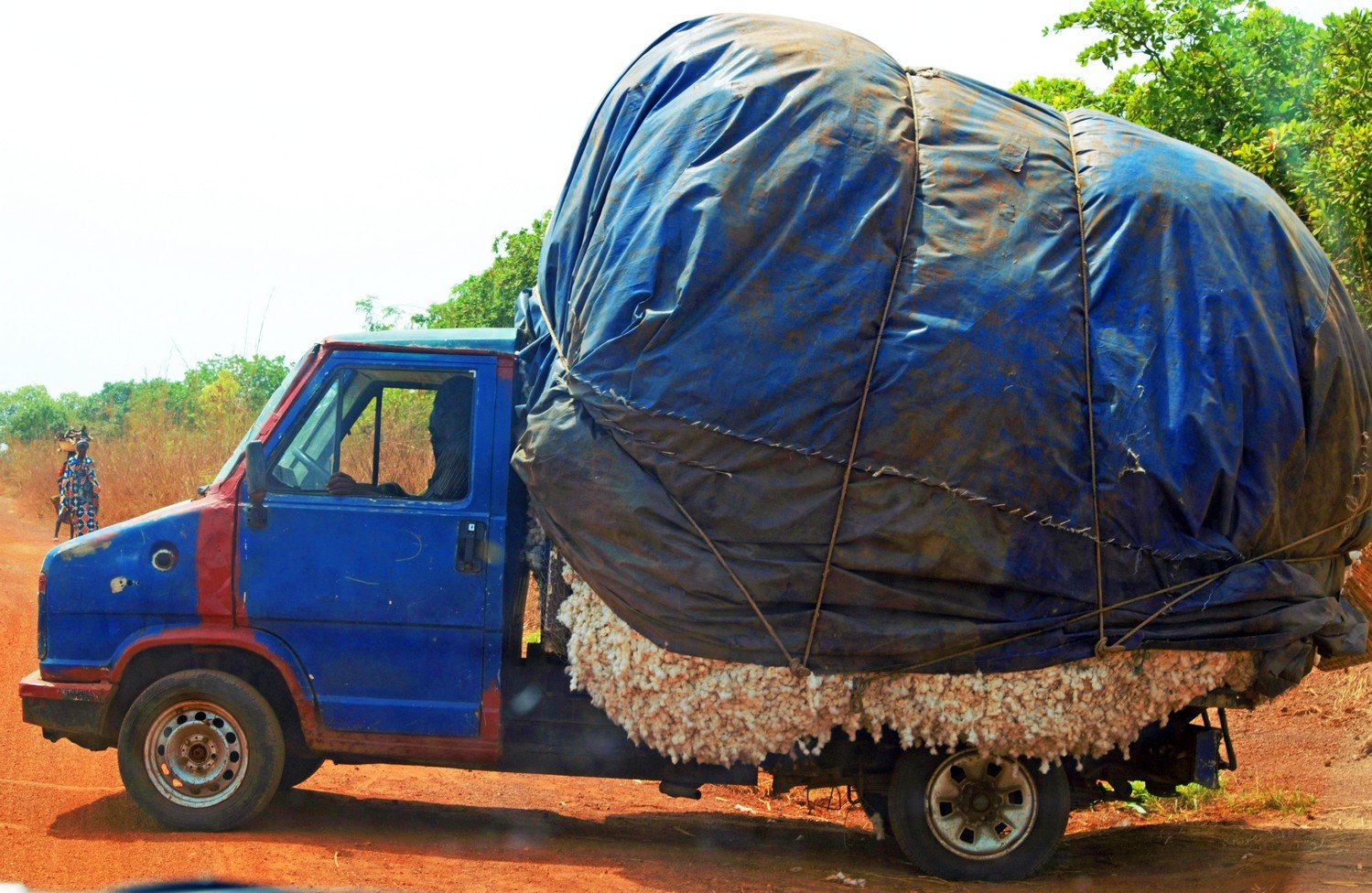
The cotton industrialisation plan takes shape
Africa grows over 1 million tonnes of cotton annually in the C4+ group alone, yet about 98% of that fibre leaves the continent raw. The World Trade Organization’s Partnership for Cotton, launched at the 13th Ministerial Conference in Abu Dhabi, wants to reverse that flow.
The partnership is now moving from diagnostics into implementation after a new phase was unveiled on the sidelines of the 14th Ministerial Conference in Cameroon. A baseline study supported by the United Nations Industrial Development Organization found that roughly USD 5 billion in industrial and semi-industrial facilities is required over ten years for C4+ countries to transform 25% of their raw cotton production locally.
The C4+ group brings together Benin, Burkina Faso, Chad and Mali, with Côte d’Ivoire as an observer. Together they produce about half of Africa’s cotton and roughly 4% of global output.
Who is financing the push
World Trade Organization Director-General Ngozi Okonjo-Iweala has publicly targeted USD 5 billion in private investment for African cotton processing. The goal is to lift domestic processing from about 2% today to 25% within the next decade.
A parallel Africa Textile Renaissance Plan was signed on 14 October 2024 by the African Export-Import Bank, ARISE Integrated Industrial Platforms and Swiss textile-machinery maker Rieter. That framework agreement commits USD 5 billion in project finance to build 500,000 metric tons of African cotton transformation capacity within three to five years.
The Renaissance Plan explicitly targets up to 500,000 jobs continent-wide and seeks to boost exports to the United States under the African Growth and Opportunity Act. It also aims to reduce Africa’s annual textile import bill while retaining value addition within African borders.
Benin’s industrial zone leads the way
The Glo-Djigbé Industrial Zone in Benin is a public-private partnership between ARISE Integrated Industrial Platforms and the Benin government. The United Nations Industrial Development Organization has called it a “game changer” for the sub-region’s cotton-textile sector.
The zone involves more than USD 500 million in textile and garment facilities, including at least ten garment factories each equipped with about 250 sewing machines. Three vertically integrated textile projects, Benin Textile SA, Benin Textile Corporation and Société des Textiles du Bénin, carry a combined investment of USD 523 million.
Benin’s national strategy aims for 25% to 50% of domestic cotton to be processed locally by 2025. That would make the zone an anchor in the emerging West and Central African textile corridor.
Cameroon and Nigeria join the corridor
Cameroon has announced a XAF 180 billion integrated cotton project, roughly USD 300 million, to rebuild its domestic value chain. A consortium including Panafritex, the textile arm of ARISE, Sodecoton and the national pension fund will create Camtext SA with spinning, weaving, knitting and finishing units in the Dibamba industrial and port zone.
The project plans about 12,000 jobs at the main hub and an additional 3,000 jobs at a garment centre in Garoua. Cameroon’s national strategy targets 600,000 tons of cotton production annually and 50% local processing by 2030.
In Nigeria, Afreximbank and ARISE plan a major textile facility projected to employ roughly 250,000 workers. Site selection for new textile parks under the Renaissance Plan prioritises power and gas availability, existing infrastructure and potential equity contributions by host states.
The value gap and the missing middle
Africa is strong in growing and ginning cotton but weak in spinning, weaving, dyeing and finishing. Industry specialists describe a “missing middle” in dyeing and finishing that prevents vertically integrated supply chains and keeps high-value manufacturing offshore.
The value curve is steep: USD 1.5 of cotton lint can become about USD 3 of yarn, USD 5 when woven into fabric, and at least USD 10 per garment. The International Trade Centre estimates that turning cotton into clothing in West Africa alone could generate around 500,000 jobs beyond farm-level employment.
The Partnership for Cotton projects USD 6 billion in value-added products from the USD 5 billion investment, implying roughly 1.2 times value-added on capital over the ten-year horizon. That excludes broader spill-over effects in logistics, services and regional trade.
Geopolitics and what to watch next
For two decades, C4 countries campaigned at the World Trade Organization against cotton subsidies in major economies. The Partnership for Cotton marks a strategic pivot from subsidy complaints to domestic industrial capacity and regional value chains.
The initiative aligns with the African Continental Free Trade Area, which is seen as a framework for regional supply chains and intra-African trade in textiles and apparel. Afreximbank, headquartered in Egypt and backed by African sovereign shareholders, has emerged as a regional development finance player filling gaps left by Western and multilateral banks in risk-heavy industrial projects.
The plan’s success depends on maintaining preferential access to United States and European Union markets, navigating price competition from established Asian producers, and securing reliable energy and transport infrastructure. The broader contest for African supply chains fits squarely within the dynamics covered by Africa: The New Scramble.
Frequently Asked Questions
How much is the African cotton industrialisation plan worth?
The World Trade Organization’s Partnership for Cotton and the Africa Textile Renaissance Plan each target roughly USD 5 billion in investment over ten years and three to five years respectively.
How many jobs could the cotton plan create?
The World Trade Organization and the International Trade Centre project around 500,000 direct jobs in West and Central Africa, with strong participation by women and youth.
Which countries are leading the cotton industrialisation push?
Benin, Burkina Faso, Chad and Mali form the C4+ group, with Côte d’Ivoire as an observer, while Cameroon and Nigeria are also building major textile projects.
Connected Coverage
For more on how African industrialisation fits into the wider contest for resources and supply chains, read Africa: The New Scramble.
Sources
This article was produced by The Rio Times’ automated newsroom system. How we use AI · Report an error
LatAm Markets: Live Signals → — real-time movers, turnover leaders and FX across Latin America.
Read More from The Rio Times