Government of Paraguay bets on the creation of family gardens in sectors of extreme poverty

RIO DE JANEIRO, BRAZIL – Between 702 and 828 million people in the world did not have enough to eat last year. In other words, 9.8% of the world’s population suffered from hunger during 2021, according to the report The State of Food Security and Nutrition in the World 2022 (SOFI) jointly presented by five United Nations (UN) agencies.
One of them, the Food and Agriculture Organization (FAO), assured that the UN goal of eradicating hunger by 2030 is getting further and further away.
In Latin America and the Caribbean, the report estimates that 7.8% of the population did not have access to healthy foods that have allowed an active life between 2019 and 2021.
Read also: Check out our coverage on Paraguay
The study also maintains that despite the economic crisis “a lot can be done with existing resources.” And it recommends that governments look for more efficient ways to manage their budgets, that promote the production, supply and consumption of nutritious and healthy food, and in this way help improve the diets of their populations.

In this sense, the UN experts highlight that the sectors that receive the most economic aid are those of rice, sugar and meat, while the production of fruit and vegetables receives less support, especially in some low-income countries.
In this context, Paraguay implemented the Mi Huerta Project almost two years ago with the aim of mitigating food insecurity —which according to the report affects 8.7% of its population— and generating income for rural families living in extreme poverty.
The initiative, which promotes the formation of family gardens, has already reached more than 5,700 families in thirteen states located in the southeast of the country. 90% of the people benefiting from the program are women, most of whom are considered heads of households.
In Paraguay, 70% of the population lives from agriculture and a three-year drought —between the effects of the climate change crisis— the increase in the cost of living and the socioeconomic consequences of the COVID-19 pandemic deepened the food scarcity and the situation of poverty.
Mi Huerta is part of the Tekoporã Program (which in Guarani means “living better”), the most important social protection policy that the Paraguayan State has had since 2005, which reaches 165,000 families. Under this program, 55,000 families (approximately 30%) had already developed vegetable gardens.
Mario Varela, Minister of Social Development of Paraguay, maintains that the Mi Huerta Program “is not only totally possible to replicate in other countries, but it is also necessary to provide better food and promote entrepreneurial capacity. The latter is essential because public budgets have more and more social demands to meet —health, education, social protection— and aid in this regard is increasingly cut back. Therefore, I think this is a good option to replicate in other countries in the region.”
VEGETABLES AND GREENS
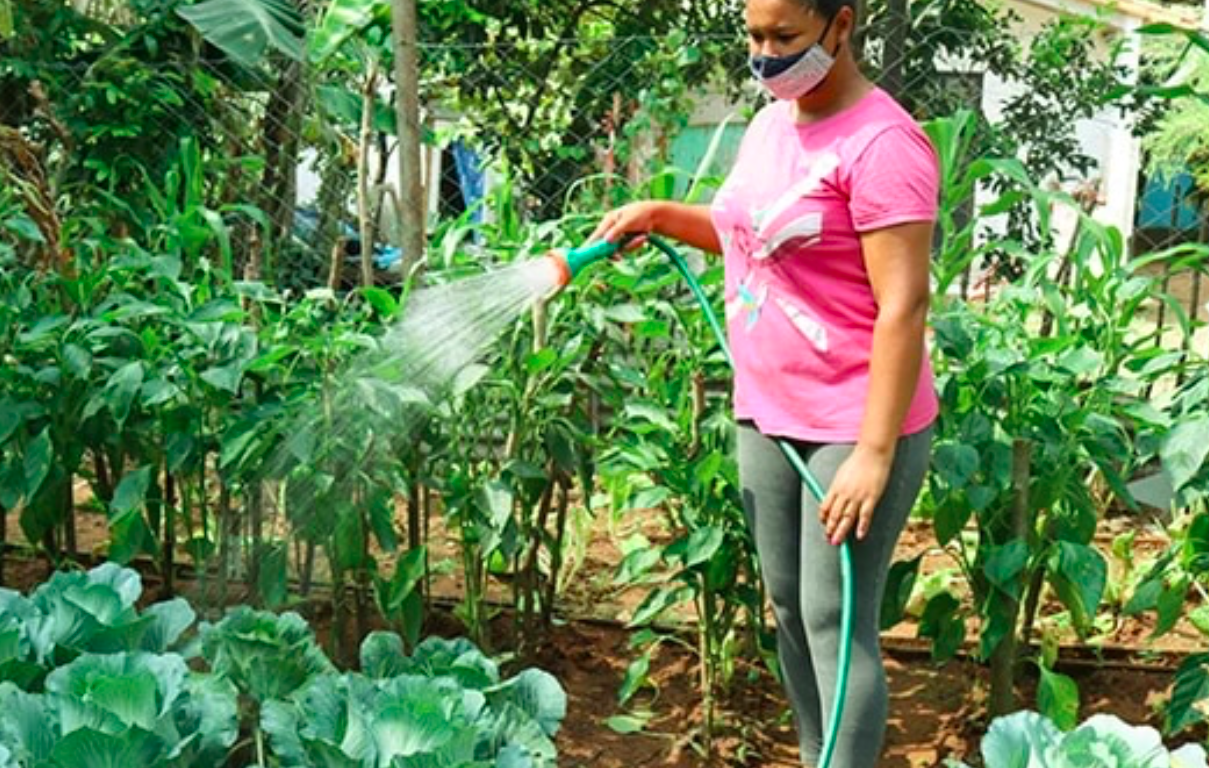
An hour’s drive from Asunción, the capital of Paraguay, is the city of Luque. There, in a small house, Liz Yegros lives with her eight-year-old son, her partner and another relative of hers. She is 27 years old and became a gardener when she joined Mi Huerta and started growing vegetables at the end of 2021 to reduce her family’s expenses and eat healthier food.
Cabbages, tomatoes, lettuce, chard are some of the vegetables that Liz grows in her home and that not only benefit her family but also several neighbors in her community, since she sells what is left over daily to generate extra income.
Every morning, Liz spends a few hours caring for the crops, watering, fertilizing and preventing pests, among other activities. “We hardly buy vegetables anymore, we eat what we have in our garden,” says Liz.
The installation of this type of vegetable garden began in an incipient manner within the framework of the Tekoporã Program ―launched in 2005― that transfers money to families in extreme poverty, in order to ensure food, health and education while they commit to that their children and adolescents attend school and receive vaccinations.
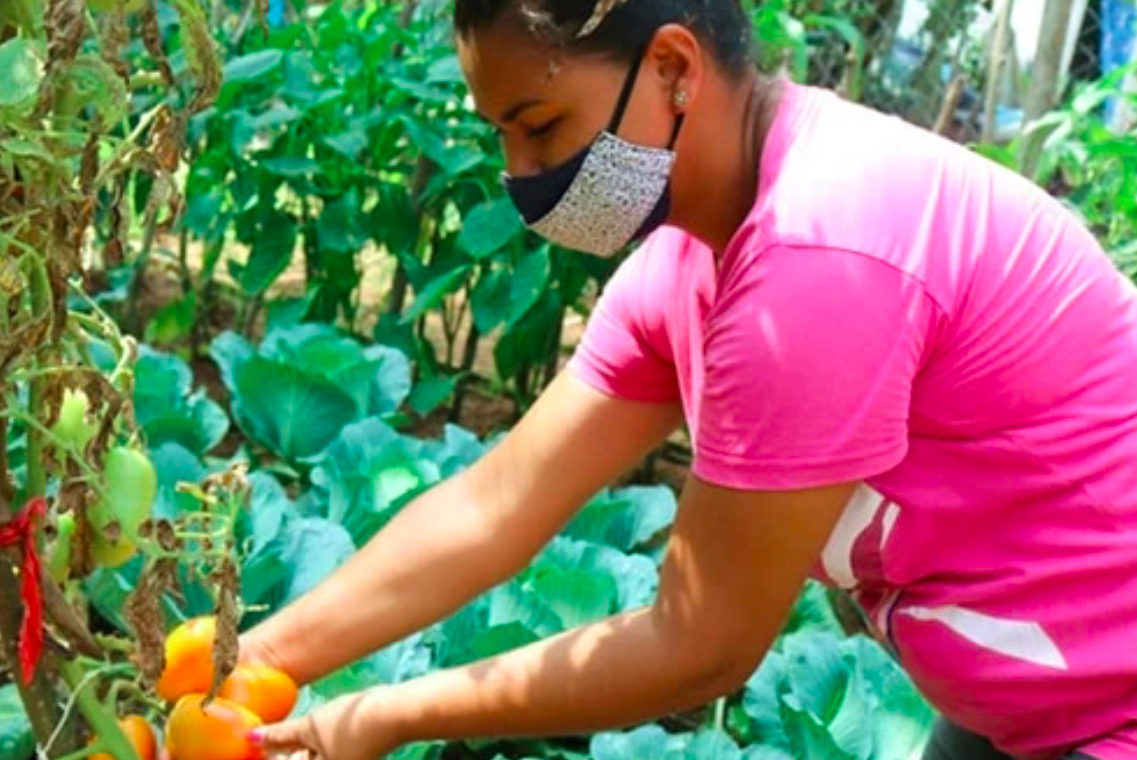
The program provides financial assistance for six years for each family. At that time, with the help of people who act as family guides, it seeks to facilitatethe fulfillment of co-responsibilities, create capacities for family and community work and achieve self-sufficiency, that is, that they do not depend on the State. The guides promote the installation of orchards among families who are dedicated to small-scale agriculture, but also in all those who have a space in which to cultivate even if they are not in the field.
The people who act as guides help to find the information and minimum training to produce fruits and vegetables. While highlighting the importance of incorporating these products into the diet.
TRAINING AND GUIDES
In 2020, when the economies had to close due to the pandemic, the installation of orchards was already consolidated and the Ministry of Social Development decided to seek financing to give them a greater boost and ensure food and some extra income for families in situations of extreme poverty.
This is how the Mi Huerta initiative was created, with the contribution of US$2,468,948 by the binational company (Paraguay-Brazil) Itaipú. Money that the United Nations Office for Project Services (UNOPS) received and managed for the purchase of tools, supplies and the payment of training that the Ministry of Social Development distributed and implemented in the territories.
In this way, 1,477 families —from 5 departments in southeastern Paraguay— who had already set up their gardens, began to receive wire, shade media, tools and seedlings —which, according to the project, ensure better production than seeds— in order to grow their gardens.
The requirements that they had to meet was to have a minimum land of 12 meters by 12 meters that could be used for the production of vegetables and drinking water for irrigation.
In turn, the program financed the training given by the Ministry of Agriculture and Livestock to the almost 800 people who act as guides. There they learned good practices in the production of organic gardens that they later transmitted to the families. For example, they developed a crop calendar, learned how to make compost, how to produce organic fertilizers and pesticides.
The bet was considered a success and in 2021 Mi Huerta was expanded to 13 departments and reached 5,776 families. UNOPS, which monitors the program, states that 90% of these orchards are producing.
At this time, the Ministry of Social Development awaits the approval of a new financing from Itaipu, with which it plans to incorporate more families into the project during 2022.
Thinking that the program can be replicated in other places, the ministry highlights the importance of accompanying the guides to constantly provide guidance and improve the entire family habitat, from the quality of the food they consume to the related habits. with health.
In the case of the Tekoporã Program, each guide serves about 130 families. However, there is not the necessary amount at the country level for the accompaniment of protected homes. For 2022, the Ministry requested the expansion of the budget for the hiring of more guides, but the proposal was denied.
Regarding the impact of the gardens on the economy of the families, the minister specified that “a family that has been working a garden since 2020 may have raised about US$1,000 by selling the surplus production at fairs.”
Key Facts
— Deep Dive
— For the complete picture, read our in-depth guide: Paraguay: Washington's Most Valued Ally in Latin America
More: Paraguay news in English, every day from The Rio Times.
Editorial responsibility: Matthias Camenzind, Editor-in-Chief · Editorial standards · Report an error