RIO DE JANEIRO, BRAZIL – It’s mid-springtime in Brazil, and people have already started thinking of what their next summer destination is going to be. With Covid-19 infection rates decreasing across the country, and the vast majority of residents vaccinated with at least one dose, the national tourism sector catches its breath again.
When it gets time to choose the summer destination, beach places in the Northeast (like Bahia and Pernambuco) are usually the first to come to mind. No wonder, some of the most famous Northeast beaches not only get crowded in high season but are also pretty expensive to stay in.
Thinking of that, we have selected beaches in a region that is often overlooked by tourists during summertime: the Brazilian South. Commonly associated with cold temperatures and wintertime, the region is also home to stunning beach cities that are not only worth a visit, but can be a good alternative to the Northeast and the Southeast. Check below:
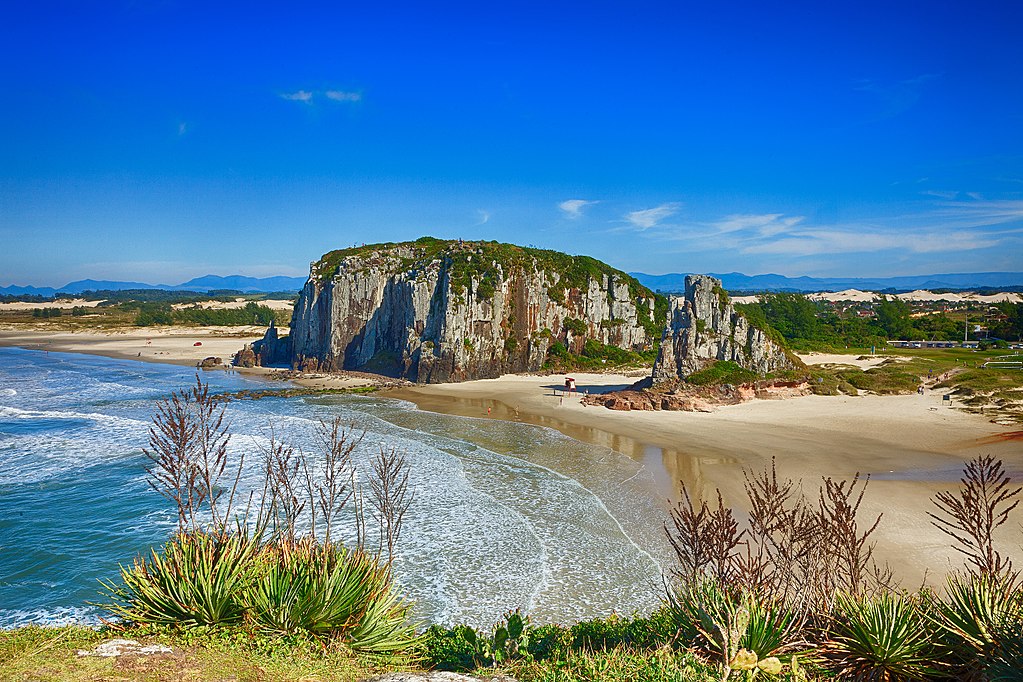
1) Torres – Located in Rio Grande do Sul, not far from the border with Santa Catarina, Torres is widely considered the most beautiful of the “gaúcha” beaches. With a highly preserved nature, the city is increasingly attracting Uruguayans and Argentineans. Torres’ coast is composed of five beaches: Itapeva, Guarita, Praia Grande, and Molhes. The first two are located in a well-preserved park called Parque da Guarita.
2) Ilha do Mel – A sweet escape from the hectic big city life – no wonder Ilha do Mel translates as “Honey Island”. The island is not far from Paraná’s capital, Curitiba, and turns out to be one of the most popular beach destinations among Curitiba residents. Around 90% of the island’s nature remains intact, composed of 25 breathtaking beaches. Praia de Fora, Praia de Encantadas, and Praia do Miguel are among the most famous.
3) Ilha do Cardoso – While Ilha do Cardoso is located in São Paulo (Brazil’s Southeast), the list could not go without mentioning this island. First, it is located in the very South of São Paulo, basically on the border with Paraná State. Secondly, the fact that Cardoso’s island is home to an impressive colony of dolphins – it’s almost impossible not to spot at least a dozen – makes it a must-visit place.
4) Praia do Cassino – Those looking for a different beach experience in Rio Grande do Sul should head to Praia do Cassino, the longest beach in Brazil, 200 kilometers from end to end. Although little-heard-of, the beach lying in between the cities of Rio Grande and Santa Vitória do Palmar has been a coastal watering hole for at least 100 years.
5) Capão da Canoa – Another important coast city in Rio Grande do Sul is Capão da Canoa. A city of strong Italian and German influence, Capão da Canoa has beach options for all tastes. One of them is Atlântida, offering good infrastructure, bars, restaurants, and excellent waves for surf lovers. Another famous one is Xangri-lá, offering more of a chilled vibe.
6) Superaguí – Unknown even among Paraná residents, the island is located around 200 kilometers away from Curitiba. If you want to run away from crowded beaches in the summertime, Superaguí is the perfect place to be. What’s more, it has campsites, lodgings, and restaurants. The island makes part of the Superagui Park, a UNESCO Natural Heritage Site since 1999.
7) Barra do Camacho – Santa Catarina is known for having the most impressive coast of Brazil’s South, and Barra do Camacho illustrates that well. Located in the municipality of Jaguaruna, Barra do Camacho is the spillway of the Congonhas river. Calm, crystal-clear waters await you in this Santa Catarina paradise.
8) Praia do Rosa – A hit in Santa Catarina, Praia do Rosa is part of the municipality of Imbituba. Its coastal vegetation is entirely preserved, and its waters, incredibly clean. Rosa is usually a favorite for those into surf, windsurf, and sailing.
9) Ilha do Campeche – It is easy to feel like in the Caribbean at Campeche, an island of light blue waters in Florianópolis, Santa Catarina’s capital. No wonder, Ilha do Campeche is the only one considered a National Archeological and Scenic Heritage in Brazil.
More: Brazil news in English, every day from The Rio Times.
Editorial responsibility: Matthias Camenzind, Editor-in-Chief · Editorial standards · Report an error