Brazil has a vast territory and diverse climatic and soil characteristics.
For this reason, Brazil is considered one of the world’s greatest agricultural powers, as hardly any food not adapts to the country’s great geographical diversity.
So why shouldn’t Brazil’s geography be suitable for wine production?

Viticulture is still very young in the country but has provided incredible surprises in the market for this beverage.
To learn more about wine production in Brazil, you should familiarize yourself with the grape varieties adapted to the terroirs.
RIESLING AND MERLOT: THE FIRST GRAPE VARIETIES
The first grape varieties in Brazil were the traditional Riesling and Merlot, which adapted easily to the country’s still little explored terroir.
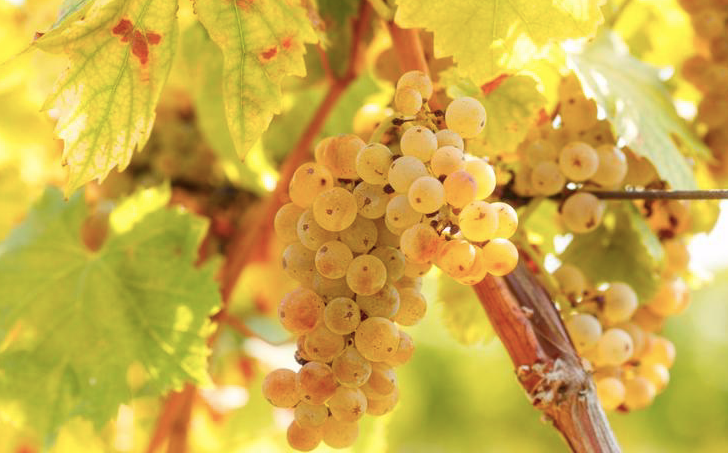
They were responsible for producing varietal wines for much of the 20th century, but in a simple way and with little investment in quality.
Today, Merlot is a grape variety representing the country’s only region that has obtained the classification of Denomination of Origin (DOC).
Vale dos Vinhedos is home to Merlot, which has adapted well to the terroir, allowing the production of elegant red wines with the rigor and characteristics of the French style.
SYRAH: THE GRAPE VARIETY OF THE NORTHEAST
The arrival of Syrah in Brazil allowed the exploration of a terroir always ignored by wine producers: the Northeast.
Due to high temperatures, low rainfall, and intense sunlight, the region seemed unsuitable for viticulture.
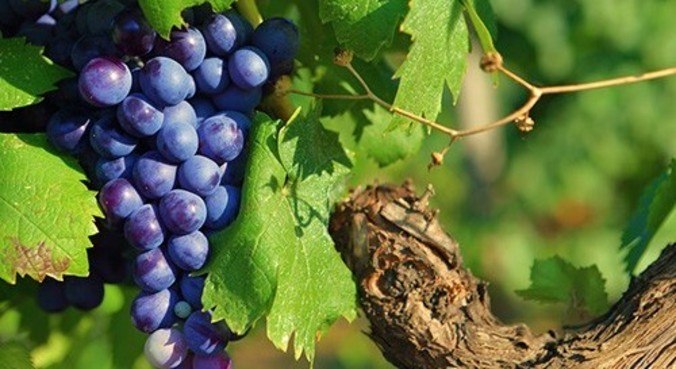
However, Syrah is a grape variety that likes exactly these characteristics – lots of sun and heat.
The terroir characteristics of the Northeast allowed the variety to produce high-quality wines in the region, which became the country’s home of this grape variety.
In addition, Moscato and Chenin Blanc have also adapted to the extreme climate there.
TANNAT AND CABERNET SAUVIGNON: GOOD RESULTS IN THE SOUTH OF THE COUNTRY
The south of the country is a region known for its wine production.
Its terroir is similar to other wine-producing countries and has always been more attractive to those wanting to grow wines here.
For example, the Tannat, the symbol of Uruguayan wine production, also produces good wines on the border between Brazil and Uruguay.

There, winters are long, and summers are hot, characteristics that this variety loves.
The difference is that the Brazilian tannates are more delicate and contain fewer tannins than the Uruguayan ones.
Cabernet Sauvignon, on the other hand, develops better in the extreme south of Rio Grande do Sul (Serra and Campanha Gaúcha), as it requires drier summers and little rain.
Grape varieties such as Cabernet Franc, Touriga Nacional, and Alvarinho have also adapted to some regions.
PRODUCTION OF PRESTIGIOUS SPARKLING WINES IN THE SOUTH
If a wine production in Brazil is already awarded and admired in different parts of the world, it is the production of sparkling wines.

The different microclimates in the country’s south have allowed white grapes, which thrive at lower temperatures, to find very productive soils to develop new flavors.
This is why grapes such as Chardonnay, Pinot Noir, and Sauvignon Blanc develop so well in the Rio Grande do Sul terroir.
On the border of this state with Santa Catarina, the cultivation of these grape varieties is also responsible for excellent varieties.
Specifically, in the Farroupilha region, Brazil has one of its most admired vineyards in the world: the Moscato grape.
This variety has grown in the region for more than 100 years and is responsible for producing several award-winning labels.
Even knowing the grapes grown in Brazil and their best terroirs, it is important to remember that the above information does not represent immutable rules for beverage production in Brazil.
There will always be exceptions to these rules in a country with such a young wine industry and wide varieties of new terroirs.
And that is why winemaking in Brazil is a pleasant challenge for many wine experts.
More: Brazil news in English, every day from The Rio Times.
This article was produced by The Rio Times’ automated newsroom system. How we use AI · Report an error · Editorial responsibility: Matthias Camenzind, Editor-in-Chief