What and how many fighter planes does Brazil have to attack and defend itself?
RIO DE JANEIRO, BRAZIL – Brazil has a large fleet of aircraft that can be used in the event of war, if necessary. There are planes, helicopters, and drones that can be used both to defend the national territory and in the event of an attack.
According to a yearbook published by Flight Global magazine, the country’s fleet of all military aircraft totals 679, not including drones.
This number is well below the world’s largest fleet of 13,246 aircraft in the United States and puts Brazil in 16th place in the world, behind countries such as the two Koreas, France, Turkey, and the United Kingdom.
In this report, we will only talk about the aircraft of the FAB (Brazilian Air Force), which has the largest fleet in the country and Latin America, with 524 aircraft. The Navy and the Army also have airplanes, helicopters, and drones, but in much smaller numbers.

The Navy has 64 aircraft, most of which are helicopters, identical to those of the Brazilian Air Force. The Army, on the other hand, has no aircraft, but 91 helicopters and drones.
See the percentage of each armed force in the country’s military fleet:
- FAB: 77%
- Army: 13
- Navy: 9%
AVIATION TYPES
The Brazilian Air Force has different types of aircraft (not only fighters), which have different characteristics depending on their purpose. They are:
- Fighter
- Rotor wing
- Patrol
- Reconnaissance
- Transport
- Special transport
- Instruction
- Flight inspection
Not all aircraft are used directly in combat, but all have their importance in maintaining the full operational capability of the armed forces.
Learn more about each type of aviation below.
FIGHTER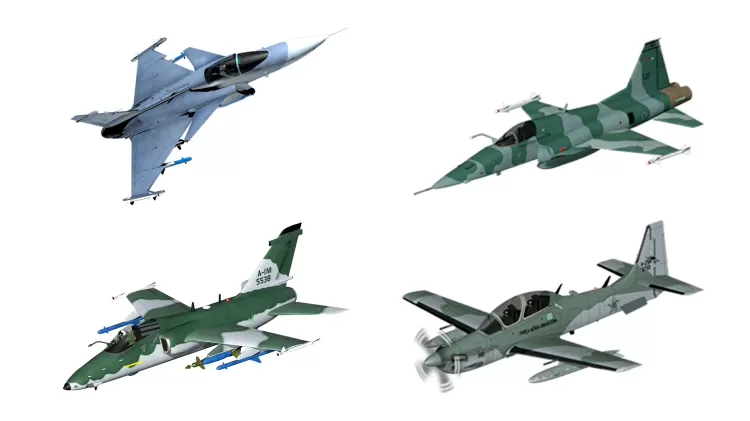
These aircraft are used to attack other aircraft and ground facilities and to support troops. Brazil currently has just over 120 fighter and combat aircraft, ranging from older models to the newest, the F-39 Gripen.
Aircraft: F-39 Gripen E/F, F-5M Tiger, A-1 AMX and A-29 Super Tucano.
ROTORCRAFT
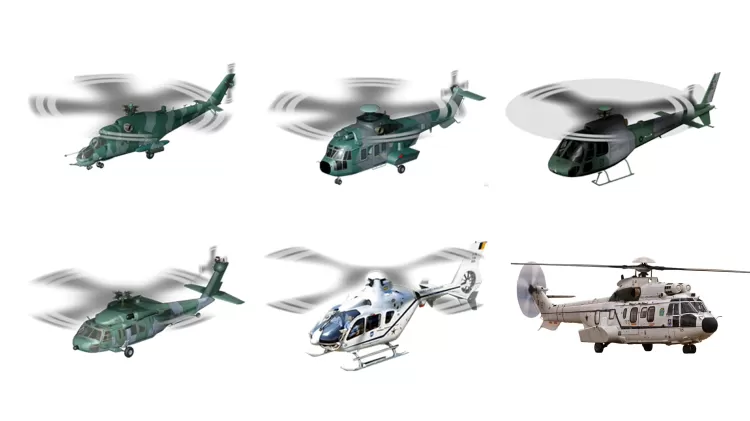
Rotary-wing aviation consists of helicopters that operate in multiple squadrons. These are models with attack, search and rescue, transport, combat, and other mission capabilities.
Aircraft: helicopters AH-2 Sabre, H-36 Caracal, H-50 Esquilo, H-60 Black Hawk, VH-35 and VH-36 Caracal (the last two are used for government transport).
PATROL
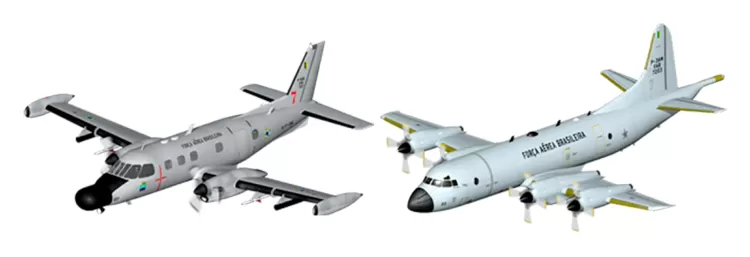
Patrol aviation is primarily responsible for surveillance of the Brazilian maritime area. The aircraft consists of civilian models adapted to be able to monitor the part of the ocean under the country’s responsibility and the adjacent areas.
Some of these aircraft are equipped to attack submarines and have sensors so sensitive that they can even hear crabs, dolphins, and whales.
Aircraft: P-3AM Orion and P-95 Bandeirulha (Bandeirante Patrol Aircraft).
RECONNAISSANCE
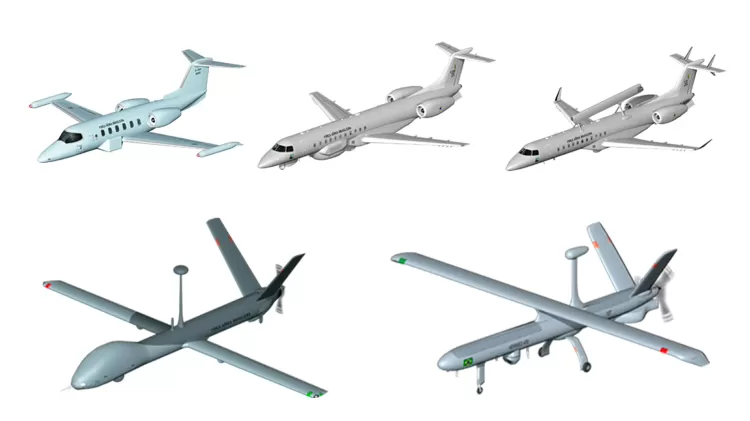
Reconnaissance aviation is one of the most important defense forces in the country. Among other things, it is responsible for identifying threats in border regions, such as unidentified aircraft.
It also investigates possible illegal operations on the ground and collects intelligence data for further action. In addition to aircraft, the reconnaissance squadrons also use drones, also known as ARP (Remotely Piloted Aircraft) or Vant (Unmanned Aerial Vehicle).
Aircraft: R-35 AM, R-99, and E-99 aircraft and the RQ 900 and RQ 450 drones.
TRANSPORT
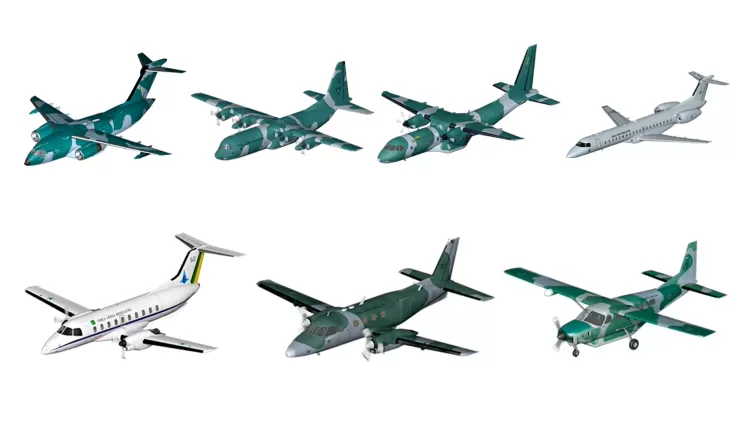
Transport – Assembly/UOL with pictures from FAB – Assembly/UOL with pictures from FAB
Transport aviation is one of those that has more tasks to perform in the daily life of aviation. According to the agency, it is responsible for the implementation:
Aeroterrestrial attack (including dropping paratroopers to battle sites).
Search and rescue
Aeromedical evacuation
Aerial exfiltration and infiltration (i.e., moving military personnel or civilians to and from specific areas, as the armed forces did in the rescue of Brumadinho victims)
In-flight refueling
Logistical air transport
In-flight firefighting
Aircraft: KC-390, C-130 Hercules, C-105 Amazonas, C-99, C-97 Brasilia, C-95M Bandeirante and C-98 Caravan.
SPECIAL TRANSPORT
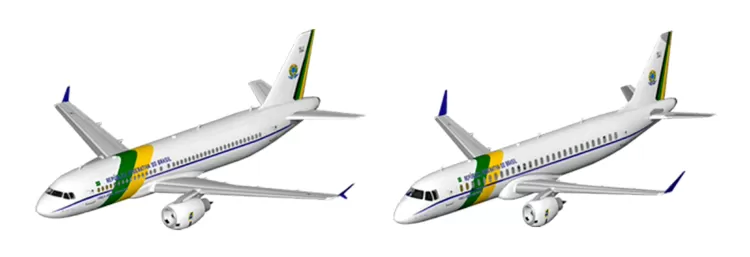
These are aircraft used to transport domestic and foreign authorities, such as the President of the Republic and leading politicians of other countries. The VC-1 is an Airbus A319 converted for presidential transport and christened Santos Dumont.
The VC-2 is the Embraer E190 model, which is more frequently used for domestic flights and for transporting ministers and other authorities.
Aircraft: VC-1 and VC-2
INSTRUCTION
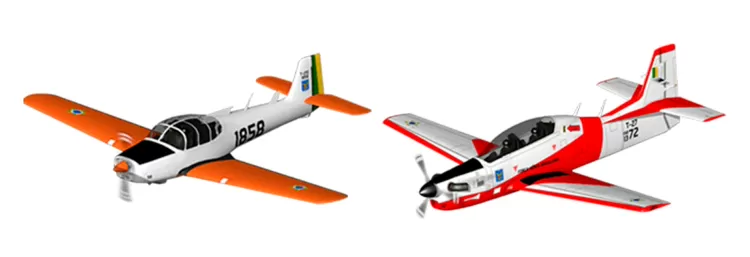
These are the first aircraft that future aviators will come into contact with during their training, which will initially take place at the Air Force Academy in Pirassununga (SP). They are not designed for combat use, but are primarily used to teach flying techniques to military personnel in the early years of their careers.
Aircraft: T-25 Universal and T-27 Tucano
IN-FLIGHT CONTROL
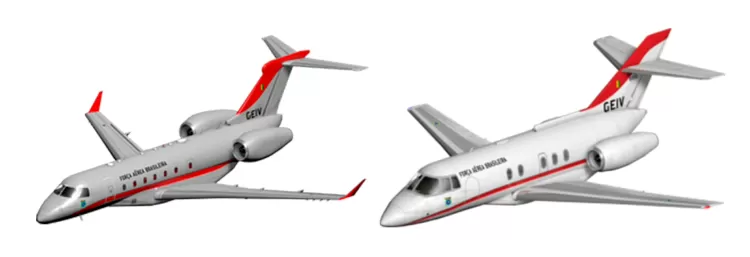
These aircraft have onboard laboratories to ensure that all flight aids are properly calibrated and functioning so that all aircraft, not just military, can land, take off and navigate safely.
For example, they are used to check the accuracy of radar systems, approach systems, radios, navigational aids, guidance lights, etc., that enable the crew to fly properly.
Aircraft: IU-50 and IU-93A
ONLY BEHIND THE U.S. ON THE CONTINENT
According to a ranking prepared by the publication GlobalFirepower, Brazil has the second largest fleet on the continent, after the United States. See the number of military aircraft deployed in the continent’s main countries (drones are not included):
- United States – 13,247 units
- Brazil – 679 units
- Mexico – 469 units
- Colombia – 454 units
- Canada – 380 units
- Chile – 290 units
- Venezuela – 256 units
- Peru – 243 units
- Argentina – 218 units
- Ecuador – 113 units
- Cuba – 80 units
- Bolivia – 63 units
- Uruguay – 50 units
With information from UOL
More: Brazil news in English, every day from The Rio Times.
This article was produced by The Rio Times’ automated newsroom system. How we use AI · Report an error · Editorial responsibility: Matthias Camenzind, Editor-in-Chief
Read More from The Rio Times