Venezuela Bets On More Gold To Refill Its Dollar Pipeline
Key Points
- Delcy Rodríguez says Venezuela will raise gold output by 30% in 2026 to generate foreign currency.
- Sanctions, secrecy, and rights abuses complicate any mining expansion, even if the volumes are globally small.
- The plan lands amid U.S. leverage over Venezuela’s oil trade, deportation flights, and a tense domestic power struggle.
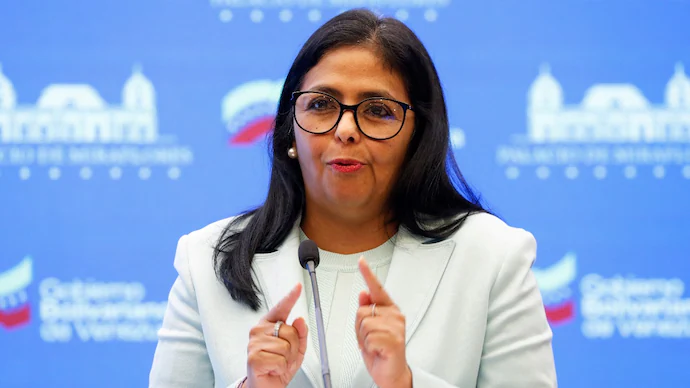
Venezuela’s acting president, Delcy Rodríguez, has promised a sharp increase in gold production as the government hunts for scarce hard currency.
She says the country produced 9.5 metric tons in 2025 and wants to lift output by 30% in 2026, framing gold as a way to fund external obligations and state priorities.
On paper, that target would take annual production to roughly 12.35 tons. At today’s spot prices, the metal value of that output could be in the low single-digit billions of dollars.
That is not the same as state revenue. It is a reminder of why gold remains tempting in cash squeezes. The announcement also revives an old problem: Venezuelan mining data has long been opaque.
Independent researchers and rights monitors have repeatedly described a sector shaped by informal control, violence, labor abuses, and severe environmental damage in the country’s south.
Any production surge raises questions about who benefits, who controls territory, and who pays the social cost. Sanctions add another layer. Washington has targeted Venezuela’s gold trade for years, including the state miner Minerven.
Venezuela gold fuels political leverage
In late 2023, the U.S. briefly allowed certain Minerven-linked transactions under a general license, aiming to pull activity away from black markets. That permission was later revoked and replaced with wind-down requirements, tightening the channel again.
Rodríguez is pitching a new mines-and-minerals law to attract international investment, while also citing higher iron, coal, and bauxite output. Yet the practical ceiling is clear.
Global gold mining runs into the thousands of tons each year, so Venezuela’s figures are small in market terms. The bigger story is political finance: gold can be sold quickly, shipped discreetly, and used as a pressure valve.
That pressure is rising after the January 3, 2026 U.S. operation that captured Nicolás Maduro and jolted Venezuela’s power structure.
The same week, the government highlighted ongoing deportation flights, while senior ruling-party figure Diosdado Cabello called for a January 23 mobilization and attacked the Catholic hierarchy.
Even abroad, Venezuela’s gold remains entangled in litigation, including a long-running dispute over bullion held at the Bank of England. In this environment, a “gold boom” sounds less like a growth plan and more like a scramble for room to maneuver.
Related coverage: Brazil’s Morning Call | Brazil’s Batista Family Eyes Venezuela’s Oil Reset as Washin This is part of The Rio Times’ daily coverage of Venezuela affairs and Latin American financial news.
More: Latin America news in English, every day from The Rio Times.
This article was produced by The Rio Times’ automated newsroom system. How we use AI · Report an error · Editorial responsibility: Matthias Camenzind, Editor-in-Chief
In depth