Uranium Found in DR Congo Cobalt Shipments to China, Report Says
DR Congo · MINING
Key Facts
—Uranium estimate: A peer-reviewed study estimates 2,000–5,000 tonnes of natural uranium left DR Congo embedded in cobalt hydroxide exports between 2000 and 2024.
—China’s refining share: China controls about 75% of global cobalt refining capacity, making it the dominant destination for Congolese cobalt.
—Government response: Kinshasa announced an investigation on 7 August 2026 and plans to install large radiation detectors for trucks carrying cobalt hydroxide.
—Company denial: The Union of Chinese-Capital Mining Companies in the DRC called the allegations “unfounded” and said no cobalt product had excessive uranium levels.
—Earlier incident: In April 2024, Zijin Mining disclosed above-normal radiation levels in a cobalt consignment from its COMMUS mine during a customs inspection in Botswana.
—Historical link: Katanga hosts Shinkolobwe, the mine that produced uranium used in the United States atomic bombs during World War II.
Uranium in DR Congo cobalt shipments to China may have totalled 2,000–5,000 tonnes between 2000 and 2024, according to a peer-reviewed study, triggering an official investigation in Kinshasa and sharpening scrutiny of Chinese-controlled mining operations.
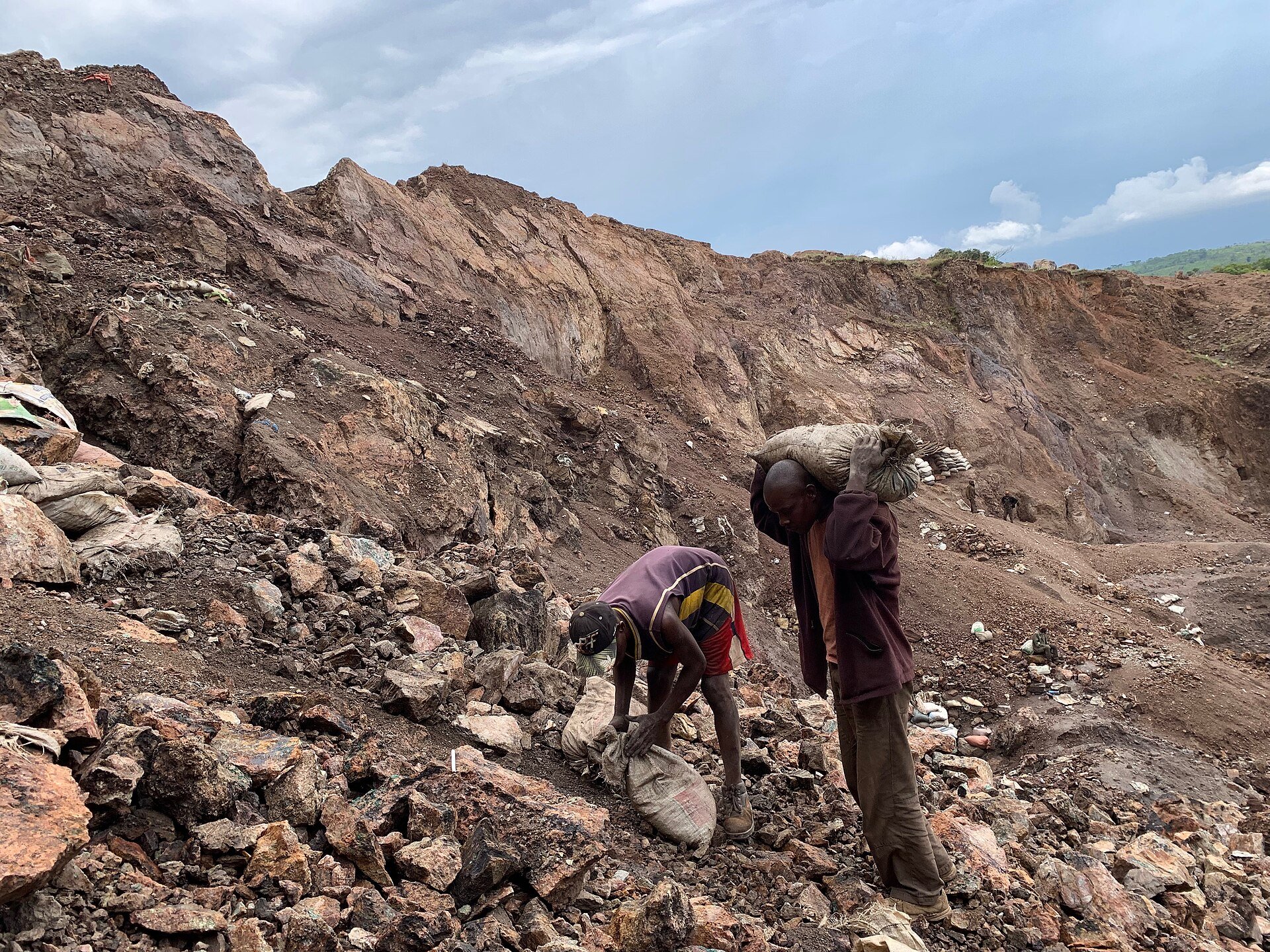
How uranium ended up in DR Congo cobalt exports
A paper by researchers Manzuk and Philippe, published on 30 July 2026 in Nature Communications, used historical rock samples from Belgium’s AfricaMuseum and mining data to model uranium levels in cobalt ores from Katanga in southeastern DR Congo. The study estimated that approximately 2,000–5,000 tonnes of natural uranium were likely shipped out of the country embedded in cobalt hydroxide exports between 2000 and 2024.
Most of that material went to China, where about 75% of global cobalt refining capacity is located. Even the lower estimate would be enough to fuel a 1-gigawatt nuclear reactor for at least a decade, or, if fully extracted and enriched, to produce on the order of hundreds of nuclear weapons, according to the joint investigation using the Nature article and additional calculations by the Financial Times and Lighthouse Reports.
The scientific findings were part of a wider investigation by Lighthouse Reports, the Financial Times and partners including Le Monde, publicised from 30 July 2026 onwards. The investigation drew on a confidential 2009 memo from the International Atomic Energy Agency (IAEA), which stated that uranium was present in “significant quantities” in most cobalt ores from Katanga and was “effectively exported as a cobalt by-product”.
What company documents reveal
Internal company documents from the Tenke Fungurume Mining (TFM) complex in Katanga, owned by Chinese group CMOC (China Molybdenum Co.), recorded uranium-rich cobalt samples, including a peak concentration of 1,100 parts per million in December 2016. That figure is roughly 15 times the export limit cited in the investigation.
Further documents indicated significant uranium concentrations still present in TFM cobalt output in June 2021. The investigation also found that a cobalt refinery in Kokkola, Finland had received Congolese material containing uranium, showing that the issue is not limited to China.
CMOC has denied that its cobalt ores contain excessive uranium, stating there were no instances where uranium concentrations exceeded legal limits. The company said it was unaware of the source of historical data used by researchers.
Kinshasa launches an official investigation
On 7 August 2026, DR Congo’s government announced it would investigate reports of uranium in its cobalt exports following the Nature Communications paper and media investigations. Officials emphasised that uranium’s presence in copper and cobalt veins in the southeast is “natural” and “well-documented”, insisting they had not violated international commitments.
Kinshasa announced comprehensive testing of cobalt hydroxide exports by national laboratories and at least one accredited international laboratory. The government also plans to install large radiation detectors for trucks carrying cobalt hydroxide out of the country, notably on the southern border into Zambia, replacing the current system of manual checks that officials concede does not cover every shipment.
Uranium mining is formally banned in DR Congo, and a 2002 mining-code amendment designates uranium as a restricted material requiring special handling and reporting. Beyond uranium, Kinshasa has tightened rules around cobalt itself, suspending cobalt exports in February 2025 and introducing a quota system in October 2025.
Chinese mining companies push back
On 5–6 August 2026, the Union of Chinese-Capital Mining Companies in the DRC (USMCC) issued a statement rejecting the allegations that Chinese-operated mines export cobalt containing excessive uranium, calling the claims “unfounded” and damaging to market confidence. USMCC said an “exhaustive verification” had found no cobalt product extracted, processed or exported by Chinese companies in southeastern DRC with excessive uranium levels.
The association acknowledged that cobalt hydroxide may contain very low, naturally occurring traces of uranium, but insisted concentrations are below levels that would make extraction technically or economically viable. USMCC pledged regular sampling and publication of quality-control findings, along with continued compliance with Congolese mining laws and “internationally recognised testing standards”.
Steve Muanza, head of DR Congo’s nuclear energy agency, told the Financial Times it was “technically possible” and even “probable” that Chinese companies were extracting uranium from cobalt ore exported from DR Congo, while stressing there was no direct evidence of such extraction inside China. Non-proliferation expert Olli Heinonen, former IAEA deputy director-general and now at the Stimson Center, described it as “plausible” that China could extract uranium from Congolese cobalt during the refining process.
A nuclear safeguards gap in critical minerals
The IAEA tracks uranium production worldwide, but DR Congo’s low-grade uranium-bearing cobalt exports do not require reporting when they are shipped for declared non-nuclear purposes, such as battery materials. Researchers and investigators argue the volumes of uranium embedded in cobalt exports are “beyond what is supposed to be declared to the IAEA”, raising concerns about oversight limitations.
Uranium in crude cobalt hydroxide must typically be removed during refining, particularly for high-purity battery applications. If removed, it can remain as a recoverable by-product in refineries, and experts say China could, in principle, extract uranium from these ores during refining, given known separation technologies.
The Katanga region hosts Shinkolobwe, the mine that produced uranium used in the United States atomic bombs in World War II. The recent investigations suggest China may have been tapping a similar geological resource indirectly through cobalt shipments for over two decades, a dynamic that fits the broader contest over African minerals covered in Africa: The New Scramble.
What to watch next
Kinshasa has said results from the comprehensive testing will be made public within about 60 days of the 7 August 2026 announcement. The government is also consulting with the IAEA on a possible technical support mission, which could bring international inspectors into the process.
The uranium issue adds a nuclear-safety dimension to what had primarily been an industrial-policy and revenue-sharing debate over cobalt. DR Congo is the world’s largest producer of cobalt, a critical metal used in lithium-ion batteries for electric vehicles and electronics, and China’s heavy reliance on Congolese cobalt makes it vulnerable to regulatory shocks, export bans, or geopolitical leverage from Kinshasa.
For Western governments and companies reliant on electric vehicle batteries, the findings provide an additional argument for stricter environmental, social and governance standards in supply-chain audits, alternative sourcing, and greater investment in African governance and transparency. The story also feeds into wider African debates about critical minerals as leverage in global climate-transition politics and the risk that African states become sites of externalised environmental and health costs for rich-country energy transitions.
Frequently Asked Questions
How much uranium was found in DR Congo cobalt shipments to China?
A peer-reviewed study estimates 2,000–5,000 tonnes of natural uranium were exported embedded in cobalt hydroxide between 2000 and 2024, mostly to China.
What has the DR Congo government done about the uranium findings?
Kinshasa announced an investigation on 7 August 2026, plans comprehensive testing of cobalt hydroxide exports, and will install large radiation detectors for trucks at border crossings.
Which Chinese mining companies are involved in the uranium controversy?
CMOC, which owns the Tenke Fungurume mine, and Zijin Mining, which operates the COMMUS mine, have both faced scrutiny over uranium in cobalt shipments from DR Congo.
Connected Coverage
This story sits within the broader contest over African minerals, Chinese investment and Western supply-chain security explored in Africa: The New Scramble.
Sources
This article was produced by The Rio Times’ automated newsroom system. How we use AI · Report an error
LatAm Markets: Live Signals → — real-time movers, turnover leaders and FX across Latin America.
Read More from The Rio Times