Unearthing Tension: The Sea Lion Oil Field and Falkland Disputes
In the chilly waters 250 kilometers north of the Falkland Islands, the Sea Lion oil field harbors a reservoir poised to redefine regional dynamics.
Discovered in 2010, this oil field, managed by Rockhopper Exploration and Navitas Petroleum, holds an estimated 712 million barrels of oil.
By 2024, decisions on investments will determine the commencement of production, potentially releasing up to 100,000 barrels each day.
The United Kingdom has initiated public consultations in the Falklands, an area under British rule since 1833 but claimed by Argentina.
This step aims to bolster the UK’s claim by legitimizing the oil field’s development. The project plans include drilling 23 wells, significantly altering the economic and environmental fabric of the area.
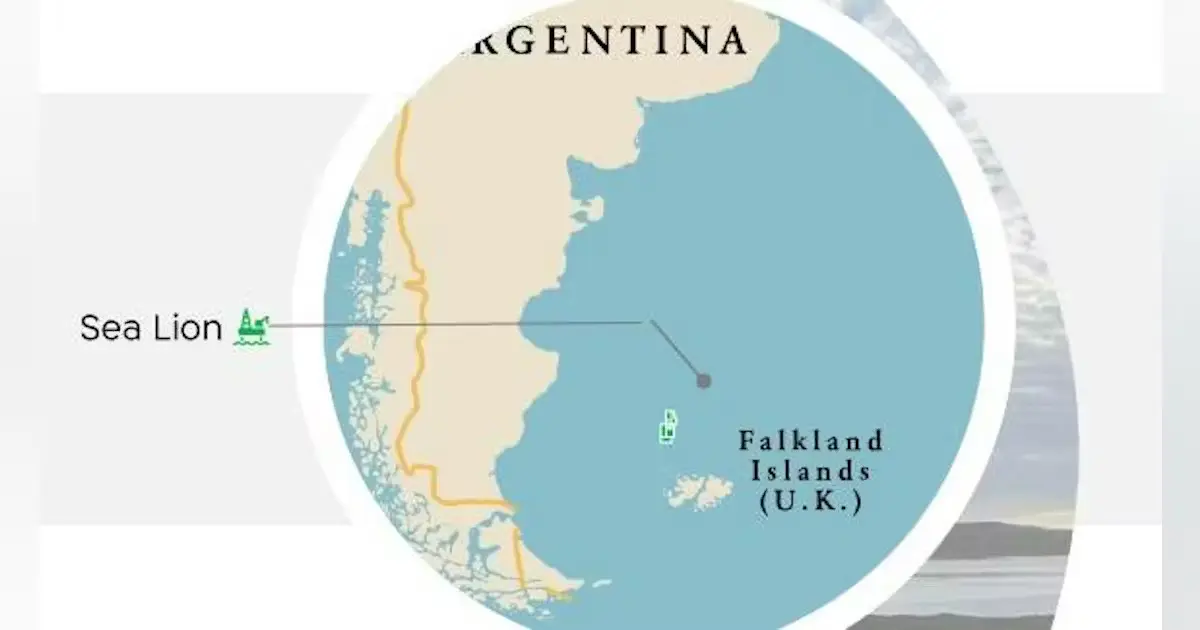
Navitas Petroleum’s leading role emphasizes the strategic weight of Sea Lion, linking it to broader international interests.
The project’s expansion is not just an economic venture; it also carries heavy environmental and diplomatic weight.
Current environmental impact assessments reflect growing ecological concerns.
Diplomatically, Argentine experts allege a violation of UN Resolution 3149, urging caution against altering the islands’ status.
Argentina disputes the oil drilling as illegal resource use in a contested maritime zone, perceiving it as a sovereignty threat.
This dispute is deeply rooted in the 1982 Falklands War, keeping a raw wound in Argentine memory. This scenario puts the Falklands at a key point, impacting locals and global stability.
More: Argentina news in English, every day from The Rio Times.
This article was produced by The Rio Times’ automated newsroom system. How we use AI · Report an error
Read More from The Rio Times