Trump Halts $1 Billion in Ukraine Aid While Europe Pushes for Military Expansion
President Donald Trump has suspended all U.S. military aid to Ukraine, halting over $1 billion in arms and equipment.
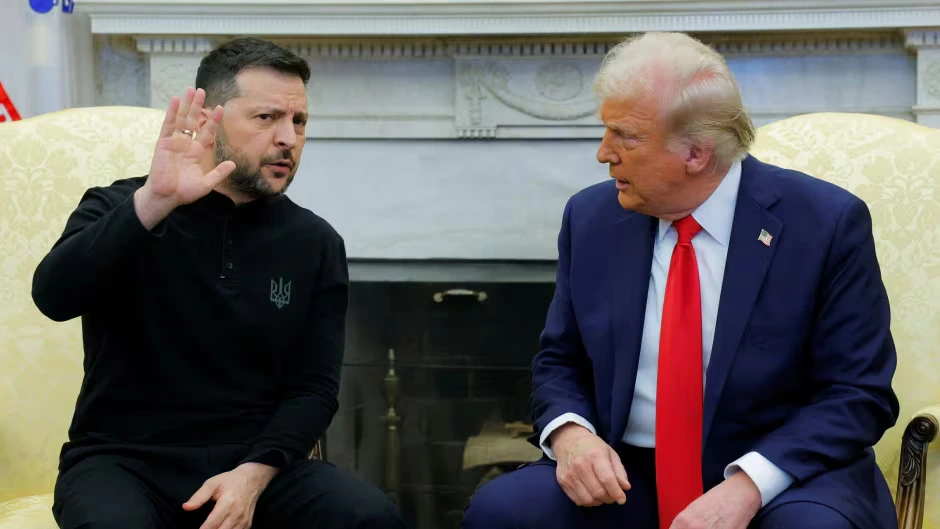
This decision, confirmed by White House officials, follows a tense Oval Office meeting where Trump criticized Ukrainian President Volodymyr Zelensky for insufficient gratitude and questioned Kyiv’s commitment to peace talks with Russia.
The freeze, framed as a temporary pause, has sparked concerns about Ukraine’s ability to defend itself against Russian aggression. While the U.S. reassesses its role, European nations are intensifying their military involvement in Ukraine, raising questions about their motivations.
The United Kingdom recently committed $2 billion to bolster Ukraine’s air defenses, enabling Kyiv to purchase advanced lightweight multirole missiles from Thales, a Belfast-based defense manufacturer.
These weapons are designed to counter drones and missile attacks, signaling a significant escalation in Europe’s military contributions. Beyond financial aid, European leaders are quietly discussing plans to deploy up to 30,000 troops to Ukraine under the guise of ceasefire enforcement or peacekeeping missions.
France and the United Kingdom have taken the lead in these discussions, with French President Emmanuel Macron proposing a phased deployment of European forces.
Europe’s Growing Military Involvement in Ukraine
However, such plans face internal divisions within Europe, with countries like Poland and Germany cautious due to political concerns and fears of provoking Russia.
These proposals remain speculative, contingent on U.S. support and broader European consensus, with no formal deployment approved or scheduled. Critics argue that Europe’s actions reflect not just solidarity with Ukraine but also a strategy of militarization that risks prolonging the conflict.
The European Union has already allocated over €82 billion ($85 billion) in aid to Ukraine since the war began, including funding for weapons and ammunition through the European Peace Facility.
This massive investment underscores Europe’s willingness to escalate rather than de-escalate tensions with Moscow. Observers warn that these moves could embolden Russian President Vladimir Putin while entrenching Europe deeper into a protracted conflict.
The deployment of European troops—if realized—would mark a historic shift toward direct military involvement in Ukraine, raising the stakes for all parties involved. As the U.S. steps back, Europe’s increasingly aggressive posture highlights the growing divergence in Western strategies for addressing the war in Ukraine.
This article was produced by The Rio Times’ automated newsroom system. How we use AI · Report an error · Editorial responsibility: Matthias Camenzind, Editor-in-Chief
Read More from The Rio Times