Trinidad and Tobago Unemployment Rises to 5.4%, Inflation Low at 0.6%
TRINIDAD AND TOBAGO · ECONOMY
Key Facts
- —Jobs Unemployment reached 5.4% in the first quarter of 2026, up from 4.9% a year earlier, official CSO data cited by the central bank show.
- —Prices Headline inflation was 0.6% in July 2026, with food prices up 1.7% and core inflation at 0.2% (CSO, via the central bank).
- —The rate The Central Bank of Trinidad and Tobago kept its repo rate at 3.50% on 30 September 2026.
- —Credit Lending across the financial system grew 3.4% year on year in July 2026, down from 4.2% in March (central bank).
- —Next step The next rate announcement is scheduled for 23 December 2026.
Trinidad and Tobago unemployment climbed in early 2026 as the economy cooled, while prices stayed calm and interest rates did not move.
Trinidad and Tobago’s unemployment rate rose to 5.4% in the first quarter of 2026, up from 4.9% a year earlier. The central bank reported the figure on 30 September 2026, when it also kept its main interest rate at 3.50%.
A weaker start to the year for jobs
The figure comes from the Central Statistical Office (CSO), the country’s official statistics agency. The central bank cited it in its quarterly monetary policy announcement, the Trinidad Express reported.
Employment moved in different directions across sectors in the first quarter, the bank said. Its own supplementary indicators suggest that demand for workers kept softening through July 2026.
The rise follows a better end to 2025. Unemployment stood at 4.3% in the fourth quarter of 2025, down from 5.5% a year before, the bank said in June.
Prices stay calm while the world heats up
Headline inflation, the yearly rise in consumer prices, was 0.6% in July 2026, according to CSO data. Food prices rose 1.7%, while core inflation, which leaves out food, was 0.2%.
Inflation has moved within a narrow band this year. It stood at 0.7% in March and slid to 0.3% in May, before edging back up. Core inflation was 0.8% in May, the bank said in June.
That contrasts with the rest of the world. The bank said inflation abroad has risen because of geopolitical tensions, strong demand and unusual heat in farming regions.
Central banks in the United States, Japan and the euro area have raised their rates, the bank noted. The International Monetary Fund (IMF) expects global growth of 3.0% in 2026 and 3.4% in 2027.
Why the central bank held its rate
The repo rate is the rate at which the central bank lends to commercial banks, and it guides other borrowing costs. The Monetary Policy Committee (MPC), the bank’s rate-setting panel, kept it at 3.50%.
The committee weighed slower economic activity, weaker growth in private-sector credit and low inflation. It said global conditions remain highly uncertain and that it will act further if needed.
Excess liquidity is the cash banks hold beyond what they must keep. It stayed within a comfortable range from June to August, the bank said. Government spending added cash to the system, while sales of foreign currency to banks drained some of it.
Holding the rate while others raise theirs has a side effect. Three-month Treasury bills in Trinidad and Tobago yielded 0.91 percentage points less than US bills in August 2026, the bank said. At ten years, local government bonds still paid 1.57 points more than US Treasuries.
Energy and the wider economy
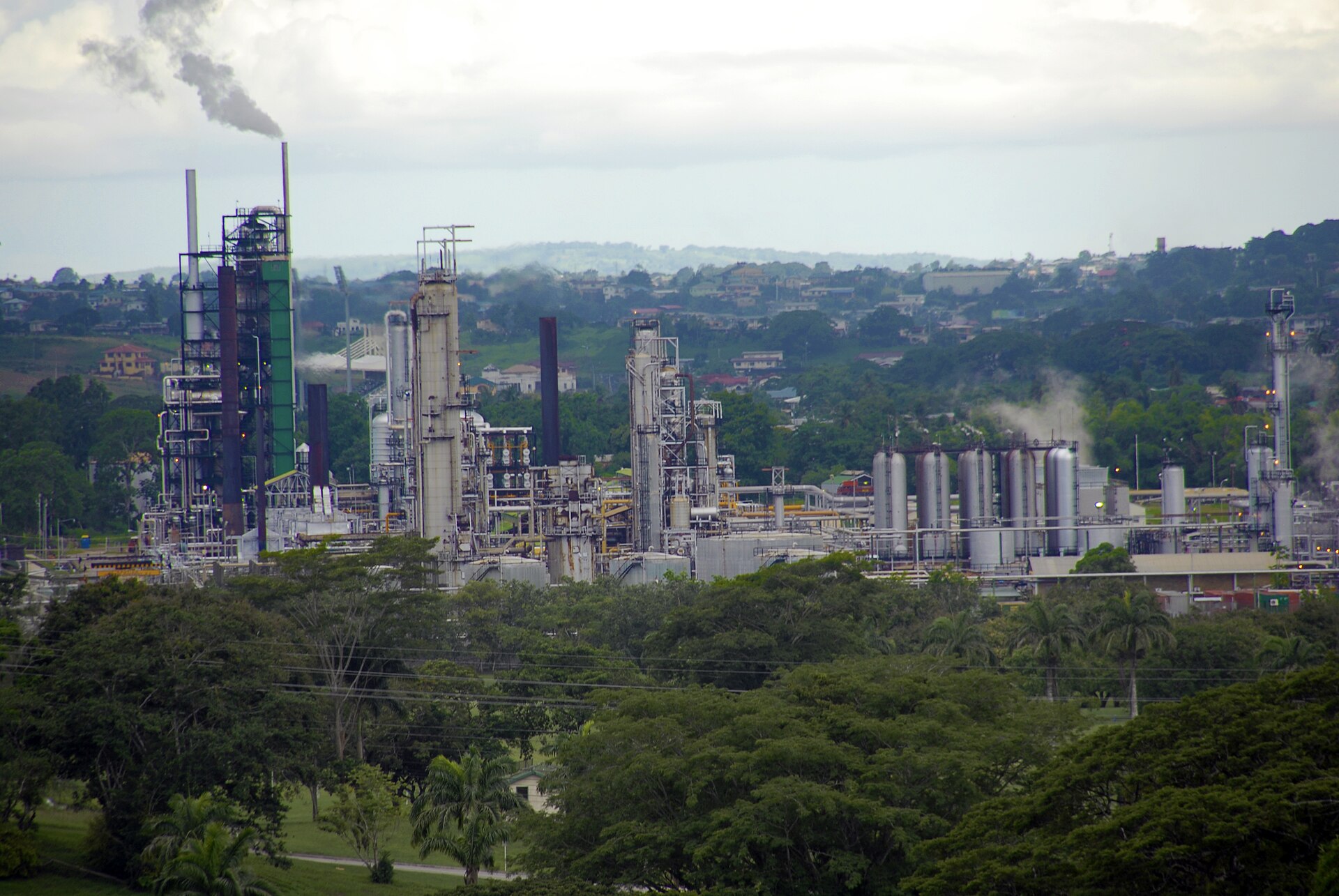
Trinidad and Tobago’s economy rests heavily on oil, natural gas and gas-based products such as methanol and ammonia. The central bank therefore tracks energy and non-energy activity separately.
In the fourth quarter of 2025 the non-energy economy grew 0.2%, while the energy sector shrank, CSO data show. Early indicators for the first quarter of 2026 point to slower construction and retail and wholesale trade.
Manufacturing grew 4.3% over the same period, the bank said. In energy, higher petroleum exports were offset by small declines in methanol, ammonia and natural gas output.
The bank expects the slowdown to ease as new oil and gas projects start producing. It also expects construction to pick up as government projects begin.

What it means for borrowers and households
Credit is still growing, but more slowly. Consumer lending rose 4.3% year on year in July 2026, down from 5.2% in March. Business lending growth fell from 3.7% to 0.6%.
Mortgage lending moved the other way, rising from 4.4% to 5.6% over the same months. The average rate on new mortgages climbed to 5.33% in June from 5.24% in the first quarter.
For residents and foreign workers, the picture is mixed. Prices are stable, but jobs are harder to find than a year ago, and borrowing for a home costs slightly more.
What comes next
The central bank’s next rate decision is due on 23 December 2026. The CSO has not published labour data for the second quarter of 2026.
If new oil and gas projects lift output as the bank expects, hiring could recover. In June, the bank said low inflation partly reflected a delay before higher world prices reach local shelves.
More: Trinidad and Tobago news, every day from The Rio Times.
Frequently Asked Questions
What is the unemployment rate in Trinidad and Tobago?
It was 5.4% in the first quarter of 2026, according to the Central Statistical Office. That compares with 4.9% in the first quarter of 2025 and 4.3% in the fourth quarter of 2025.
What is Trinidad and Tobago’s inflation rate?
Headline inflation was 0.6% in July 2026, with food inflation at 1.7% and core inflation at 0.2%. That is low compared with many advanced economies.
Did the central bank change interest rates?
No. The Central Bank of Trinidad and Tobago kept its repo rate at 3.50% on 30 September 2026. Its next announcement is scheduled for 23 December 2026.
Sources: Central Bank of Trinidad and Tobago · Central Bank of Trinidad and Tobago · Trinidad Express
This article was produced by The Rio Times’ automated newsroom system. How we use AI · Report an error
Read More from The Rio Times