Trafficking wild animals to China endangers Latin America’s endemic species
RIO DE JANEIRO, BRAZIL – China has become the largest importer and main market for endangered species, said Rodrigo Medellín Legorreta, researcher at the Institute of Ecology of the National Autonomous University of Mexico (UNAM).
The “illegal trade in wild animals and plants is the fourth largest illegal activity in the world,” after human, weapons and drug trafficking, he said.

According to the United Nations Development Program (UNDP), close to 7,000 animals and plants have been illegally traded worldwide. Among the most trafficked species are jaguars, gray wolves, turtles, axolotls, pangolins, birds, tigers and bears.
“Poaching to supply the illegal wildlife market is depleting the populations of many of Latin America’a endemic species,” says the organization.
With over 30% of the world’s species and three of the top five countries (Brazil, Colombia, and Mexico) with the most bird, amphibian, mammal, reptile, fish, and plant life, Latin America is a biodiversity powerhouse
For Medellín Legorreta, illegal wildlife trafficking has a direct and irreversible impact on ecosystems and becomes “a threat to the whole world, not only eroding biodiversity, but also the social fabric,” as this activity is handled by organized crime.
In China, in addition to the totoaba fish, “the mafia has expanded to cover the illegal trade of jaguar teeth, bones and claws,” which is severely affecting this species’ population in Mexico and other Latin American countries, he said.
According to the researcher, in Latin America organized crime has reached “poor communities that clearly need money,” and can offer “ten pesos for an eagle, a parakeet or an orchid, and that is very good money for them.”
Meanwhile, criminal groups are able to make substantial profits from the sale of the species on the national and international market.
Twelve years ago, organized crime in Mexico saw the opportunity to diversify its illegal activity. “With Felipe Calderón, the illegal wildlife trade skyrocketed and continues to grow in each administration,” because the SEMARNAT (Ministry of Environment and Natural Resources) and PROFEPA’s (Federal Attorney for Environmental Protection) resources “are small,” he said.
“They don’t have the manpower, they don’t have the budget, they don’t have the field presence and that leads to those who are dedicated to this illegal activity to feel completely unpunished,” he commented.
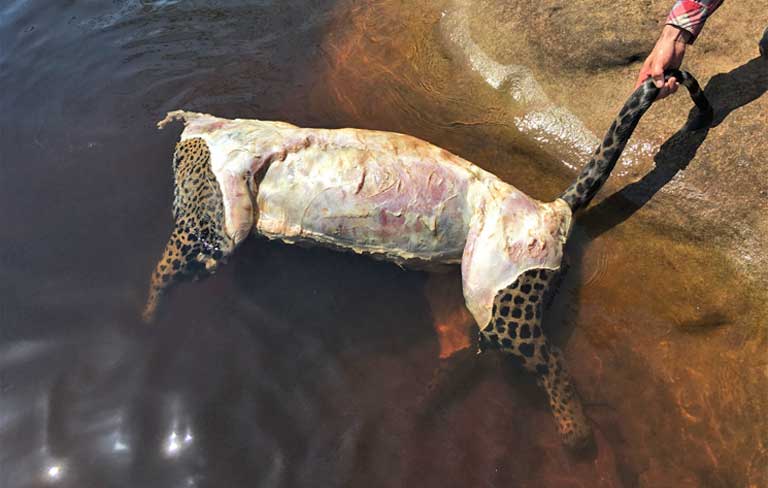
Jaguars and canines
Seizures of hundreds of jaguar heads and canines in Central and South America from 2014 to 2018 resulted in worldwide media coverage suggesting that wildlife traffickers are trading jaguar body parts as substitutes for tiger parts to satisfy the demand for traditional Asian medicine.
Specialists have compiled a data set of over 1000 seized wild cats (jaguar, puma and ocelot) from 19 Central and South American countries and China. They ran generalized additive mixed models to detect trends in wild‐cat seizures from 2012 to 2018 and assess the effects of socioeconomic factors of source countries and between those countries and China on the number of wild cats seized.
Jaguar seizures increased over time, and most of the seized jaguar pieces were teeth or claws (1991 of 2117). Around 34% (32 of 93) of the jaguar‐part seizure reports were linked with China, and these seizures contained 14‐fold more individuals than those intended for domestic markets. Source countries with relatively high levels of corruption and Chinese private investment and low income per capita had 10–50 times more jaguar seizures than the remaining sampled countries.
The number of Chinese residents in Central and South America was not significantly related to the number of jaguars seized. No socioeconomic factors influenced the seizures of puma and ocelots. Legal market chains may provide structure for the illegal chain; thus, the influx of illegal jaguar products is potentially a side effect of the economic partnership between Central and South American countries and China.

Poverty and high levels of corruption in the source countries may motivate local people to engage in illegal activities and contribute to the growth of this trade. Supply‐side interventions to curb this threat to Neotropical wild cats may include improved training for officials and promotion of governance and the value of protecting these animals to local people.
More: Brazil news in English, every day from The Rio Times.
This article was produced by The Rio Times’ automated newsroom system. How we use AI · Report an error · Editorial responsibility: Matthias Camenzind, Editor-in-Chief