The never-ending story: a high-speed train between Rio de Janeiro and São Paulo
Once upon a time, a high-speed train connected Rio de Janeiro and São Paulo, covering the 500-kilometer distance in less than two hours.
The line was to be completed for the 2014 World Cup and serve as a showcase for the power of Brazil, whose economy was growing at the speed of a locomotive.
Thus began a story that, after several failed attempts, is now just a pipe dream.
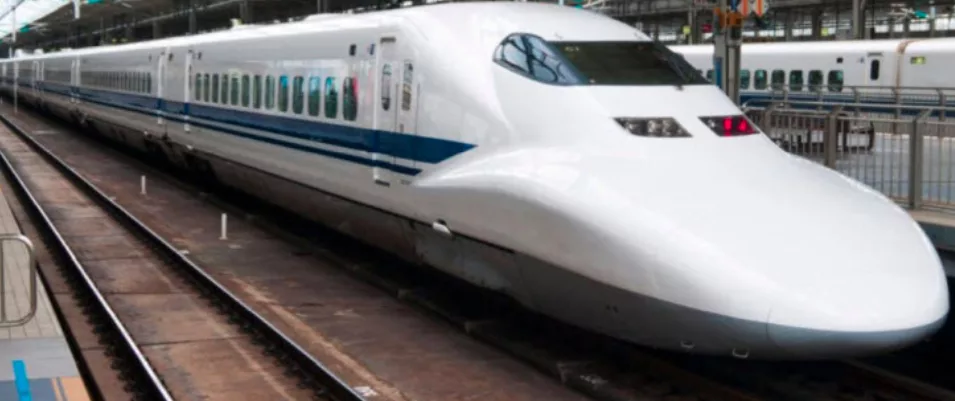
The dreamed-of project was tentatively revived in recent days, however, when the state-run National Regulatory Authority for the Ground Transportation Sector (ANTT) granted the private company TAV Brasil permission to take up the high-speed train idea.
It would be the first in Latin America.
The project’s origin dates back to 2009, the second term of Luiz Inácio Lula da Silva.
Then Interior Minister Dilma Rousseff spearheaded the promise, which was to become a reality for the 2014 World Cup.
It was then postponed until the 2016 Rio Olympics.
It was expected to carry 18 million passengers a year, but not a single kilometer of track had been built when the athletes arrived.
The original cost, estimated at R$22 billion (more than US$4.2 billion today), quickly rose to R$34.6 billion.
Some foreign companies, such as Italy’s AlsaldoBrena and China Railways, approached Brazilian authorities but promptly gave up.
Doubts about the project’s viability eventually weighed heavily.
The project was shelved, but it was still not in vain.
In those years, a public company was created that resisted until recently.
The preliminary studies cost the public coffers R$29 million, according to the Court of Audit, which warned in 2021 that if the government wanted to restart the train, it would have to start everything from scratch since the budget appropriations had already expired with so much delay.
After several years of hearing nothing of this inconvenient, frustrating dream, the high-speed train is now making a tentative comeback, thanks to the company TAV Brasil.
Its CEO, Bernardo Figueiredo, recently told the local press that there would be no government involvement this time.
Figueiredo is considered a big enthusiast of the high-speed train, as he was president of the national transport authority when the idea was floated in the government.
The plan calls for the line, already promoted by the private sector, to be 380 kilometers long, with trains traveling 350 kilometers per hour to connect the two cities in one hour and 30 minutes.
The first passengers could use the line in June 2032.
By then, R$50 billion would have to be spent.
TAV Brasil, set up specifically to revive the train and has a share capital of just R$100,000, says it is in talks with national and international investors.
However, financing a project of this scale without public funds is a major challenge.
Frustrated with the past, the government is distancing itself from the revived rail dream.
Last week, the new president of state-owned Infra S.A., Jorge Bastos, clarified, “We have no interest in participating in this project. It is not one of our priorities. It is a private permit; they will take care of it.”
And even the experts are not all in favor of the project.
For Cláudio Robert Pierini, a doctor of urban planning at the Federal University of São Carlos, we must wait for the financing rounds.
“Maybe they have realized that there is a pent-up demand.”
Currently, the commute between Rio and São Paulo is one of the busiest in the world, and for more modest budgets, buses connect the two cities in about six hours, with only ten-minute headways during rush hour.
Competing with this scenario will be very difficult, says Pierini, who cites major technical obstacles and high, unaffordable prices for the average Brazilian.
The Serra do Mar mountain range brings environmental constraints and would require the construction of tunnels and viaducts, making the project enormously more expensive.
Some solutions to long-standing problems also limp along.
The old project envisioned no fewer than eight stops (two in Campinas, one in São Paulo, one at Guarulhos International Airport, one in São José dos Campos, one between Barra Mansa and Volta Redonda, and two in Rio de Janeiro; one in the center and one at the airport).
This large number of stations, the result of the classic struggle of local authorities to modernize on their doorstep, affected speed and competitiveness.
Now only two are planned: Rio and São Paulo.
The branch line connecting the capital São Paulo with Campinas will also be discontinued, but even this solution is unsatisfactory.
To reduce costs, the two stations would be built on the outskirts of the two cities.
In Rio, for example, the station for the high-speed train would be located in the Santa Cruz district, where the city ends to the west, 66 kilometers from the center, which means two hours of congestion.
“Urban lines are more expensive because they require tunnels and limit speeds, but moving stations to the periphery doesn’t solve the problem. Passengers then have to cross the city in the middle of traffic,” reminds the expert.
In his opinion, using the current disused rail network to operate regional trains, not necessarily high-speed trains, would make more sense.
“It would be cheaper to use the existing trains, but the impact would not be as great. There’s also a certain mystique in people’s minds. Maybe they’ll get a feasibility study and find out it’s doable, but I’d like to see how,” he says, somewhat incredulously.
More: Brazil news in English, every day from The Rio Times.
Editorial responsibility: Matthias Camenzind, Editor-in-Chief · Editorial standards · Report an error