The Country That Discovered How to Grow During the Pandemic: Sell Citizenship
RIO DE JANEIRO, BRAZIL – With more or less coronavirus cases, with high or low mortality rates, virtually every country in the world is suffering the devastating economic consequences of the measures taken to stop the spread of COVID-19. Even those that imposed mild restrictions, given that the blow to international trade was too severe.
If the impact of the pandemic is added to the damage caused by a natural disaster, a total economic collapse can only be expected. However, there is an archipelago in the Pacific Ocean that, despite the coronavirus and the destruction caused by the second-worst cyclone in its history, closed the mid-year accounts in the black rather than the red.
It is very possible that the collapse of international tourism and the economic downturn will make Vanuatu end 2020 in recession, but the state is enjoying an unexpected fiscal surplus, which in the first semester of the year reached US$33.3 million (R$167 million). This figure is even more difficult to accept than a rise in GDP, because all governments in the world have suffered a marked deterioration in their finances due to the combination of a sharp drop in revenue with the need to increase spending to offset the impact of the pandemic.

What is Vanuatu’s secret? Its controversial citizenship sale program, from which it made US$62 million between January and June, 32 percent more than last year and nearly 80 percent of what it intended to generate in the whole of 2020. Ronald Warsal, head of the Citizenship Commission, told the Vanuatu Daily Post that in August they had exceeded US$84 million.
For US$130,000, anyone can obtain Vanuatu nationality and a Vanuatu passport without even setting foot in the country. It is an opportunity to set tax residence in a tax haven, which also allows access to the European Union without a visa.
“The sale of passports or citizenship has a long history in the Pacific region. Many island states developed different plans since the early 1980s. The main motivation is to generate revenue for the government, in contexts where other sources are limited. In Vanuatu, the sale of citizenship accounts for more than 30 percent of revenue, which has increased as the COVID-19 pandemic has impacted tourism and other activities,” explained Anna Dziedzic, a researcher at the Centre for Comparative and Public Law at the University of Hong Kong.
It is obviously a program that raises many internal and external discussions. Internally, many people see it as an affront that someone who doesn’t even know where the country lies is considered an almost equal citizenship. Others caution that Vanuatu may end up becoming a haven for escaped criminals. In Europe, people wonder if they should not be more restrictive about the admission of people with Vanuatu documentation.
“Citizenship is a sovereign prerogative and there is very little in international law that can impact it, particularly with regard to naturalization policy. Therefore, technically, countries can do whatever they want. Even if the European Commission does not like Malta’s or Cyprus’ citizenship by investment programs, it can do nothing directly about them. However, the EU could revoke visa-free access, for instance, which would discourage interest in Vanuatu’s citizenship. Such programs are a significant reputational risk for countries,” said Kristin Surak, a professor of politics at the School of Oriental and African Studies at the University of London.
Citizenship as a commodity
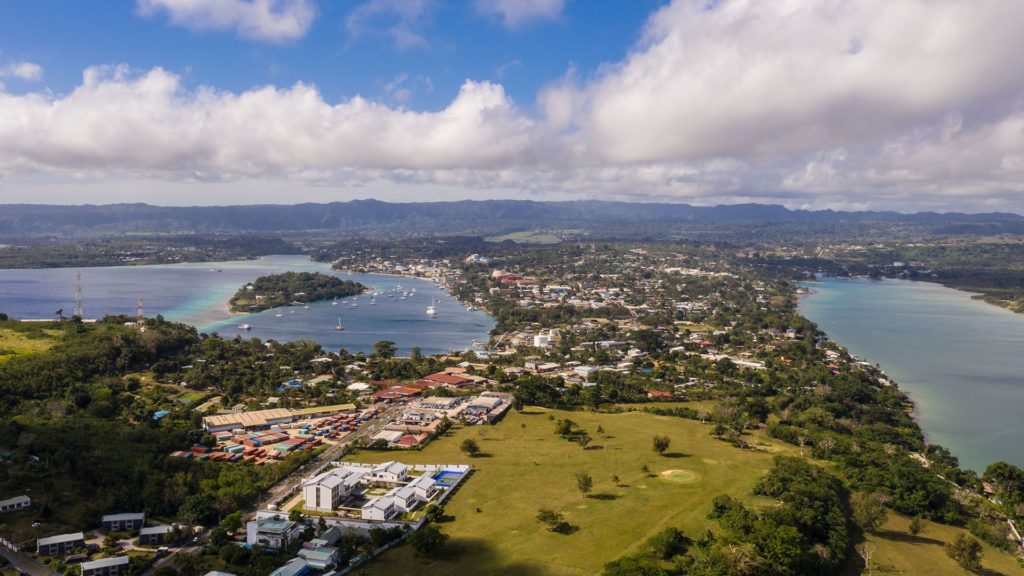
Vanuatu is an archipelago consisting of some 80 islands located in the South Pacific, 1,750 kilometers from the northeastern tip of Australia. For centuries it has been inhabited by communities of Melanesian origin that today are identified as Ni-Vanuatu. In the 17th century it was colonized by Spain, but at the end of the 19th century it fell into the hands of France and the United Kingdom, who administered it as a joint protectorate called New Hebrides until its independence in 1980.
Currently, it has a population of 292,000 inhabitants. It is a parliamentary republic that, although it has become accustomed to political instability, maintains a certain peaceful and democratic order. Like most island countries in the region, it has a relatively poor economy, with a per capita GDP of US$2,875 and a Human Development Index of 0.597 out of 1.00 (141st out of 189 countries).
The population has always lived from subsistence agriculture and, more recently, from income derived from tourism and financial services. The European Union includes it in its list of tax havens.
With its structural shortcomings, Vanuatu has to deal with the severity of its climate. In April, while the world was still trying to come to terms with the global reach of the coronavirus, Cyclone Harold, the first Category 5 storm so far this year, swept away seven of its islands. A third of the population was affected by the storm, which left much of the country without power and caused US$100 million in damage.
Five years earlier, the archipelago had faced Cyclone Pam, the worst in its history. In addition to the unprecedented destruction, it killed at least 15 people. The need to increase revenues to rebuild the areas that had been devastated was the argument used by then Prime Minister Charlot Salwai in 2016 to launch the citizenship sale program.
“Over the past 30 years, the government has gone through several rounds of honorary citizenship plans that grant passports, generating sources of money for the players involved,” said Surak. However, the history and legality of these programs is difficult to trace. The current plan is more formalized. The Development Support Program replaced the Economic Rehabilitation Program, which was established in the wake of Cyclone Pam, which devastated several islands.
The idea was not original. The relaxation of the criteria to decide who and under which conditions nationality is granted to a country resulted from globalization. More than half of the countries in the world, including powers such as the United States and the United Kingdom, have naturalization plans for those who are willing to make a significant investment. But obviously, most of them establish requirements that make it a long process, in which the applicant has to invest a great deal of time and energy, apart from money.
Then, some realized that they could become much more attractive destinations by making things easier for investors. Few took this as far as Vanuatu. For many years, the passport trade was conducted clandestinely, but over time it became more formalized. The first step was to reform the Constitution in 2012, to enable dual nationality, something that was not allowed before, which forced any foreigner interested in acquiring Vanuatu’s nationality to renounce his or her own.
But it was Salwai’s government that eventually pushed the business forward, shortening times, lowering costs, and enabling more agencies to issue passports abroad. Of the US$130,000 paid by the applicant, US$80,000 goes to the State and US$50,000 to the agency.
Thus, the passport can be obtained within 30 to 60 days, during which time the Vanuatu Financial Intelligence Unit is supposed to investigate the buyer, to ensure that he or she is not a criminal. The country sold 1,800 citizenships in 2018, according to the Vanuatu Daily Post.
Bob Loughman took office in April as Prime Minister with a promise to expand the program. In a short time, he doubled the number of agents authorized to issue passports. But this could be just the beginning.
A controversial business
Vanuatu’s passport is not among the most powerful in the world, according to the Passport Index prepared by the Arton Capital company, but it is not bad at all for such a small country with such few resources. It ranks 87th out of 199, thanks to the fact that it allows the entry to 35 countries without a visa, to which another 29 countries are added, where a visa is granted after arrival. That policy includes the European Union.
“The main reason people acquire Vanuatu citizenship is that it gives them the right to enter other states without a visa,” said Dziedzic. For instance, to the EU, the UK, Russia and Hong Kong, a privilege that is not available to many other nationalities. Sometimes having a foreign citizenship can give a person tax or other advantages in their home state. The majority of passports sold in Vanuatu are for Chinese nationals, although under Chinese law one may not have another nationality.
While there are individuals interested in the tax benefits of keeping their fortunes in the country, the bulk of buyers are Chinese citizens eager to enter Europe without a visa. Many live in Hong Kong and want a quick way out as Beijing advances over the autonomous region. Very few of them travel to Vanuatu before or after obtaining the nationality.
In the rush to ensure quick access to citizenship, and thus win over competition from other countries, controls on clients sometimes fail. Last year, six Chinese citizens – Vanuatuans – were arrested in Port Vila, the capital of Vanuatu.
Four of them had Interpol red alerts for being part of an organization that conducted online scams, but that did not stop them from the country selling them a passport. Their citizenship was removed after the arrests but many wonder how many more such cases go unnoticed.
“Selling citizenship carries both national and international risks. At the national level, there is criticism that it undermines the citizenship of the Ni-Vanuatu people and their unique connection to the country. Vanuatu’s current scheme is heavily regulated by legislation, but in the past, less formal arrangements in other Pacific states have been marred by corruption and the misuse of public office for personal benefit. Internationally, the value of citizenship in one country depends on how others address it. If granted too freely, other states may eliminate favorable concessions, such as visa exemption, for all of the country’s citizens, or refuse to recognize passports held by investing citizens. This is a topic of discussion in Vanuatu. There is also concern that without proper investigation and oversight, citizenships may be sold to individuals who use them for criminal purposes, providing a false identity for travel,” said Dziedzic.
This is the main source of concern for the citizenship sales system. It’s one thing to be a tax haven for people who want to save on certain taxes or even for evaders. Another thing is to be a lair for all kinds of criminals. It is not only an important part of citizens who fear this. There are also important political leaders, such as Ati George Sokomanu, Vanuatu’s first president (1984 – 1989), who openly criticize this policy.
In addition, there is a moral challenge raised by Sokomanu himself. Until 1980, the Ni-Vanuatu, that is, the overwhelming majority of the population, were not recognized as citizens. Only the foreign settlers and their descendants had access to it. The fact that four decades later anyone with no ties to the country can buy one has to be a bit of a sting.
The government retorts -probably with good reason- that no other activity would allow the state to raise so much money in such a short time. What many Vanuatuans say is that four years into the program, they do not see that these resources have been used to improve their living conditions.
Source: infobae
More: Brazil news in English, every day from The Rio Times.
This article was produced by The Rio Times’ automated newsroom system. How we use AI · Report an error · Editorial responsibility: Matthias Camenzind, Editor-in-Chief