RIO DE JANEIRO, BRAZIL – (Opinion) Back in the sixties, on this gringo’s first flight to Brazil, I remember reading a useful guide prepared by the US Central Intelligence Agency explaining about life and culture here.
One thing that particularly caught my attention was a slightly puritanical note about local etiquette which warned innocent gringos not to be off put or embarrassed by a hug (abraço) and/or a slap on the back, even at a first meeting.

Brazilians are very warm and open, the manual explained, and an abraço was a standard familial greeting. Obviously, abraços are gone for the duration of Covid-19. If they are ever to come back, sadly, I fear it won’t be soon.
Now we are all quarantined for the near future, forced to stay home and at a safe distance from nearly everyone, despite outrageous comments to the contrary by President Bolsonaro. He has been lagging just a couple of weeks behind equally irresponsible, “Don’t worry. It’s all under control” utterings from his US mentor Donald Trump.
The ‘New York Times’ reported: “President Jair Bolsonaro of Brazil continues to minimize the risk of COVID-19 in his country, calling it “a measly cold.” He has defied the advice of his own health minister. On Wednesday, Bolsonaro spoke by phone with Trump about the next steps each country is taking to slow the spread of the virus.”
“Brazilians, he declared, are uniquely suited to weather the pandemic because they can be dunked in raw sewage and “don’t catch a thing.” But soon after this, like Trump, he changed his tune in favor of seclusion.
The good news is that Brazilians are for the most part ignoring him and unlike Trump, while he can make a lot of noise, his power to make things happen is much more limited.
That’s a good thing.
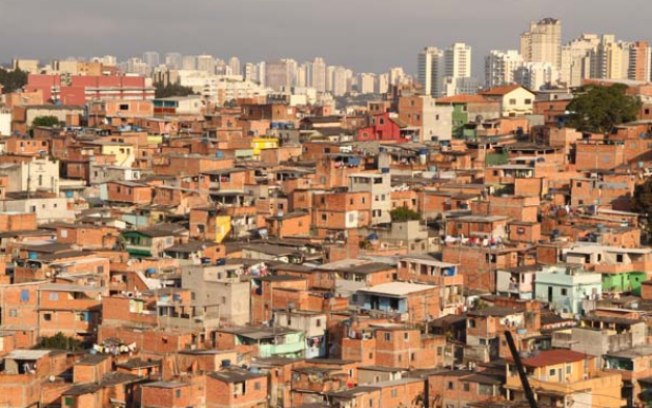
On a football pitch in the center of the Paraisópolis favela, community leader Gilson Rodrigues distributed donated goods, including soap, sanitizer and food. “There is no government here. Only us. If communities don’t organise themselves, they will die,” he said. “Bolsonaro doesn’t even speak the word ‘favela’. There is only disregard from the federal government, which has no idea that there are slums in Brazil, that there are millions of slum dwellers in Brazil that need public policy and that need to be saved,” he added.
In the absence of ‘public policy, the ever-present drug gangs have stepped in to fill the vacuum. A message from gang leaders to residents of one favela, said: “We are on the streets taking risks so that you can sleep in peace, we leave our families to protect yours, so, then respect the order we have given.” The protection ‘carrot’ thus delivered, the message also contained the ‘whip’ order, warning that for anyone caught on the street after 10pm, “it will be bad!”
The virus does not differentiate between the world of the favelas, where people will suffer most from it and its accompanying economic fallout, and the relatively prosperous and sheltered bourgeois world that surrounds them.
What may have seemed normal for many, before being confronted with the pandemic, might be described as life being lived on a happy merry-go-round, music playing loudly and everyone reaching for the golden ring of prosperity with little regard for those less well-off and watching from the sidelines.
Perhaps we should have realized that the carousel was speeding ever faster and faster, making it dangerous and nearly impossible to get off. Now that it has suddenly come to a grinding standstill, we, like favela dwellers, now have to consider what’s next, even whether we want the future to be like the past?
If the pandemic is reshaping the political and social order, it is doubtful that laid back, abraço-rich Brazil will rapidly get back to ‘normal’, at least the normal that makes it such a warm, exciting and fun place to live, a normal full of plentiful and generous human contact and many abraços.
For both rich and poor, returning to lifestyles enjoyed before the pandemic will not be easy, but Brazilians may be able to do it better than most.
In his classic novel, ‘The Plague’ Albert Camus wrote: “The truth is that nothing is less sensational than pestilence, and by reason of their very duration great misfortunes are monotonous.”
This misfortune, in addition to indulging our claustrophobia and binging on Netflix series may be a unique opportunity to put our feet up and contemplate where we are and how we got here. We might do well to look more objectively than usual at how we have been living our lives before the short-circuit of the virus and how it is touching all of us.
We might also consider how important those symbolic abraços are for all Brazilians and whether they are likely to reappear sometime down the road?
Let’s hope so.
More: Brazil news in English, every day from The Rio Times.
Editorial responsibility: Matthias Camenzind, Editor-in-Chief · Editorial standards · Report an error