Latin America Steel Rises as Brazil, Mexico Mills Gain

Key Facts
- SLX, the steel-producers ETF, gained to 101.67 $ on 2026-07-22, up +1.26% day on day, making the global steel benchmark the cleanest read-through for the sector.
- Gerdau also rose to 4.77 $, up +2.80% day on day, while CSN climbed to 1.09 $, up +9.00% day on day, showing Brazilian mills outperformed the broader market.
- Ternium advanced to 46.25 $, up +3.14% day on day, extending the Mexican steelmaker’s role as the region’s main listed proxy for domestic steel demand.
- Cheap Chinese imports remain the core overhang Latin American steel imports fell 8.6% year on year in March 2026 to 2.5 million tonnes, and were 1.2% lower in the first quarter at 7.6 million tonnes.
- Brazil and Mexico have tightened trade defences the region raised and in some cases doubled tariffs in 2026, including Brazilian anti-dumping duties on Chinese flat steel that last five years.
- Demand is still the missing catalyst Brazilian apparent rolled steel consumption rose just 0.1% year on year in March 2026 to 6.5 million tonnes, while Alacero expects Latin American apparent steel consumption to rise only 0.5% to 75.6 million tonnes in 2026.
Today’s Focus
Latin American steel traded firmer, but the move was more about policy relief than a burst of end-demand. SLX, the steel-producers ETF, closed higher, and Brazil’s listed mills and Ternium in Mexico all outpaced the broader steel proxy.
The clearest theme is that cheap Chinese steel is still the structural pressure point, but the flow is easing. Regional imports fell in March, while governments kept tariffs and anti-dumping duties in place to shield local mills.
For outsiders, the important distinction is simple: construction means buildings and infrastructure, while auto demand means car production and the steel needed for bodies, frames and parts. Both are still too soft to create a true earnings boom, even if they are stabilising.
The market therefore reads as a late-cycle, policy-led rebound rather than a clean demand breakout. The main variable to watch is whether construction and car orders improve enough to absorb imports without forcing another round of tariff action.
What matters today. This was a tariff-and-demand story first, with steel stocks rising because import pressure eased more than because end-use demand suddenly accelerated.
01 The session in one read
Latin American steel finished the latest session firmer, with the global steel benchmark ETF leading and Brazilian and Mexican names following. The move fits a market that is relieved by easier import pressure but still waiting for a real pick-up in building and vehicle production.
In plain English, mills are getting a little help from policy and a little help from steadier demand, but not enough to call it a boom. That is why the price action looked better than the business backdrop.
The session points to a market where local steelmakers are being helped by tighter trade protection and a slightly better price tone, but the fundamental backdrop is still weak. March data showed flat Brazilian rolled consumption, only modestly higher crude steel output, and a regional demand forecast that still implies only minimal growth in 2026.
That makes the share moves look justified but not euphoric: investors are pricing less import damage and some margin support, not a full recovery in construction or auto buying. The variable to watch is whether Mexican and Brazilian downstream demand improves enough to turn this from a defensive rally into a genuine cyclical upswing.
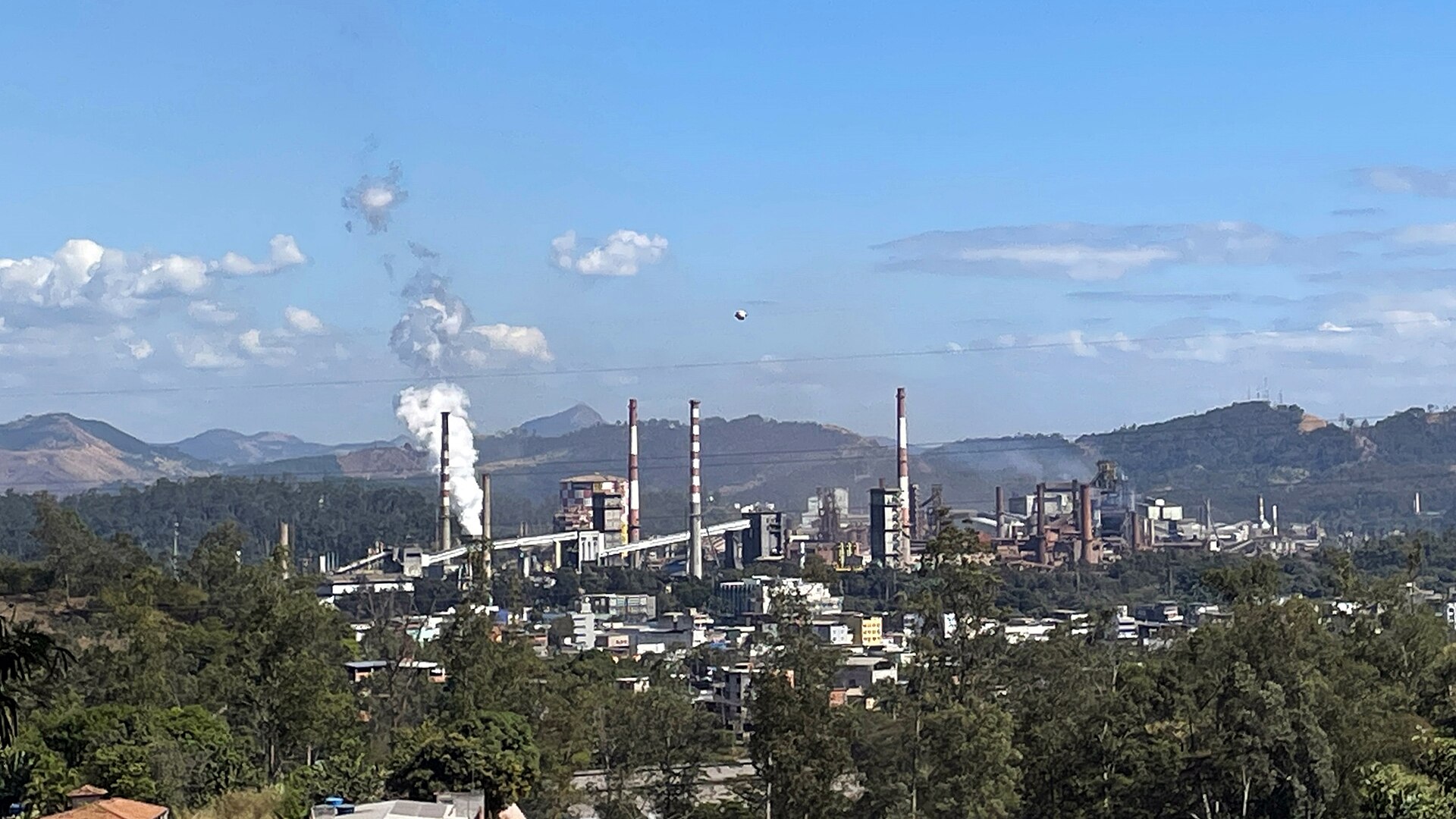
02 The board
The board showed SLX at 101.67 $, up +1.26% day on day on 2026-07-22, which is the broad sector signal investors will use first. Gerdau closed at 4.77 $, up +2.80% day on day, CSN at 1.09 $, up +9.00% day on day, and Ternium at 46.25 $, up +3.14% day on day.
Those moves matter because they suggest regional mills outperformed the wider steel basket. For a non-specialist reader, that usually means local factors — tariffs, import controls and domestic demand — mattered more than the global steel cycle on the day.
| Asset | Level | Change |
|---|---|---|
| Steel (SLX ETF) | 101.67 $ | +1.26% |
| Gerdau | 4.77 $ | +2.80% |
| CSN | 1.09 $ | +9.00% |
| Ternium | 46.25 $ | +3.14% |
Source: RT close, 2026-07-22. Where a commodity has no spot feed, an exchange-traded tracker or leading producer is shown as a labelled proxy.
Live Market IntelligenceThe live market board
Rio Times · Live Market Intelligence
Latin America — Cross-Market Board
| Instrument | Last | Change | YoY | Prev. | High | Low | Volume |
|---|---|---|---|---|---|---|---|
| IBOV | 203,276.70 | -1.56% | +21.85% | 206,495.23 | 168,310 | 167,142 | — |
| IPSA | 10,792.54 | -1.76% | — | 10,985.55 | 11,210 | 10,984 | 1,513,213,483 |
| IPC MEX | 70,249.54 | +1.43% | +12.17% | 69,258.58 | 66,121 | 65,405 | 108,886,187 |
| MERVAL | 3,017,221 | — | +30.51% | 3,022,485 | 3,042,365 | 2,991,150 | — |
| COLCAP | 2,524.78 | -1.39% | — | 9.04 | 9.05 | 9.02 | 4,133 |
| BVL PERÚ | 59,561.23 | -1.85% | — | — | — | — | — |
| USD/BRL | 5.16 | +0.01% | -5.13% | 5.16 | 5.18 | 5.14 | — |
| EUR/BRL | 5.95 | +1.01% | -5.83% | 5.89 | 5.98 | 5.94 | — |
| USD/MXN | 17.06 | -0.24% | -8.58% | 17.10 | 17.08 | 17.01 | — |
| USD/CLP | 913.98 | +0.04% | -5.67% | 913.65 | 915.11 | 906.68 | — |
| USD/COP | 3,140 | +0.03% | -22.04% | 3,139 | 3,141 | 3,105 | — |
| USD/PEN | 3.36 | -0.66% | -4.82% | 3.38 | 3.38 | 3.35 | — |
| USD/ARS | 1,493 | +0.10% | +12.96% | 1,491 | 1,494 | 1,480 | — |
| USD/UYU | 40.27 | +1.24% | +1.80% | 39.77 | 40.27 | 40.23 | — |
| USD/PYG | 5,939 | +1.68% | -19.54% | 5,841 | 5,939 | 5,925 | — |
| USD/BOB | 11.64 | -0.76% | +72.04% | 11.73 | 11.72 | 11.64 | — |
| USD/DOP | 58.34 | +1.25% | -3.44% | 57.62 | 58.34 | 58.04 | — |
| USD/CRC | 445.92 | +0.89% | -9.71% | 441.97 | 448.50 | 445.92 | — |
Live Company IntelligenceGerdau S.A — the full investor dossier
Valuation & profitability
Price & risk
$16.6652-wk high
$27.13
Revenue trend · 6y
Ownership
Dividend
03 What moved it
The main driver was the continuing squeeze on cheap Chinese steel imports. Regional imports were down 8.6% year on year in March to 2.5 million tonnes and down 1.2% in the first quarter to 7.6 million tonnes, while Brazil and Mexico have both tightened trade defences this year.
That matters because tariffs and anti-dumping duties make imported steel more expensive, protecting local mills from being undercut by lower-priced foreign supply. The market also drew support from the idea that construction and auto demand are no longer deteriorating as quickly as before, even if they are still far from strong.
04 The Latin American read
Brazil remains the key regional story because Gerdau, CSN and Usiminas are the names most closely watched by investors looking for domestic steel health. March consumption data were still soft, with apparent rolled steel consumption up just 0.1% year on year at 6.5 million tonnes, which says the local market is stable rather than hot.
Mexico matters because Ternium reflects both industrial demand and tariff policy in a large manufacturing economy. Fastmarkets said Mexican hot-rolled coil prices are expected to rise in 2026 as tariffs curb imported supply and seasonal demand improves, which is exactly the sort of mix that can support local producers without proving that end-use demand is truly strong.
05 The names to watch
Gerdau is the cleaner Brazil read because it is widely followed and sensitive to domestic construction and industrial demand. CSN can move more sharply when investors expect a better pricing backdrop, while Usiminas is often treated as a direct proxy for Brazilian flat steel and local steel cycles.
Ternium is the main Mexico name because its shares are watched as a barometer for regional manufacturing and construction, not just one company’s earnings. SLX remains the quickest way to see whether the market is rewarding the sector as a whole or only a few tariff-protected names.
06 The outlook
The next move depends on whether tariffs merely slow import pressure or actually give local demand time to recover. Alacero’s 2026 forecast of only 0.5% growth in regional apparent steel consumption to 75.6 million tonnes implies the upside remains limited unless construction and car production improve more decisively.
That leaves investors balancing two forces: tighter trade rules that support prices and still-muted end demand that caps the rally. If the sector is going to extend this move, the main thing to watch is whether construction orders and auto output finally strengthen enough to absorb supply.
07 What to watch
- cheap Chinese imports: If imports stay subdued, local mills can hold pricing power and protect margins; if they rebound, the tariff shield may not be enough.
- construction demand: Buildings and infrastructure are the biggest drivers of flat steel demand, so any pick-up would matter directly for Brazil and Mexico.
- auto demand: Car production uses a large amount of steel, especially flat products, so a better auto cycle would support Ternium and the Brazilian mills.
- tariffs and anti-dumping duties: Policy is currently doing much of the work, and any change in duties could quickly alter the balance between domestic and imported steel.
Frequently Asked Questions
Why did steel stocks rise if demand is still weak?
Because investors saw less pressure from cheap imports and more support from tariffs, which can lift prices and margins even before end-demand fully recovers.
What does SLX tell readers?
SLX is a steel-producers ETF, meaning it is a basket of steel company shares used as a broad market proxy for the sector.
Why focus on Brazil and Mexico?
They are the two most important listed steel markets in the region, with Brazil led by Gerdau, CSN and Usiminas, and Mexico by Ternium.
What is the biggest risk to the rally?
A renewed flood of cheap imports or a further slowdown in construction and auto demand could quickly weaken steel pricing and shares.
This article was produced by The Rio Times’ automated newsroom system. How we use AI · Report an error · Editorial responsibility: Matthias Camenzind, Editor-in-Chief
LatAm Markets: Live Signals → — real-time movers, turnover leaders and FX across Latin America.