South Sudan Has Written a Budget That Rests Almost Entirely on Oil
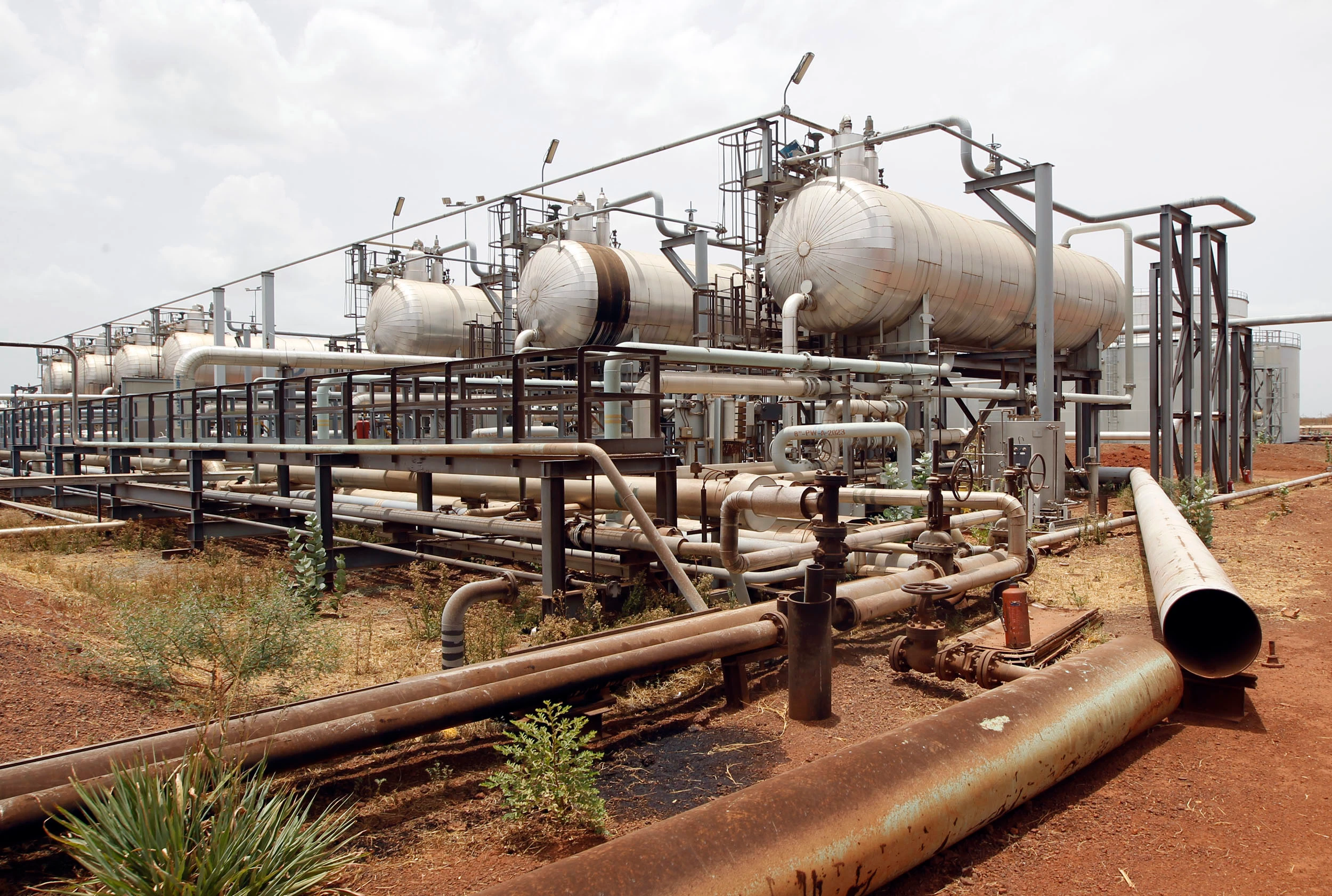
That projection carries a risk the budget does not price. South Sudan’s crude leaves through a single pipeline across Sudan, and a drone strike on the Heglig processing facility in November forced a shutdown.
The operator declared force majeure at the time. We have found no confirmation that it has been formally lifted.
Officials said in June that production had recovered to about 174,000 barrels a day. That is a production claim rather than verified export throughput.
SOUTH SUDAN · ECONOMY
Key Facts
The total: Finance and Economic Planning Minister Kuol Daniel Ayulo has tabled a budget of more than SSP 11.34trn, about US$2.0bn at the parallel exchange rate, before the Transitional National Legislature.
The oil share: Oil revenue is projected at SSP 9.01trn, about US$1.6bn at the parallel rate, and 79.5% of total projected revenue.
The rest: Non-oil revenue is projected at SSP 2.32trn, about US$417m.
The elections: About SSP 183bn, roughly US$33m, is allocated for the elections scheduled for 22 December 2026.
The theme: The budget was presented under the heading Building Resilience and Economic Prosperity for Sustainable Peace.
The status: It is now before the Transitional National Legislature for deliberation and approval.
The South Sudan budget for 2026-27 has been tabled at more than SSP 11.34trn, with oil expected to supply about 79% of all revenue. Some SSP 183bn is set aside for elections due on 22 December.
What the South Sudan budget contains
South Sudan runs an official and a parallel exchange rate, and the dollar figures here use the parallel rate of about 5,500 pounds, which is where the market actually clears.
The Minister of Finance and Economic Planning, Kuol Daniel Ayulo, tabled a national budget of more than SSP 11.34trn for the 2026-27 financial year before the Transitional National Legislature. It was presented under the theme Building Resilience and Economic Prosperity for Sustainable Peace.
Of that, oil revenue is projected at SSP 9.01trn and non-oil revenue at SSP 2.32trn. Oil therefore supplies about 79% of everything the state expects to collect.
The government says the money will prioritise productive sectors, infrastructure, livelihoods and economic opportunity.
Seventy-nine per cent is the whole story
There is no other African budget quite this concentrated. Nigeria’s oil is under half of exports and a smaller share of revenue; Angola and Congo-Brazzaville are heavily oil-dependent but not to this degree.
The exposure is not only to price. South Sudan’s crude leaves through a pipeline crossing Sudan, and that pipeline has been interrupted repeatedly by the war next door.
A budget in which four fifths of revenue depends on one commodity moving through one neighbour’s territory is a forecast with a single point of failure.
The election line is small and significant
SSP 183bn is allocated for elections scheduled for 22 December 2026. Against an SSP 11.34trn budget that is a fraction of a per cent.
South Sudan has never held a general election since independence in 2011, and the vote has been postponed more than once. Funding it in the budget is a commitment of a kind.
Whether the allocation is adequate is a separate question, and one the legislature is likely to ask.
What non-oil revenue would have to become
SSP 2.32trn of non-oil revenue covers customs, taxes and fees in an economy where most activity is informal or agricultural. Building it up is the only structural answer to the concentration problem.
Practical steps exist and some are under way. An economic reform committee has been removing illegal checkpoints on the Juba to Nimule highway, the main trade artery to Uganda, which is a direct tax on every truck.
Trade facilitation is unglamorous and cumulative. It is also the kind of reform that does not depend on a pipeline staying open.
The currency sits underneath everything
South Sudan’s pound has weakened sharply, which flatters every figure quoted in local currency. A budget that grows in pounds may be shrinking in dollars.
Readers comparing this budget with last year’s should therefore be careful. The nominal total says less than the oil share does.
What the pipeline problem looks like in practice
South Sudan’s crude reaches the sea through Port Sudan, along a pipeline crossing a country at war. Damage, unpaid transit fees and force majeure have each halted flows since 2023.
When the pipeline stops, so does almost all state revenue. Salaries go unpaid within weeks, and the currency moves immediately.
No budget line can hedge that. It is a single dependency with no domestic substitute.
Why the non-oil line deserves more attention than it gets
SSP 2.32trn of non-oil revenue is small, but it is the only part of the budget the government fully controls. Customs at the Nimule crossing, business licensing and property taxes are all within reach.
Removing illegal checkpoints on the Juba to Nimule road, as an economic reform committee has been doing, raises collectable revenue and lowers the price of imported goods at the same time.
The salary arrears problem sits under everything
Public servants and soldiers in South Sudan have gone unpaid for months at a time when oil flows have been interrupted. Those arrears are a security question as much as a fiscal one.
A budget that clears them would absorb a large share of the total. One that does not leaves the same risk in place for another year.
What a December election would cost beyond the budget line
Voter registration, security, ballot logistics and dispute resolution in a country with almost no sealed roads are expensive in ways a single line cannot capture. International partners have historically funded much of it.
That external contribution has not been announced for this cycle. If it does not arrive, SSP 183bn will not stretch far.
The alternative, a further postponement, carries its own cost in the peace agreement that underpins the transitional government.
What to watch next
The first thing is whether the legislature approves the budget without material change. The second is whether the election allocation survives to December.
The third, and the one that decides the rest, is whether the export pipeline runs uninterrupted through the financial year.
Frequently Asked Questions
How large is the South Sudan budget for 2026-27?
More than SSP 11.34trn, tabled before the Transitional National Legislature by Finance Minister Kuol Daniel Ayulo.
How much comes from oil?
Oil revenue is projected at SSP 9.01trn, about 79% of total projected revenue, with non-oil revenue at SSP 2.32trn.
How much is allocated for elections?
SSP 183bn is set aside for the elections scheduled for 22 December 2026.
Why is the oil share a risk?
South Sudan’s crude is exported through a pipeline crossing Sudan, which has been interrupted repeatedly, so revenue depends on both price and transit.
Has the budget been approved?
Not yet. It is before the Transitional National Legislature for deliberation and approval.
Connected Coverage
South Sudan’s electoral timetable is covered in the removal of the legal obstacles to voting and its oil restart in the restart of oil exports. The regional trade agenda appears in East Africa’s push against trade barriers.
This article was produced by The Rio Times’ automated newsroom system. How we use AI · Report an error · Editorial responsibility: Matthias Camenzind, Editor-in-Chief
LatAm Markets: Live Signals → — real-time movers, turnover leaders and FX across Latin America.