Malawi Has Signed Its Second Chinese Shipping Deal for One Lake in Six Weeks
MALAWI · BUSINESS
Key Facts
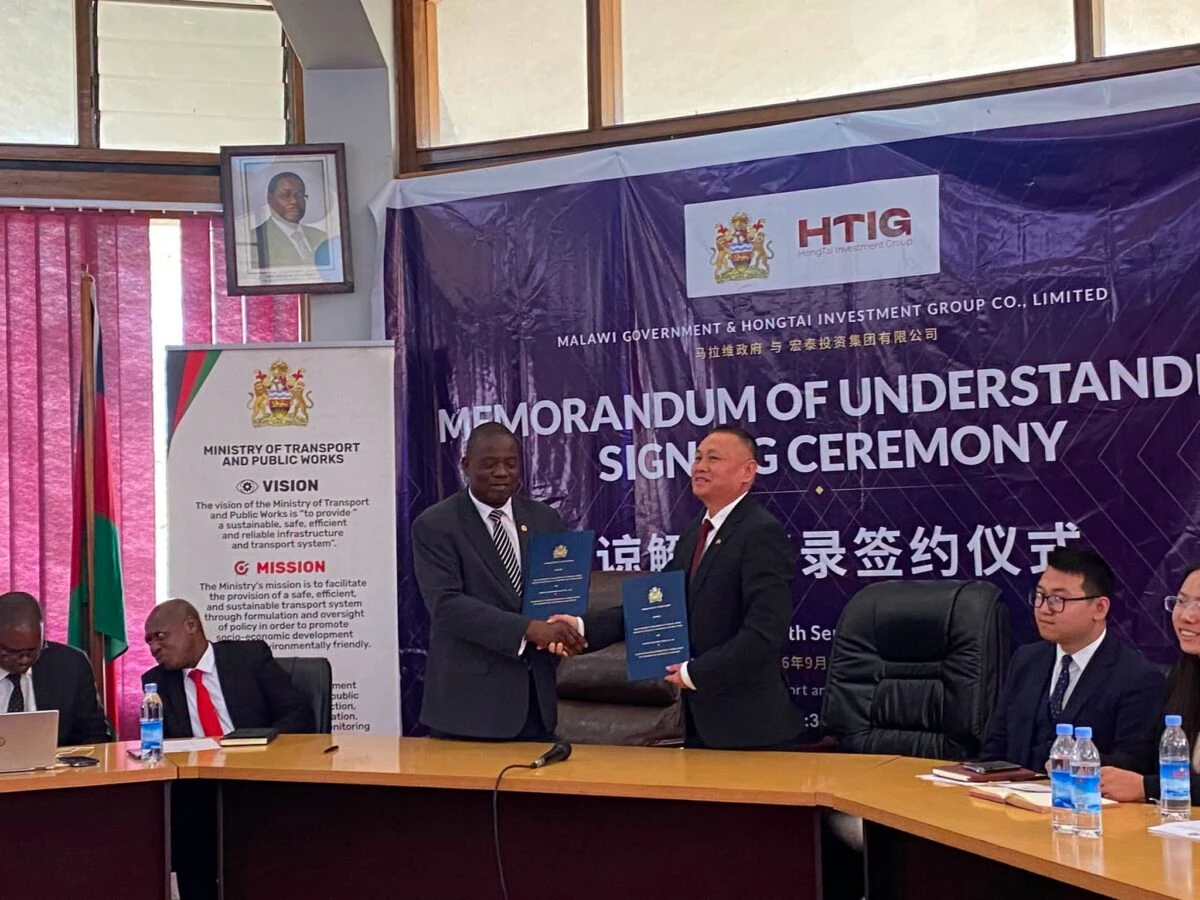
The agreement: Malawi’s government signed a memorandum of understanding with Hongtai Investment Group for two marine vessels and a shipyard upgrade on Lake Malawi.
The value: The first phase is valued at US$20m. The financing structure was not disclosed.
What is covered: A cargo vessel, a passenger vessel and the modernisation of the Monkey Bay shipyard.
The routes: Monkey Bay is the shipyard to be modernised, and Chipoka is among the ports named for upgrading.
The timetable: The first vessel is expected to set sail within about 18 months.
The second deal: It follows an agreement six weeks earlier, on 27 July, with Xiao Xiang Investment for four vessels. No value was disclosed for that one.
A Malawi lake transport memorandum with a US$20m first phase has been signed with China’s Hongtai Investment Group, covering vessels and the modernisation of the Monkey Bay shipyard. It is the second such deal with a Chinese firm in six weeks.
Neither counterparty has a traceable record. We could find no corporate registration, ownership or prior marine project for Hongtai Investment Group or for Xiao Xiang Investment.
That matters because Malawi took the lake fleet back into state hands at the end of 2024, terminating 35-year concessions held by Mota-Engil. The 74-year-old MV Ilala has since been grounded as a safety hazard.
The memorandum was signed by the transport ministry’s principal secretary rather than the minister. A memorandum is also not a contract, and due diligence still lies ahead.
What the Malawi lake transport deal covers
The government has signed a memorandum of understanding with Hongtai Investment Group for two marine vessels, one cargo and one passenger, and for the modernisation of the Monkey Bay shipyard. The first phase is valued at US$20m, and the financing structure was not disclosed.
The vessels are intended for the main lake routes, with Chipoka among the ports named for modernisation. The first vessel is expected to sail within about 18 months, on the ministry’s own accours.
It is a memorandum rather than a construction contract. No financing structure or repayment terms have been published.
Two deals, six weeks apart, one lake
This is the second agreement Malawi has signed with a Chinese company for Lake Malawi shipping in six weeks. The earlier deal, with Xiao Xiang Investment, covers two dry cargo vessels, a fuel tanker and a passenger vessel.
Between them the two agreements would replace most of the country’s usable lake fleet. The MV Ilala, the vessel most Malawians associate with the lake, entered service in 1951.
Two separate Chinese investors competing for the same small market in the same quarter is itself the story.
Why a lake matters in a landlocked country
Malawi has no coastline, and its imports arrive by road through Mozambique or Tanzania. Lake Malawi runs almost the length of the country and connects to Tanzanian and Mozambican shores.
Working lake transport would move fuel, fertiliser and freight at a fraction of road cost, and would connect districts where roads are seasonal. It is also a passenger service for communities with few alternatives.
The constraint has never been demand. It has been vessels, and a shipyard capable of maintaining them.
The financing question is the one to ask
Malawi is in a fragile fiscal position, with a foreign exchange shortage and an IMF programme that has not been signed. Any new external obligation is scrutinised carefully.
The word used is investment rather than loan, which would place the exposure on the investor rather than the state. Until the structure is published, that distinction cannot be verified.
Malawi’s experience with vessel procurement has not been uniformly happy, and the country has open questions about contract compliance in other sectors.
Where this sits in the wider pattern
Chinese lending to African governments has fallen sharply from its peak, but Chinese corporate investment in specific, revenue-generating assets has not. Ports, vessels, transmission lines and industrial parks are where the money now goes.
It is a shift from sovereign balance sheets to project balance sheets. For a country like Malawi that is a lower-risk way to receive capital, provided the projects earn.
The Ilala has been working since 1951
The MV Ilala is the vessel most Malawians associate with the lake, carrying passengers and freight between lakeshore communities since 1951. It has been out of service for long stretches for want of parts and dry-dock capacity.
That is why a shipyard upgrade sits alongside the new vessels in the agreement. Ships without maintenance become monuments.
Monkey Bay is the natural place for it, at the lake’s southern end where the main routes converge.
The corridor logic beyond Malawi
Lake Malawi touches Tanzania and Mozambique as well, and a functioning fleet would open routes that road haulage cannot serve cheaply. Fuel and fertiliser are the obvious cargoes.
Malawi’s imports currently travel by road from Beira and Nacala, which is expensive and vulnerable to weather. Water freight is the only cheaper option the country physically has.
Malawi’s forex position complicates everything
The kwacha has been under sustained pressure and importers have struggled to obtain hard currency for fuel and inputs. Any project requiring imported parts inherits that constraint.
Vessels need spares, and spares need dollars. That is the risk a shipyard upgrade is meant to reduce and cannot remove.
What a working fleet would change for prices
Malawi’s landlocked position adds a large freight premium to almost every imported good, from fuel to fertiliser to cement. Road haulage from Beira or Nacala is the main channel and the main cost.
Water freight over long distances is substantially cheaper per tonne where the route exists, and Lake Malawi runs most of the length of the country.
The effect would show up in consumer prices in lakeshore districts long before it appeared in any national statistic.
What to watch next
The first marker is a definitive agreement with the financing structure disclosed. The second is whether the Monkey Bay shipyard work actually begins.
The third is whether the two Chinese investors’ vessels end up competing on the same routes, and what that does to fares and freight rates.
Frequently Asked Questions
What has Malawi signed?
A memorandum of understanding with China’s Hongtai Investment Group for two marine vessels and the modernisation of the Monkey Bay shipyard on Lake Malawi.
How much is it worth?
The first phase is valued at US$20m. The financing structure was not disclosed, and the first vessel is expected within about 18 months.
Which routes will the vessels serve?
The main lake routes, with Monkey Bay the shipyard to be modernised and Chipoka among the ports named for upgrading.
Is this the first such deal?
No. It is the second Chinese agreement in six weeks, following one with Xiao Xiang Investment for two dry cargo vessels, a fuel tanker and a passenger vessel.
Why does lake transport matter for Malawi?
Malawi is landlocked, and Lake Malawi runs almost the length of the country, offering far cheaper freight than road haulage through neighbouring states.
Connected Coverage
Malawi’s fiscal and currency position is covered in the forex crisis and the IMF, its power sector in the conflict at the top of its power companies, and the continent’s shifting Chinese finance in China’s retreat from African lending.
This article was produced by The Rio Times’ automated newsroom system. How we use AI · Report an error · Editorial responsibility: Matthias Camenzind, Editor-in-Chief
LatAm Markets: Live Signals → — real-time movers, turnover leaders and FX across Latin America.
Great Powers in Africa
- Who Backs Whom in Africa 2026: China, Russia, US, Gulf
- Africa: The New Scramble
- DP World and AD Ports Drive Gulf States Africa Investment as Saudi Deals Follow
- China Slashes Africa Lending 46% as Kenya and Angola Race to Refinance Old Debts