Ramaphosa Promises Arrests, but Cannot Put a Number on Them
SOUTH AFRICA · SOCIETY
Key Facts
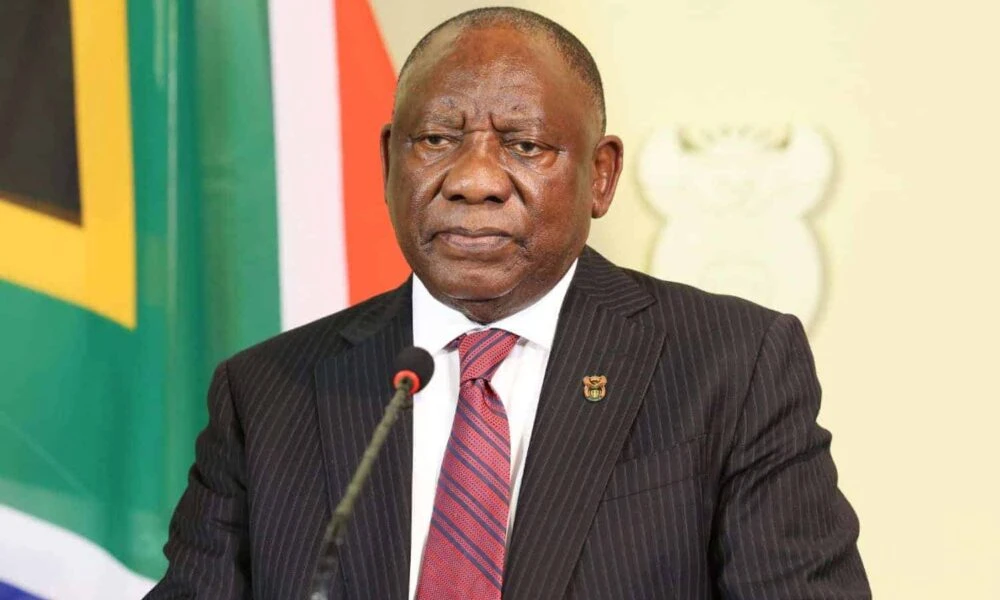
—The exchange: President Cyril Ramaphosa answered questions in the National Assembly on Tuesday 25 August, in a supplementary exchange with EFF leader Julius Malema.
—The accusation: Malema said violence against African nationals had happened in the presence of police without arrests, creating an impression of state-sanctioned violence.
—The answer: Ramaphosa said the matter is being processed, that a number of other people have been arrested, and that those seen to be leading the attacks are of direct interest to the police.
—The missing number: No arrest figure, charge, name or date range was given. Human Rights Watch reported in May that there had been little or insufficient apparent police response.
—The independent count: Xenowatch recorded 406 xenophobic incidents between 2022 and 2025, resulting in 75 deaths, and 151 incidents in 2025. It verified 22 incidents from January to May 2026, 14 of them violent.
—The repatriations: Malawi says it brought home 56,723 nationals over four months, concluding on 12 August, on almost 900 buses at a cost it puts near US$5 million.
—The bill: South Africa’s Department of Home Affairs has asked Malawi, Ethiopia and Nigeria to reimburse close to R300 million (about US$19 million) for repatriating at least 82,000 people.
South Africa xenophobic violence drew a firm promise from President Cyril Ramaphosa in the National Assembly on 25 August that perpetrators would be arrested and charged, and the promise arrived without a single arrest figure attached to it.
What was said about South Africa xenophobic violence
The exchange came during oral questions in the National Assembly on Tuesday 25 August. EFF leader Julius Malema pressed the point in a supplementary question.
Malema said the perpetrators have a face, that violence had occurred in the presence of police without arrests, and that this created an impression the violence was state-sanctioned rather than the isolated work of vigilante groups.
Ramaphosa replied that the matter is being processed and that police and other security services are gathering reports and evidence. He said a number of other people have been arrested, and that those seen to be leading the attacks are of direct interest to the police.
His commitment was categorical in intent and vague in substance. Those who have perpetrated acts of violence against foreign nationals are going to be dealt with, he said, adding that cases involving injury or death would be pursued.
The number that is not there
No figure was given. There is no arrest total, no charge sheet, no province and no date range in either the government’s own account of the session or the independent reporting of it.
This is where a reader should be careful. The government’s news service published a separate item the same day headlined on more than a thousand arrests, and that was Operation Prosper, an illegal mining crackdown with 1,080 arrests that has nothing to do with xenophobia.
Independent monitors describe the opposite of an active response. Human Rights Watch documented little or insufficient apparent police reaction in May, and Xenowatch co-founder Loren Landau said in August that those who led the marches were not being held responsible.
What the 2026 wave has looked like
The mobilisation this year has been organised rather than spontaneous. A movement calling itself March and March held demonstrations in Pretoria, Johannesburg and Durban in April and May, and drove foreign nationals from homes and workplaces between April and June.
Tactics have also shifted. Anti-migrant groups moved from attacking shops toward blockading clinics, hospitals and schools to demand identity documents, conduct the Gauteng High Court in Johannesburg ruled unlawful in November 2025 in a case brought by Kopanang Africa Against Xenophobia and others.
Malema raised a specific complaint: that two men Ramaphosa met in June, leaders of a group called Insizwa Nobunsizwa, were among the perpetrators, and should have been detained that day. Ramaphosa did not address the meeting directly.
No verified death toll exists for the current wave. Human Rights Watch has stated explicitly that it has not verified reported deaths of foreign nationals at the hands of vigilante groups.
The diplomatic and financial cost
Malawi’s disaster management department says repatriation of its nationals concluded on 12 August, with 56,723 people brought home over four months on almost 900 buses, at a cost the government puts at nearly US$5 million.
South Africa has responded with an invoice. Home Affairs has asked Malawi, Ethiopia and Nigeria to reimburse close to R300 million, about US$19 million at the 27 August rate of roughly R15.96 to the US dollar, for repatriating at least 82,000 people, a sum Pretoria does not expect to receive.
The issue is now moving up the continental agenda. Ghana has asked the African Union to debate the attacks at the bloc’s next summit early next year, while South Africa has instead proposed an Africa-wide conference on migration.
A SADC summit hosted by South Africa in Durban this month called for coordinated regional dialogue on the drivers of migration. Ramaphosa cited it, alongside border management reform and a white paper on citizenship, migration and refugee protection.
The pressures underneath
South Africa’s unemployment rate is above 30 percent on the narrow official definition and above 40 percent on the expanded one, which counts people who have stopped looking for work. Municipal services are failing in many places at the same time.
The migrant population was officially estimated at 2.4 million in the 2022 census, about 3.9 percent of the population, with no reliable split between documented and undocumented. Home Affairs deported 46,898 people in the year to 31 March, up 18 percent.
The regional push factor is equally concrete. World Bank data cited this month indicates up to 270,000 young Malawians enter the labour market each year against roughly 40,000 formal jobs created.
Local government elections fall in November 2026, which gives every actor in this story a reason to be seen doing something.
What would count as follow-through
Arrests are the stated commitment, so arrest and charge numbers are the measure. None has been published.
The second measure is compliance with the November 2025 court order barring clinic blockades, and whether the appeal against it has been decided. Neither is established.
The third is whether any lead department, task team or deadline is assigned. Nothing in the presidential answer named one.
More: South Africa news in English, every day from The Rio Times.
Frequently Asked Questions
What did Ramaphosa say about xenophobic violence?
Speaking in the National Assembly on 25 August 2026, he said the matter is being processed, that a number of other people have been arrested, and that those who have perpetrated violence against foreign nationals will be dealt with.
How many people have been arrested?
No figure has been given. Neither the presidency nor the police have published an arrest total, charges or names for xenophobic violence.
How many xenophobic incidents have been recorded?
Xenowatch counted 406 incidents between 2022 and 2025, resulting in 75 deaths, and 151 in 2025 alone. It verified 22 incidents from January to May 2026, 14 of them violent.
How many people have been repatriated?
Malawi says 56,723 of its nationals were brought home over four months to 12 August. South Africa has asked Malawi, Ethiopia and Nigeria to reimburse close to R300 million (about US$19 million) for repatriating at least 82,000 people.
Connected Coverage
The scale of the displacement is set out in the more than 53,000 migrants who left under pressure, and the rumour that helped drive it in the fake June deadline that spread panic. More from the region sits on our Southern Africa hub.
This article was produced by The Rio Times’ automated newsroom system. How we use AI · Report an error · Editorial responsibility: Matthias Camenzind, Editor-in-Chief
LatAm Markets: Live Signals → — real-time movers, turnover leaders and FX across Latin America.