Senate Cleared to Probe Kanyotu’s Son Over Kiambu Land Dispute
Kenya · POLITICS
Key Facts
Kenya latest: Kenya news — latest coverage · Nairobi International Trade Fair: Kenya Show Opens 28 September
- —What happened Kenya’s Senate authorised a probe into a KSh 10 billion (about US$77.5 million) land dispute in Ruiru, Kiambu County, tied to the estate of former spy chief James Kanyotu and a man claiming to be his son, Willy Kihara.
- —The land Roughly 500 acres, or about 205 hectares, part of LR 11261/76 and related parcels, is registered to Kangaita Coffee Estate Ltd, where Kanyotu was majority shareholder.
- —The residents The land hosts the Two Rivers Crescent Estate, with about 76 to 600 middle-class homeowners depending on the source.
- —The hearing The Senate Lands, Environment and Natural Resources Committee summoned Lands Cabinet Secretary Alice Wahome, Interior Cabinet Secretary Kipchumba Murkomen and Willy Kihara to appear on 6 August 2026.
- —What comes next The committee directed police to protect homeowners and bar interference by non-lawful owners pending court outcomes.
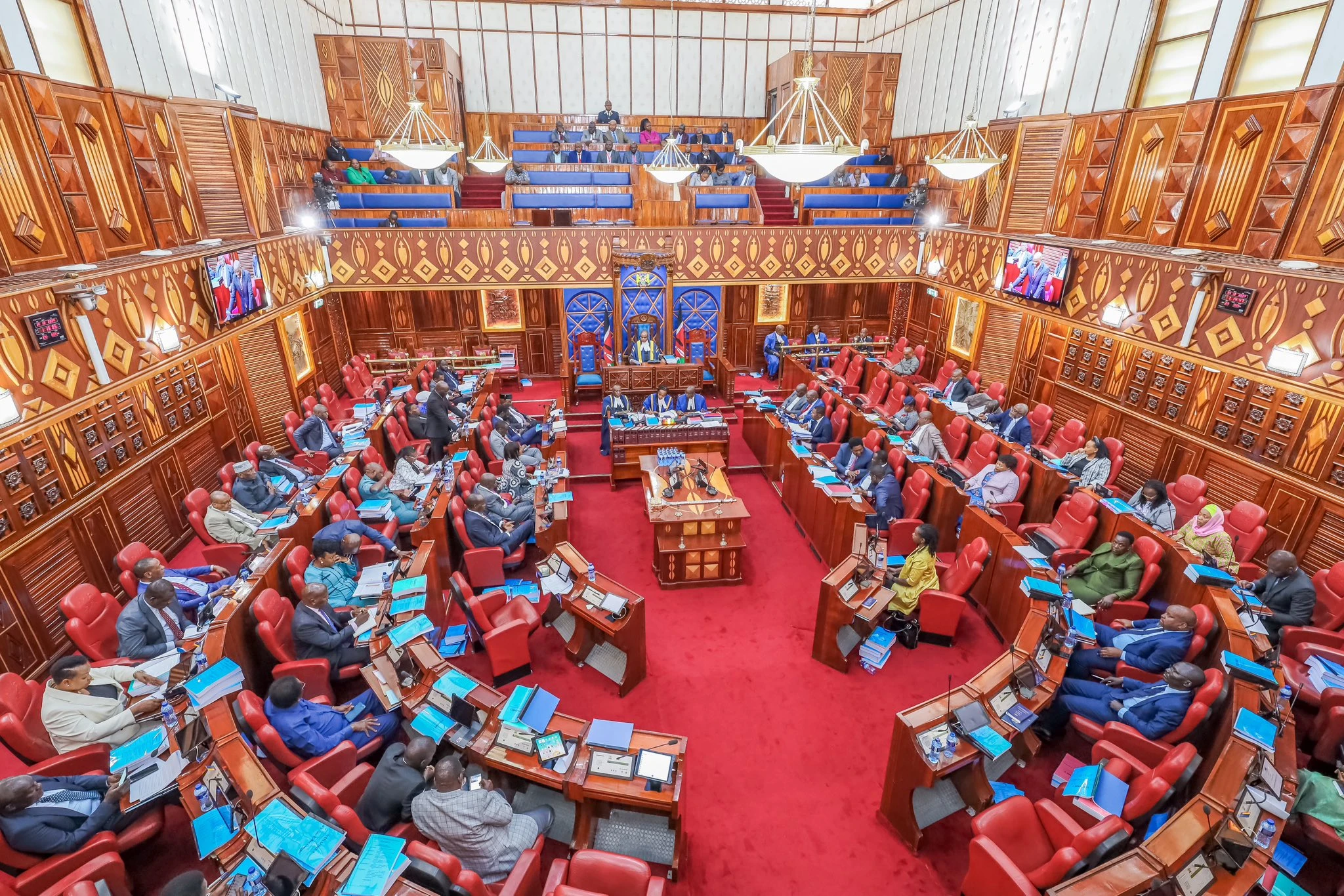
Kenya’s Senate has cleared the way to investigate a KSh 10 billion (about US$77.5 million) Kiambu land dispute centred on the estate of former spy chief James Kanyotu and a man claiming to be his son, Willy Kihara. The probe will test whether political pressure can override judicial rulings on succession and property rights.
Kenya’s Senate has authorised a formal inquiry into a KSh 10 billion (about US$77.5 million) land dispute in Ruiru, Kiambu County, involving the estate of former Special Branch director James Kanyotu and a man claiming to be his son, Willy Kihara. The decision follows months of complaints from homeowners at the Two Rivers Crescent Estate who say they face harassment, intimidation and attempted unlawful evictions.
What triggered the Senate probe into the Kiambu land dispute
On 4 June 2026, Kiambu Senator Karungo Thang’wa formally requested a Senate statement on the alleged harassment of Two Rivers Crescent residents by Willy Kihara. Kihara claims to be the sole beneficiary of Kanyotu’s estate, which includes the contested land in Ruiru.
The Senate Lands, Environment and Natural Resources Committee, chaired by Senator Mohamed Faki, responded by summoning Lands Cabinet Secretary Alice Wahome, Interior Cabinet Secretary Kipchumba Murkomen and Willy Kihara to appear on 6 August 2026. Residents allege that armed goons, demolitions and boundary alterations have been used to dispossess them of their homes.
The committee directed police to protect homeowners and bar interference by non-lawful owners pending court outcomes. That directive signals an unusual level of legislative intervention in a property dispute that has already been through multiple court rulings.
The land, the estate and the succession battle
The contested land covers roughly 500 acres, or about 205 hectares, and forms part of LR 11261/76 and related parcels. It is registered to Kangaita Coffee Estate Ltd, where James Kanyotu was the majority shareholder.
Kanyotu died in 2008, triggering Succession Cause No. 1239 of 2008. In October 2009, the High Court barred any dealings with the land, and that injunction was registered in July 2010.
Despite the injunction, subsequent transfers and subdivisions took place. In July 2025, Justice Oguttu Mboya of the Environment and Land Court, in ELC No. 4 of 2021, declared those transfers and subdivisions null and void, restoring ownership to Kangaita Coffee Estate and cancelling investors’ title deeds.
Who is Willy Kihara and what does he claim
Willy Kihara, also identified in some records as Kihara/Njoki/Kanyotu, claims to be the sole beneficiary of Kanyotu’s estate. Interior Cabinet Secretary Kipchumba Murkomen told senators that Kihara is a legally recognised beneficiary who was allocated 13 plots.
However, Murkomen said Kihara is claiming more land based on alleged gifts and fraud challenges. Residents and their advocates dispute those claims, pointing to the July 2025 court ruling that cancelled the title deeds held by investors and restored ownership to Kangaita Coffee Estate.
The dispute has exposed a deep tension between judicial enforcement of succession law and political pressure from cabinet-level actors. The Senate probe will test whether institutional checks and balances can hold in a market where billions in domestic and foreign capital hinge on clear property rights.
Money, power and the lingering influence of Cold War-era elites
James Kanyotu was Kenya’s longest-serving Special Branch director, a powerful figure from the Cold War era who controlled strategic peri-urban land now central to Nairobi’s real-estate boom. The Ruiru land is close to major developments, including projects linked to Marriot Africa International and other large-scale investments.
The case highlights Kenya’s chronic land-record fraud, succession disputes and weak protection for bona fide purchasers. Courts have stressed that investors and financiers must now check succession files and court orders, not just the land registry, before committing capital.
For foreign investors and local professionals, the Two Rivers Crescent case is a warning about the fragility of property rights in Kenya’s fast-growing satellite towns. The Senate’s involvement adds a political layer to what was already a complex legal and financial dispute.
What the Senate committee is expected to examine
The committee chaired by Senator Mohamed Faki will likely focus on how transfers and subdivisions occurred despite the 2009 High Court injunction. Senators will also question why police protection for homeowners was not enforced earlier.
Lands Cabinet Secretary Alice Wahome and Interior Cabinet Secretary Kipchumba Murkomen are expected to explain their ministries’ roles in the dispute. Willy Kihara will be asked to justify his claim to more than the 13 plots that Murkomen says he was legally allocated.
The 6 August 2026 hearing could produce new directives affecting the Two Rivers Crescent Estate and the broader Ruiru land market. Investors will watch closely for any signal on how the government balances political influence against court orders.
Why this Kiambu land dispute matters beyond Kenya
The Kanyotu estate case is not just a local property row. It reveals how Cold War-era security elites accumulated strategic land that now sits at the centre of Nairobi’s expansion and foreign investment flows.
Kenya’s struggle to enforce succession law and protect bona fide purchasers echoes similar challenges across East Africa, where land records are often contested and politically sensitive. The Senate probe is a test of whether legislative oversight can strengthen property rights in a region where capital is increasingly mobile.
For readers following the broader scramble for African land and resources, this case fits a familiar pattern of legal uncertainty and elite influence. The outcome will shape confidence in Kenya’s real-estate market and its appeal to international investors.
Frequently Asked Questions
What is the KSh 10 billion (about US$77.5 million) Kiambu land dispute about?
The dispute concerns roughly 500 acres in Ruiru, Kiambu County, registered to Kangaita Coffee Estate Ltd, where former spy chief James Kanyotu was majority shareholder. Willy Kihara, who claims to be Kanyotu’s son, is accused of trying to evict homeowners at the Two Rivers Crescent Estate.
When will the Senate committee hear the Kiambu land dispute case?
The Senate Lands, Environment and Natural Resources Committee summoned Lands Cabinet Secretary Alice Wahome, Interior Cabinet Secretary Kipchumba Murkomen and Willy Kihara to appear on 6 August 2026.
What did the court rule in the Kanyotu estate land case?
In July 2025, Justice Oguttu Mboya declared subsequent transfers and subdivisions of the land null and void, restoring ownership to Kangaita Coffee Estate and cancelling investors’ title deeds.
Connected Coverage
Sources
This article was produced by The Rio Times’ automated newsroom system. How we use AI · Report an error · Editorial responsibility: Matthias Camenzind, Editor-in-Chief