São Tomé’s $90K Passport Is Selling Fast. Here’s Why
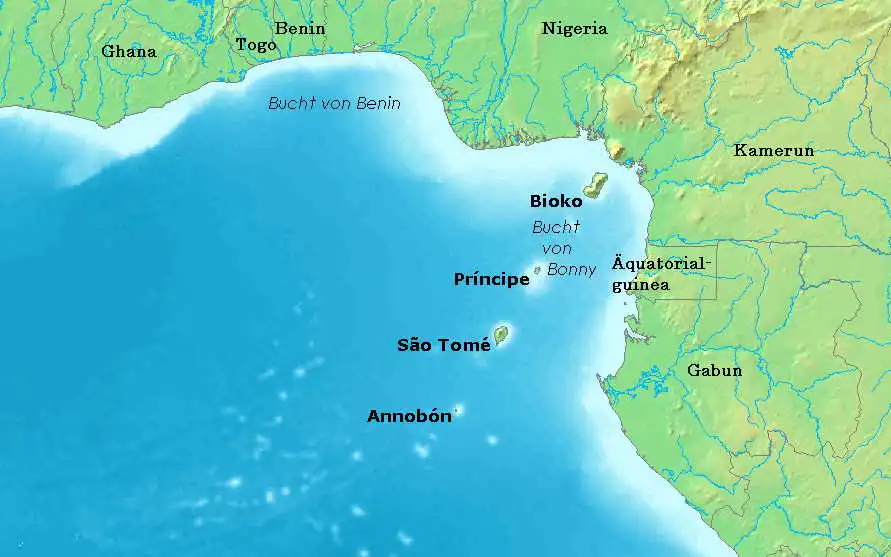
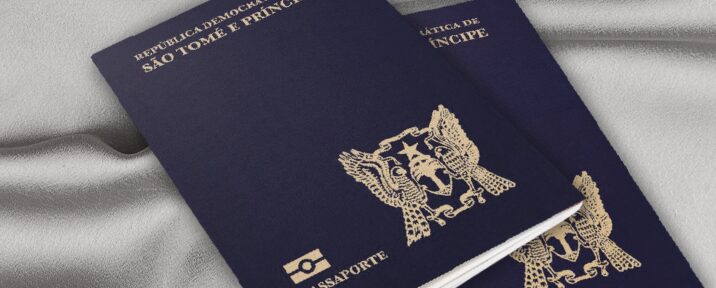
A tiny Portuguese-speaking archipelago in the Gulf of Guinea has disrupted the global citizenship market. São Tomé and Príncipe began accepting applications in September 2025 at just $90,000 — less than half the cheapest Caribbean alternative.
Within five months, 98 applications arrived from 27 nationalities. All 27 processed were approved, and the first passport was issued in January 2026.
Filling the Caribbean vacuum
The timing was strategic. In 2024, Dominica, Antigua and Barbuda, Grenada and St. Kitts and Nevis harmonized minimum thresholds at $200,000 or above under EU and U.S. pressure. São Tomé slotted into the gap below $100,000.
Applicants donate to a National Transformation Fund. No residency requirements, no interviews, and processing averages 2.5 months. The fastest case was approved in four weeks.
The Lusophone angle
The passport offers visa-free or visa-on-arrival access to roughly 60 to 75 countries — far fewer than Caribbean options covering 140-plus destinations. But São Tomé’s CPLP membership transforms the value proposition.
CPLP citizens currently qualify for Portuguese citizenship after five years of legal residency. Portugal’s parliament voted in October 2025 to extend that to seven years, but the Constitutional Court struck down parts of the bill in December. The old five-year rule remains in force.
That makes the São Tomé passport a cheap entry point to EU citizenship — bypassing Portugal’s Golden Visa, which requires a minimum €500,000 (~$530,000) fund investment. The CPLP link also accelerates Brazilian citizenship to one year of residency instead of four.
The Africa access card
São Tomé is a member of ECCAS, the Economic Community of Central African States. The bloc’s 1983 protocol grants citizens the right to free movement, residence and business establishment across 11 member states including Angola, Cameroon, Chad, Congo, the DRC, Equatorial Guinea and Gabon.
Within ECCAS sits CEMAC — Cameroon, the Central African Republic, Chad, Congo, Equatorial Guinea and Gabon — whose six members share the CFA franc and have operated full visa-free movement since 2017. These are oil-rich, mineral-rich economies with a combined population of about 37 million.
Broader ECCAS visa reciprocity covers only about 38% of member-state pairs. The establishment protocol — the right to live and open a business — remains unevenly enforced but is strengthening as more members adopt liberal entry policies.
The Lusophone business network
The CPLP connection adds another layer. São Tomé citizens get simplified residency in Portugal, Brazil, Angola, Mozambique, Cape Verde, Guinea-Bissau, Timor-Leste and Macau.
For entrepreneurs targeting Portuguese-speaking Africa — where Angola alone has a $100 billion-plus economy — the combination of ECCAS treaty rights and CPLP residency creates a business mobility package no Caribbean passport can replicate. It is the only CBI program in the world that opens doors to both Central African and Lusophone markets simultaneously.
What the passports unlocks at home
Russians make up the largest applicant group with 22 filings, followed by Chinese (17) and Germans (15). The geographic spread — from Caracas to Kuwait City — suggests motivations range from plan-B diversification to deliberate African and Lusophone positioning.
As citizens, CBI holders have the full right to live, work and do business in São Tomé and Príncipe with no restrictions. They can incorporate a company in as little as three days through a one-stop shop, with no requirement for local partners or minimum local employment.
The tax regime is friendly. Non-residents pay tax only on São Tomé-sourced income. Residents — those spending more than 183 days a year in-country — face progressive rates of 0% to 25%.
Crucially, there is no wealth tax, no inheritance tax and no capital gains tax on foreign-held assets. Double taxation treaties with Portugal, Angola and Cape Verde add another layer of protection.
Real estate is more nuanced. Foreigners can buy buildings and structures, but land is overwhelmingly state-owned. The practical route is long-term leasing — up to 50 years and extendable, or up to 90 years for approved investment projects.
Private land can be purchased with a residence permit, though holdings are capped at two hectares unless part of a government-approved project.
Prices remain low by global standards. A two-bedroom house in smaller towns sells for $37,000 to $75,000. Monthly rentals run $500 to $750. Luxury coastal apartments in the capital fetch more, but the market is still in its early stages — a fraction of Caribbean resort pricing.
The risks
Significant risks remain. The program is barely six months old, major banks apply enhanced scrutiny to CBI passports, and the $90,000 donation is non-refundable with no asset backing.
The U.S. has suspended immigrant visa processing for ten CBI states, and pressure on golden passport programs is intensifying. But for investors playing a multi-year Lusophone and Central African strategy rather than seeking immediate travel freedom, the arithmetic is hard to ignore. This is part of The Rio Times’ daily coverage of global affairs and Latin American financial news.
Related coverage: Brazil’s Morning Call | Trump’s Plan B: A Global 10 Percent Tariff Within Days
More: Angola news in English, every day from The Rio Times.
This article was produced by The Rio Times’ automated newsroom system. How we use AI · Report an error · Editorial responsibility: Matthias Camenzind, Editor-in-Chief