Rocky First Year for Brazil’s President Jair Bolsonaro
SÃO PAULO, BRAZIL – The year of 2019 was the first year of Brazil’s right-wing Jair Bolsonaro’s presidency. Contradicting expectations, Bolsonaro did not soften his aggressive stance once he took office, and the Brazilian leader, his sons and cabinet nominees fostered controversy throughout the year, both domestically and abroad. Below are some highlights of 2019 for the Bolsonaro government.

The year began with human rights groups criticizing a decree issued by Bolsonaro in mid-January that would ease rules for the possession of firearms in the country. The decree would be the first of eight published this year on the issue, as the President tries to get Brazil’s Congress to approve more flexible norms for firearms possession. “Every good citizen deserves the right to protect himself,” he argues.
Later that month, Bolsonaro faced his first crisis as a wave of mud engulfed the city of Brumadinho, with the rupture of mining giant Vale’s dam. Eleven months after the tragedy, eleven people are still missing while 259 bodies have been recovered and identified. The federal government acted swiftly, and the President won points with the population by visiting the site the day after the disaster.
Bolsonaro, however, went back on his campaign promise when he decided against doing away with the Environment Ministry and putting on the backburner his plans to speed up and simplify the environmental licensing process for companies.
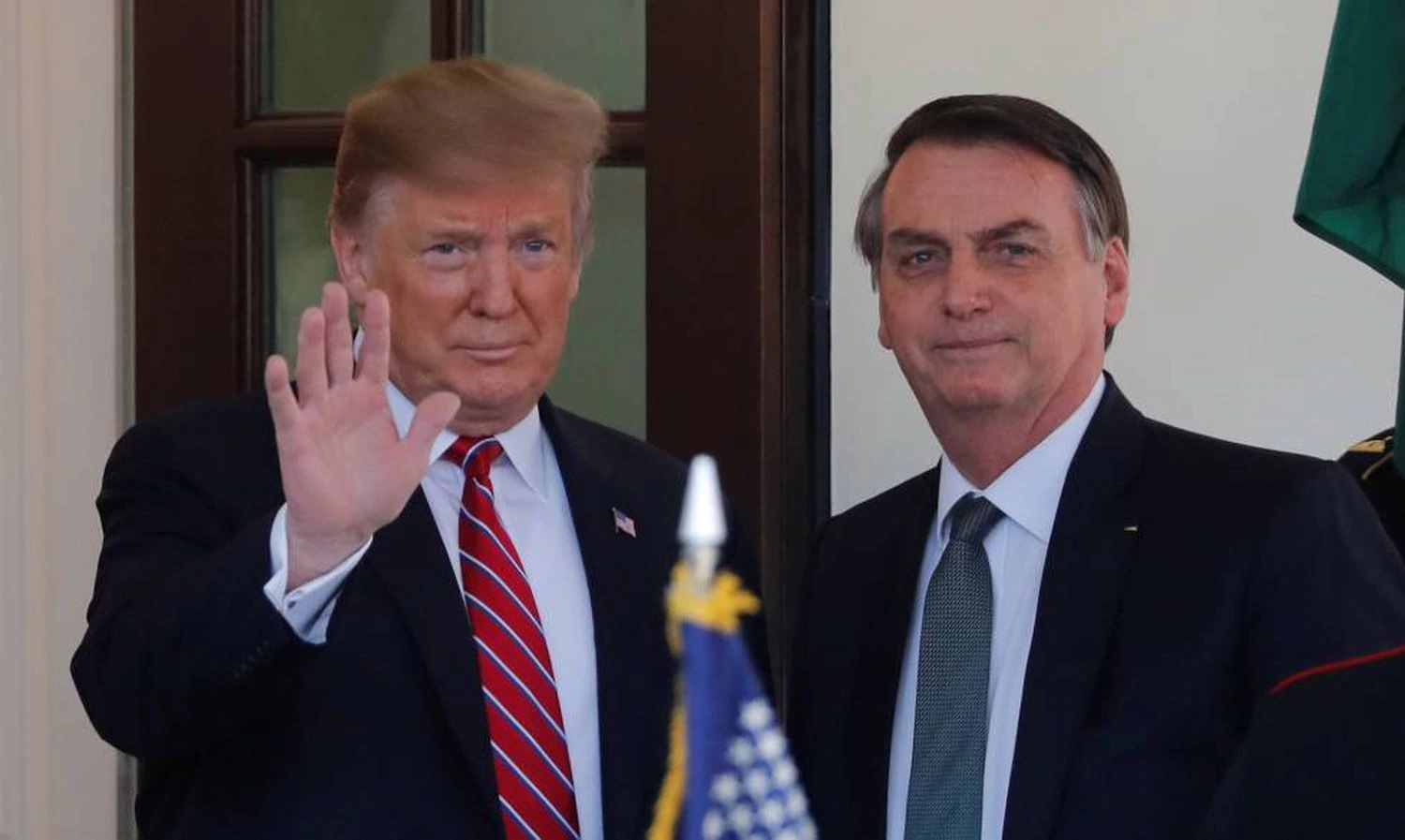
Bolsonaro’s visit to Washington and President Donald Trump in March was celebrated by government supporters. During the visit, Trump declared his support for Brazil’s entry into the OECD (Organization for Economic Co-operation and Development). The endorsement was viewed by many Bolsonaro enthusiasts as a sign of the now close relationship between the two countries. In October, however, US Secretary of State, Mike Pompeo backed the bid of neighboring Argentina, not mentioning Brazil at all.
In April, President Bolsonaro visited Israel, and announced plans to move the Brazilian embassy from Tel Aviv to Jerusalem. The announcement displeased the Arab community, and Brazil’s government later decided to open only an Apex (Brazilian Export and Investment Promotion Agency) office in Jerusalem, leaving the embassy in Tel Aviv.
Two months later, in June, Bolsonaro was once again abroad, this time attending the G20 meeting in Japan. During the trip, the conclusion of a free trade agreement between Mercosur and the European Union was announced. The only limit on the agreement, which began in 1999, was made by Germany’s Angela Merkel and France’s Emmanuel Macron, who said that their countries would be unwilling to sign a trade deal if Bolsonaro withdrew from the Paris Climate Agreement.
French President Macron also played a role in one of the main controversies relating to President Bolsonaro this year. In August, the French President called an emergency meeting of the G7 partners to talk about the burning in the Amazon. Macron called the spread of fires an ‘international crisis’ while Bolsonaro responded that the Amazon fires were a domestic problem and blamed NGOs and even Leonardo diCaprio for the fires.
“The NGO people, what did they do? (They) Set fire to the bush. The NGO campaigns against Brazil, contacts Leonardo DiCaprio, and Leonardo DiCaprio donates US$500,000 to this NGO. Part of the money goes to the people who are setting the fires. Leonardo DiCaprio is collaborating there with the burning in the Amazon,” said Bolsonaro in November, reigniting the Amazon controversy once again.
November was also the month Bolsonaro’s main rival, former President Luiz Inacio Lula da Silva was released from prison, after being incarcerated for 580 days for corruption and money laundering. Lula’s release was made possible after Brazil’s Supreme Court ruled that one could only be those convicted after all appeals had been exhausted.
Lula’s release gave the Brazilian leader some relief, with the ideology discussion temporarily taking over the spotlight and moving criticism over the government’s ultra-conservative public policy changes as well as the growing scandals involving some of Bolsonaro’s family members to the back pages of national newspapers.
But local media soon returned to the President’s family and the scandals surrounding it. Senator Flavio Bolsonaro, the President’s eldest son, came under attack earlier this month, accused by federal prosecutors of embezzling money, having ties with militia groups and heading a criminal organization.
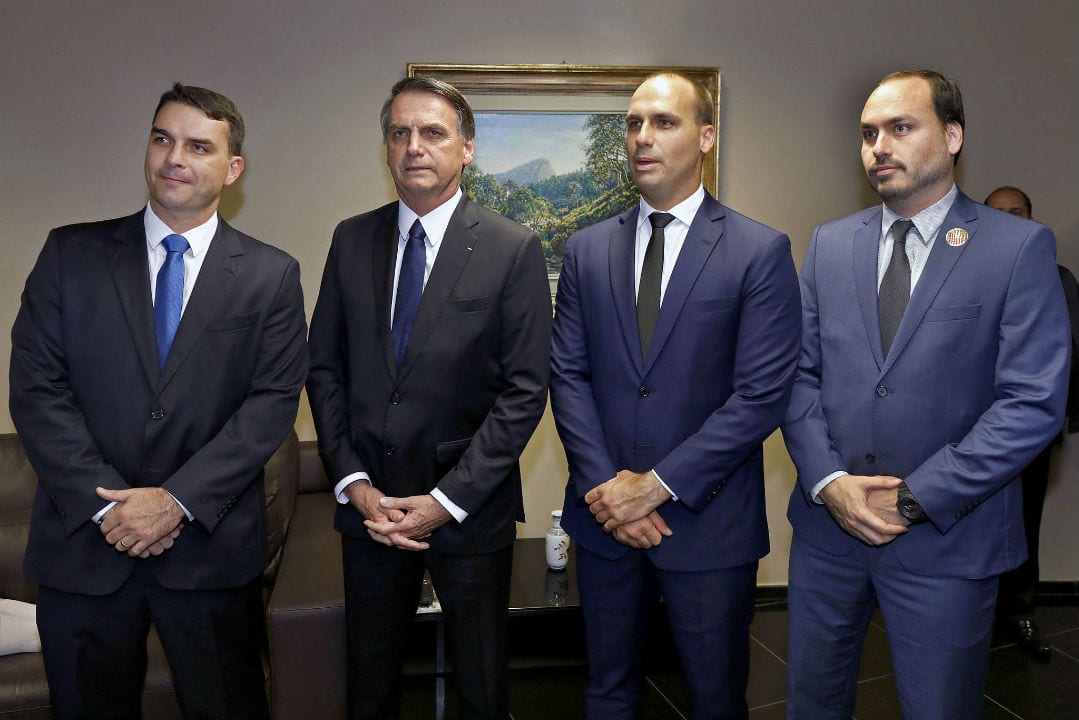
After stating on a TV interview that military intervention would be positive for Brazil and that the Supreme Court could be shut down by military officers, Federal Representative Eduardo Bolsonaro, another son, also came under attack, when the President announced he was considering nominating him as ambassador to the U.S. Brazil usually nominates professional diplomats to foreign posts and the main criticism was that the younger Bolsonaro had no foreign affairs experience. The President eventually dismissed the idea, nominating instead someone in the Brazilian diplomatic corps.
But the Bolsonaro did not only face criticism and controversy during this past year. There were some successes. In October, Brazil’s Congress approved the Social Security reform, almost nine months after the proposal was submitted by the government. The reform changed retirement and pension rules for more than 72 million people, including working private sector workers and federal civil servants, which according to officials will help Brazil reduce its deficit.
The Brazilian economy is slowly improving and unemployment is dropping. Interest rates are also at an historic low, with the government’s economic team doing all it can to increase consumption and production in the country.
President Bolsonaro’s first year as Brazil’s commander and chief has been rocky to say the least. The leader has mimicked US President, Donald Trump, and adhered to social media as the principal venue of addressing his supporters and criticizing his opponents. Sometimes, however, his plans to gain even more support have backfired.
In early March, during Carnival, Bolsonaro shared a pornographic video which received strong criticism from both allies and opponents alike. And in August he responded to a reporter’s question, about reducing environmental pollution suggesting that the population “poop every other day”.
Political analysts say that next year should be more of the same. According to them, the government is likely to continue with its conservative stance, pushing civil liberties, environmental matters and human rights issues to the back of the line of priorities. This, they say, may encourage ultra-right radical groups to gain strength within the government.
More: Brazil news in English, every day from The Rio Times.
Editorial responsibility: Matthias Camenzind, Editor-in-Chief · Editorial standards · Report an error