The US Supreme Court Lets the President Fire Regulators at Will — but Not the Fed
Analysis
Key Facts
—What this is about. On June 29 the US Supreme Court handed the president sweeping new power to fire the heads of independent federal regulators at will — one of the biggest shifts in how Washington is governed in decades.
—The precedent overturned. The 6–3 ruling swept away a 91-year-old precedent, from 1935, that had let Congress protect such officials from removal except for cause.
—Who is now exposed. Agencies once thought independent — the Federal Trade Commission, the National Labor Relations Board and the Merit Systems Protection Board — are now exposed to at-will presidential removal under the ruling’s logic.
—The big exception. In a companion case decided 5–4, the court blocked the firing of a Federal Reserve governor, calling the central bank a uniquely structured institution.
—Why it matters. The carve-out shields the independence markets prize most — the Fed’s control of interest rates — even as the president’s reach now extends across nearly every other regulator.
—Left open. The tenure of specialized judges, such as those on the Tax Court, was left for a later case.
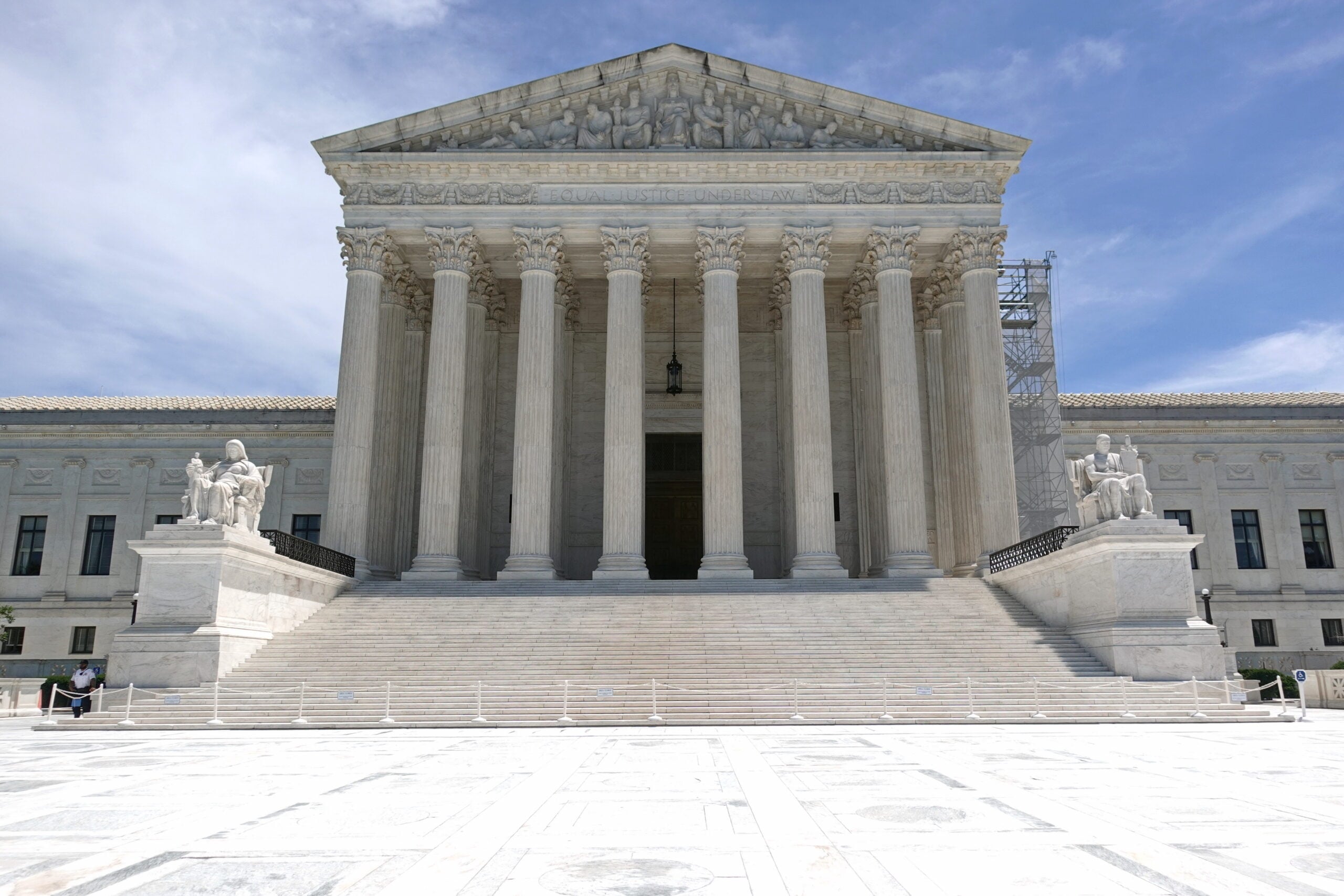
In a single day, the US Supreme Court redrew the line between the president and the agencies that regulate American life. It handed the White House the power to fire most of their leaders at will — while carving out one crucial exception: the Federal Reserve.
On June 29 the Supreme Court ruled, by six votes to three, that the president may fire the leaders of independent federal agencies at will. In doing so it swept away a rule from 1935 that had let Congress shield those officials from removal except for cause.
The decision came in the case of a fired Federal Trade Commission member. But its reach extends to a whole class of bodies, and understanding which ones, and why the court spared one in particular, matters more than any single day’s headline.
What the old rule did
For most of a century, a particular kind of federal body operated at arm’s length from the president. These were the multi-member commissions, boards of several people meant to regulate an industry or enforce a law with some insulation from the politics of the moment.
The protection was simple. The president appointed their members, but by law could not fire them merely for disagreeing with them, and removal required a real cause, such as neglect of duty or misconduct.
That arrangement rested on the 1935 decision, which held that Congress could protect the members of such bodies because their work was not purely the president’s executive business. The idea was that some functions of government benefit from a measure of distance from the White House.
The new ruling ends that. In the majority’s words, if anything remained of the old framework the court now overruled it, and officials who exercise the president’s executive power must be removable by the president at will.
Which agencies are now exposed
The practical consequence is that a long list of bodies once thought independent now sit within the president’s direct reach. The case itself concerned the Federal Trade Commission, which polices competition and consumer protection.
The same logic extends to others built on the same model. Bodies such as the National Labor Relations Board, which referees disputes between workers and employers, and the Merit Systems Protection Board, which hears the appeals of fired federal employees, are structured in the same way and are now exposed to at-will presidential removal under the ruling’s logic.
What these share is the feature the court fastened onto. They are multi-member commissions whose members wield executive power on the president’s behalf, and under the new rule that is enough to strip away their protection from firing.
The chief justice was careful about the boundary. The ruling, he wrote, does not touch the tenure of judges on specialized courts such as the Tax Court, leaving those questions, in his phrase, for another day.
Why the Federal Reserve was spared
The most consequential detail is the exception. On the very same day, in a companion case, the court blocked the president’s attempt to fire a governor of the Federal Reserve, the body that sets the country’s interest rates.
That decision went the other way, by five votes to four, with the chief justice joined by one other conservative and the three liberal members. The reasoning was that the central bank is different, a uniquely structured institution with a long historical pedigree stretching back to the first national banks of the early republic.
The court leaned on that history rather than on pure principle. It described the Federal Reserve as a distinct, quasi-private entity, unlike the ordinary enforcement agencies that answer directly to the president, and it held that any change to the protection of its governors must come from Congress, not from the courts.
There is a plain reason the justices drew this line with care. Financial markets around the world depend on the belief that a central bank sets interest rates on the merits, free from a president’s short-term wishes, and a ruling that left the Fed exposed could have rattled that confidence badly.
What independence now means
Put the two rulings together and a new map appears. The president’s control now runs across the great body of regulatory agencies, while a narrow island of protected independence remains around the central bank.
The word independent has quietly changed meaning. For most agencies it no longer describes a legal shield against firing; it describes, at most, a customary distance that the president may choose to respect or to end.
That is a real shift in how the American state is arranged. Power that Congress had deliberately spread out, placing it in bodies designed to resist a single will, has been gathered back toward the office of the president.
Why presidential removal power reaches Latin America
For readers in Latin America this is not an exotic constitutional puzzle but a familiar theme in a new setting. The region has long debated how much distance to keep between elected leaders and the institutions meant to check them, from central banks to electoral courts to regulators.
The concentration of power in a presidency, and the slow erosion of bodies built to be independent of it, is a story the region knows intimately. To watch the oldest constitutional democracy in the hemisphere move power back toward its president is to see a debate the region has lived, playing out at the center of the system that many took as the model.
The saved central bank is the part that will travel furthest. In economies where the fight to keep monetary policy free of political interference has been long and costly, the spectacle of a court singling out the central bank for protection, precisely because its independence is too valuable to risk, is a pointed one.
The case that none of this is settled
It would be a mistake to read either half of this as permanent, and the strongest counter-argument rests on exactly that. Consider first the expansion of firing power.
A ruling handed down by one court can be narrowed by a later one, and the very breadth of this decision invites future litigation over its edges, over which officials truly wield executive power and which fall into some protected category the court has not yet defined. Then consider the carve-out for the central bank.
It was justified by history rather than by a clean principle, and a protection resting on a court’s reading of tradition is a fragile thing, open to being trimmed or reasoned away by a differently minded majority later. There is a further wrinkle.
The central-bank case was decided on narrow, procedural grounds, sending the underlying facts back to a lower court, which means the president may yet try again to remove the governor if he can show cause, and the fight is deferred rather than finished.
So the map drawn this week is written in pencil, not ink. It is a genuine and important shift in where power sits, but its two boundaries, the wide new reach over agencies and the narrow shelter around the central bank, are each less fixed than they look, and the coming years of argument will decide how much of it endures.
Frequently Asked Questions
What did the presidential removal power ruling decide?
It held, by six votes to three, that the president may fire the heads of independent federal agencies at will. It overturned a 1935 precedent that had allowed Congress to protect them from removal except for cause.
Which agencies does it affect?
It reaches multi-member commissions built on the same model as the trade commission at the center of the case. The labor-relations board and the merit-systems board are among those now exposed to at-will removal.
Why was the Federal Reserve treated differently?
In a companion case the court blocked the firing of a Federal Reserve governor by five votes to four. It called the central bank a uniquely structured institution whose protections must be changed by Congress, not the courts.
Is the outcome final?
Not entirely, on either side. The expansion invites further litigation over its edges, and the central-bank case was sent back to a lower court on procedural grounds, leaving room for the president to try again.
Connected Coverage
USMCA Review Begins a Ten-Year Countdown to Possible Exit
The USMCA in 2026: A Complete Guide to the North American Trade Pact
This article was produced by The Rio Times’ automated newsroom system. How we use AI · Report an error · Editorial responsibility: Matthias Camenzind, Editor-in-Chief