Panama goes backwards in access to information: Transparency International
By Mary Triny Zea
In what appears to be a dead letter, access to public information in Panama is guaranteed in the Political Constitution, as well as in the Panamanian Transparency Law, inspired by the Freedom of Information Act of the United States, which contemplates the claim before the courts, through habeas data, foresees sanctions, and even the dismissal of the public servant who does not provide the requested information.
To sample a button: one year has elapsed since the Supreme Court of Justice (CSJ) ordered the National Assembly – through a habeas data – to deliver information regarding professional service contracts, also known as form 172, which had been requested by the author of this article, under Law 6 of 2002, or Transparency.
Despite this decision of the highest court of justice, which indicates that the information should be delivered in a maximum of 5 days, secrecy is around.
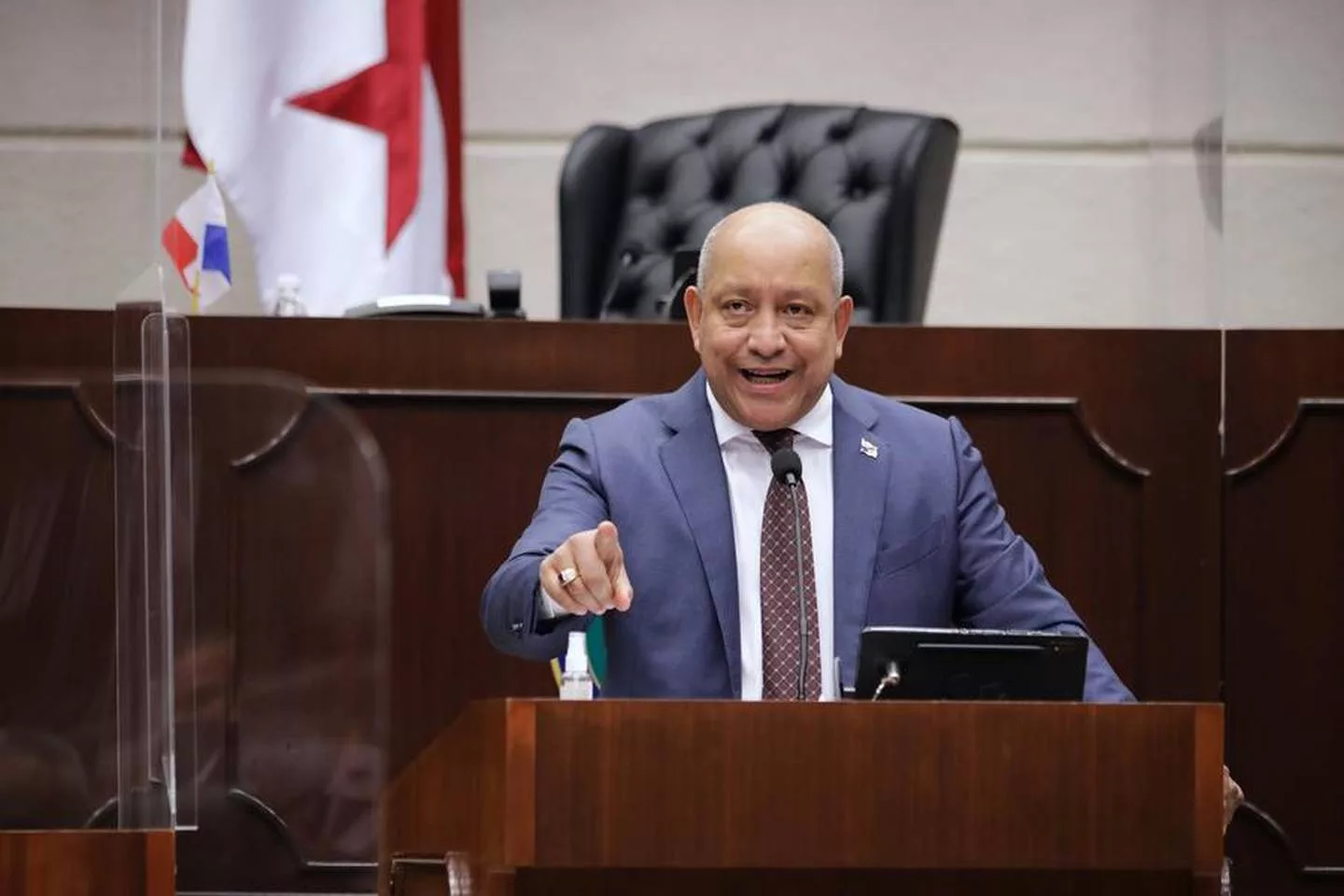
These are the service contracts popularly known as the “cash back” form, since the money from these payments returns to the deputies who manage these service contracts or consultancies and in most cases does not imply the execution of any service, because in reality it is a procedure to deplete public funds, as evidenced in past journalistic investigations.
The CSJ, under the presentation of magistrate Olmedo Carrasco, confirmed that these service contracts are public and ordered the delivery of a simple copy of the reports regarding the service paid and a simple copy of the contracts for the year 2020, among other required documents.
For his part, the president of the National Assembly, Crispiano Adames, replied that the Body presented a “writing to clarify the ruling on some points” of the ruling of November 16, 2021 that granted habeas data and until it is resolves that the request cannot be met, by means of a letter.
COMPLICITY IN HIDING THE INFORMATION?
“There has been a setback in the country regarding the understanding of what the citizen’s right to request access to public information is and that also goes through the issue of habeas data and entities that refuse to deliver information of a public nature,” told Bloomberg Línea, Olga de Obaldía, Executive Director of Transparency International (TI) Panama chapter.
De Obaldía added that in practice these contracts continue to be managed on a discretionary basis and that observing how the justice system acts in these subpoenas “causes her deep concern.”
And it is that these service contracts or “cash back” payroll have implied the disbursement of some US$85 million, between 2015 – 2020, almost double what was assigned to the National Secretariat of Science, Technology and Innovation of Panama for operate in 2023.
With that amount, it would have been possible to build some six model schools, with better teaching facilities, among them, gyms, libraries, science laboratories, computer science and other facilities.
The lack of accountability and detail on the use of public funds was also echoed by the Ministry of Economy and Finance, which avoided providing the detail of the legislative budget, with the detail by item for 2022 and the previous ten years, which were requested by the journalist of this article by letter on April 18.
PANAMA, PERCEIVED AMONG THE MOST CORRUPT
Precisely, the facts described coincide with the fact that Panama has one of the “most deficient” results in the Transparency International Corruption Perception Index, the lawyer and former president of Transparency International, Panama chapter, Carlos Barsallo, reminded Bloomberg Línea.
Panama obtained a score of 36 where 100 points is the best and 180 countries were considered in the evaluation. Meanwhile, its neighbors Colombia and Costa Rica were better evaluated with 39 and 58 points out of 100, respectively.
Similarly, when Panama is compared with 53 countries that the World Bank classifies as high-income, the country is the most corrupt based on the Corruption Perception Index, according to existing data as of 2019.
“Panama is a high-income country, there is a great contradiction between corruption and economic development, we have been like this for the last 10 years, it is a stagnant situation, we are not improving and the reason is that there is no will”, concluded Barsallo.
With information from Bloomberg Línea
More: Latin America news in English, every day from The Rio Times.
Editorial responsibility: Matthias Camenzind, Editor-in-Chief · Editorial standards · Report an error