One Old Railway, Two Superpowers, and the Fight for the Metals That Run the Future
Rio Times · Analysis
Key Facts
—What it is The Lobito Corridor is a 1,300km-plus railway linking Angola’s Atlantic port to the copper and cobalt belts of the DRC and Zambia.
—Fresh money Angola has secured new international lender funding to modernise the line, adding to a $553m US development-finance loan agreed in December 2025.
—The prize The DRC produces roughly 70% of the world’s cobalt, and the DRC-Zambia belt holds a large share of global copper.
—The rivalry Washington backs Lobito to counter China, which already controls most Congolese copper mines and mineral processing.
—The catch Despite the headlines, little copper and cobalt has yet moved to the US by rail, and roads still dominate.
—Latin America read Chile, Peru and Brazil, rival mineral suppliers, watch a new Atlantic export route reshape the global map.
A century-old African railway has become the front line of the US-China contest for cobalt and copper, and its progress will help decide who controls the raw materials behind electric cars, phones and weapons.
A Colonial Railway With a Twenty-First-Century Job
Some infrastructure outlives its original purpose and finds a new one, and the Lobito line is a striking case. Developed in 1902 as a colonial trade corridor to extract raw minerals from African hinterlands to international markets in Europe and the Americas, the Lobito Corridor today sits uneasily at the intersection of a global green transition, geopolitical contestation, poor regional infrastructure and governance deficits.
War left it a ruin, and the scale of decay is hard to overstate. Decades of civil strife in post-colonial Angola severely damaged infrastructure and slowed progress on upgrades and modernisation works on the corridor.
By the time the civil war ended in 2002, only 34 km, less than 3 per cent of the rail along Angola’s coast, remained functional.
What it connects is what makes it matter now. Revitalization and expansion of the Lobito Corridor, which spans Angola’s Lobito Port to the Democratic Republic of Congo (DRC) and Zambia, is poised to reshape Southern Africa’s economic landscape.
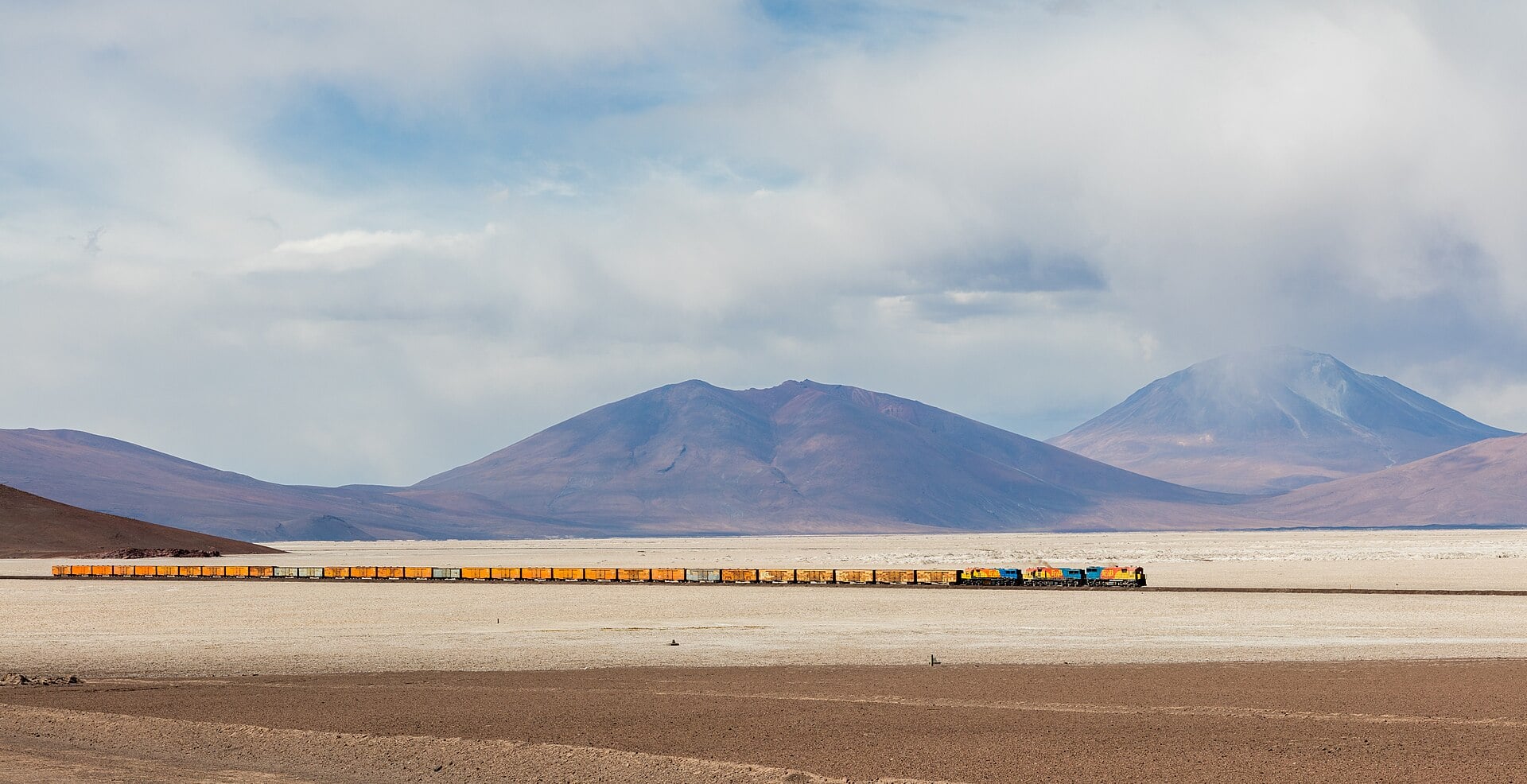
The route today is operational but only partly modern, a work in progress rather than a finished asset. The Lobito Corridor is an operational 1,300+ km railway and logistics transport corridor between Angola, the DRC, and Zambia.
It currently serves as a mineral export superhighway, but massive proposed upgrades could transform it into a catalyst for regional economic growth.
For a country where a quarter of the population lives along the line, this is not abstract geopolitics. According to Angola’s Census report, nearly a quarter of the country’s population lives in the four provinces covered by the Lobito Corridor, making its development a major national priority.
The Metals Everyone Wants
Strip away the diplomacy and this is a story about a handful of elements. It is rich in cobalt, lithium and copper, key materials for the energy transition.
Copper is used in electrical wires, and cobalt and lithium are key components in the batteries that keep electric vehicles and cell phones powered.
The DRC’s dominance in cobalt is close to a monopoly. The Democratic Republic of Congo, which will be directly linked to the Atlantic through the Lobito Corridor, produces approximately 70% of the world’s cobalt—a mineral essential for electric vehicle batteries, consumer electronics, and various defense applications.
Add copper, and the corridor’s two feeder countries become globally significant. This is because the extraction countries, the DRC and Zambia, have major mineral reserves, with the DRC holding roughly 70% of the world’s cobalt and the DRC-Zambia belt holding a large share of global copper.
These are not merely industrial inputs; they are strategic ones, and Washington frames them that way. This pledge reflects the United States’ heightened focus on securing supply chains for critical minerals, resources that play a pivotal role in the development of technologies from electric vehicles to solar panels to defense systems.
That is why an African rail line now shows up in conversations about semiconductors, AI data centres and defence procurement.
The Great-Power Contest, in Steel
The corridor is best understood as the physical form of a rivalry. The United States International Development Finance Corporation has finalized a $553 million loan with the Lobito Atlantic Railway consortium for the refurbishment of Angola’s strategic rail line, marking a watershed moment in Washington’s efforts to secure access to critical minerals while countering China’s deepening economic presence across Africa.
Washington openly calls it a strategic play, not just charity. As DFC CEO Scott Nathan stated during President Biden’s December visit to Angola: ‘DFC’s significant investments along the Lobito Corridor are fostering sustainable economic development and advancing key U.S. strategic interests’, encapsulating Washington’s dual objectives of promoting African development while securing American strategic interests in an era of intensifying great power competition.
But China holds the ground that matters most, the mines and the processing plants. China controls most of the mines and most of the processing factories for these critical minerals, but a big question was how to get the minerals out.
Its grip on Congolese copper in particular is near-total. China already owns 80% of the DRC’s copper mines; thus, the corridor is already dependent on Chinese companies that export minerals from the DRC and Zambia.
Beijing was also here long before Washington’s recent push, having rebuilt stretches of the very same line. For example, one of China’s railway construction groups funded a $2 billion renovation (through debt-trap loaning) of the Lobito Corridor from 2006 to 2014, which created over 25,000 local jobs.
Fresh Money, and the Long List of Backers
The story is live this week because Angola keeps stacking financing onto the project. The DFC loan, combined with $200 million from the Development Bank of Southern Africa, will finance the rehabilitation of approximately 1,300 kilometers of rail tracks connecting the mineral-rich Democratic Republic of Congo border to Angola’s Atlantic coast port of Lobito.
The developers are candid that more deals are coming. The developers plan to finalize more financing deals by the end of 2026, according to senior AFC officials, indicating that the project remains in relatively early stages despite the headline-grabbing loan announcement.
The backer list is telling, because it is not a two-horse race any more. The U.S. International Development Finance Corporation already signed a $553 million loan to the Angolan railway in December 2025, with European, Chinese, Egyptian and Emirati investors simultaneously pledging billions more. For Latin America’s major mineral exporters—Chile, Peru and Brazil—the emergence of a modernised Atlantic export route from Central Africa is not a distant curiosity. Our reporting has shown that the Lobito Corridor, combined with Chinese control of Congolese processing, could over time erode the price premium that South American copper and lithium have long commanded, particularly if Gulf and European capital helps African volumes reach Atlantic markets faster than expected.
Gulf money has arrived in force, following high-level diplomacy. Additionally, the UAE has invested in Angola.
Following President Mohammed bin Zayed’s visit in August 2025, the Abu Dhabi and Dubai sovereign funds have found a renewed interest in Angola, funding agro-industrial and renewable projects up to 3 billion USD.
The operating consortium itself is a picture of globalisation. The consortium bringing together diverse international capabilities includes Portugal’s Mota-Engil, one of Europe’s largest construction and infrastructure companies; commodities trading giant Trafigura, which brings extensive experience in mineral logistics and marketing; and rail operator Vecturis SA, which provides railway management expertise.
The Gap Between Announcements and Cargo
It is easy to be swept up by the headlines, and worth remembering how modest the flows still are. Still, despite all the investment and guarantees from Washington, comparatively little copper and cobalt has left Congo and passed through Angola by rail on its way to the U.S. For the moment, road transportation still rules, and China looks like it might benefit yet again from U.S. policy in Africa.
The volumes that have moved are real but small against the ambition. When Trump took office for the second time in 2025, the Lobito Corridor had already handled about 125,000 tonnes of cargo, including around 40,000 tonnes of copper ore from the DRC moving out via Lobito.
Even the new lithium projects illustrate the trap. When KoBold, a U.S. mining firm backed by Bill Gates and Jeff Bezos, began looking at developing a lithium mine in the Congolese town of Manono, officials there imagined the means of egress for the lithium ore would include an extension of the Lobito Corridor, but when I asked planners how they would get the minerals to the railway, they admitted that the easiest way would be building a road with China Railway Seventh Group (CREC-7), a Chinese state-owned enterprise.
Trump’s own emphasis shifted the game, too, away from transport and toward the mines themselves. Trump, however, wanted to control the extraction of critical minerals, not simply their means of export.
So the corridor is at once a genuine breakthrough and a reminder that steel rails alone do not rewrite supply chains.
Does the Wealth Reach the People?
The deeper question hanging over Lobito is whether it develops Africa or merely drains it faster. At the same time, it warns about the risk of staying locked into raw-material export roles, noting that 77% of Africa’s resources are exported in raw form while refining and processing take place elsewhere—primarily in China, but also in Europe and other industrialized regions.
That makes the project a genuine test rather than a foregone success. In that context, the Lobito Corridor is presented as a test case for whether mineral wealth translates into broad-based development or reinforces a new phase of critical-minerals geopolitics.
There is a credible upside case for local livelihoods, not only for foreign buyers. At the local level, infrastructure development is expected to facilitate informal cross-border trade, re-establish commercial links between urban and rural areas, enhance livelihoods, create employment and improve food security for communities along the corridor.
But governance is the perennial worry, and honest observers say so. However, the implementation of this major infrastructure project also raises several concerns, most notably around financial transparency, adherence to environmental and human rights standards, and regulatory and harmonisation challenges.
Angola’s smartest strategy may be to refuse to pick a side and play the suitors against one another. Angola would also be able to continue to balance competing foreign powers, rejecting the need for the adoption of exclusion partnerships.
The Latin America Read-Through
For readers in the Americas, Lobito is not a distant African curiosity; it reshapes the market they compete in. Chile and Peru are the world’s copper giants, and Bolivia, Argentina and Chile hold the lithium triangle.
A cheaper, faster Atlantic route for Congolese and Zambian copper changes the competitive geometry those countries have long enjoyed. More African supply reaching Western buyers could soften the pricing power of Andean exporters over time.
Brazil sits on both sides of the ledger, as a mining power in its own right and as a country courting the same Western capital for critical minerals. The contest playing out in Angola is a preview of the deals Brasília and Santiago are chasing.
There is a Lusophone thread, too, that ties the story home. Angola’s Portuguese-speaking government and the presence of Portugal’s Mota-Engil link this corridor to the same Atlantic, Lusophone world that includes Brazil.
The strategic lesson for Latin America is blunt: in a world hungry for battery metals, the countries that control processing, not just extraction, capture the value. Lobito is Africa’s attempt to climb that ladder, and the Andes are watching.
Whoever wins the race to move Africa’s metals will also set the terms on which Latin America sells its own.
What to Watch Next
The near-term test is whether the promised follow-on financing actually closes this year. The developers plan to finalize more financing deals by the end of 2026, according to senior AFC officials, indicating that the project remains in relatively early stages despite the headline-grabbing loan announcement.
The bigger build is the greenfield extension into Zambia, which turns a repair job into a new artery. The project involves construction of 515 kilometers of new rail lines in Zambia and another 315 kilometers in the Democratic Republic of Congo that will connect to the existing Benguela line, creating an integrated transportation corridor spanning three countries.
Watch whether rail actually displaces road for the heavy Copperbelt flows, the metric that decides if the corridor works. The expected logistics shift is described in concrete terms: today, Copperbelt minerals often move by heavy-duty trucks for weeks or even months over poor roads to reach ports in South Africa or Tanzania.
Watch, too, whether electrification and local processing get built, the difference between a raw-export chute and genuine development. Finally, the blog highlights the potential for railway electrification, which would reduce the carbon footprint of the supply chain and could anchor financing for hydropower projects, which could enhance energy access for rural areas across the corridor.
And watch the politics, because a shifting cast of American, Chinese, European and Gulf backers can change the terms overnight. The corridor is a live experiment in how the multipolar world actually divides up the future.
For Angola, the reward for getting it right could be transformative; for everyone else, it is a lesson in how the metals age will be won.
More: DR Congo news in English, every day from The Rio Times.
Connected Coverage
- The Ceasefire Breaks, the Oil Shock Returns, and the World Feels It All at Once
- Mali’s Battle for Anefis Tests Russia’s Grip on the Sahel
- Burna Boy Becomes Africa’s Most-Streamed Artist on Spotify
- Global Investors Court Tanzania in a Trade and Investment Push
- South Africa Leads Africa in AI Outsourcing, Ranks Eighth
- Flutterwave Wins Circle Backing to Push Stablecoins in Africa
- Samsung’s Record Profit, Korea’s Sixth Crash: The AI Memory Reckoning Reaches Latin America
- Congo Ebola Outbreak Passes 450 Deaths as It Spreads
Explore the cluster: World · Africa · North America · Asia
This article was produced by The Rio Times’ automated newsroom system. How we use AI · Report an error · Editorial responsibility: Matthias Camenzind, Editor-in-Chief
Frequently Asked Questions
What is the Lobito Corridor?
It is a more than 1,300km railway and logistics route linking Angola’s Atlantic port of Lobito to the copper and cobalt regions of the Democratic Republic of Congo and Zambia, now being modernised with US, European, Gulf and Chinese money.
Why do the US and China care about it?
The DRC and Zambia hold huge shares of the world’s cobalt and copper, essential for batteries, electronics and defence. Washington backs the railway to secure Western access and counter China, which controls most of the region’s mines and processing.
How does this affect Latin America?
Andean copper and lithium producers compete with African supply. A faster Atlantic export route for Congolese and Zambian metals could reshape global pricing and the deals that Chile, Peru and Brazil are pursuing.