Mozambique Updates Customs and Tax Procedure Codes for 2026
Mozambique · ECONOMY
Key Facts
—The new law: Parliament approved Law No. 8/2025 on 12 December 2025, and it was promulgated on 29 December 2025, and the new customs and tax procedure codes took effect on 1 January 2026.
—Traveller allowance: Tax is now applied only to the difference between an item’s value and the permitted limit when the limit is exceeded.
—State-project vehicles: Motor vehicles under tariff codes 87.02 and 87.04 may qualify for customs-duty exemption or reduction for state institutions.
—AfCFTA alignment: The law sets Mozambique’s tariff dismantling schedule for 2025–2033 under the African Continental Free Trade Area.
—Revenue target: The tax authority expects the overall 2026 reform package to add roughly 15 billion meticais, equivalent to about €200 million.
—New HS subheadings: The reform introduced new Harmonised System subheadings across multiple tariff headings, including 35.06, 38.10, 84.86 and 85.41.
Mozambique’s Parliament approved new customs and tax procedure codes through Law No. 8/2025, approved on 12 December and promulgated on 29 December 2025, with the changes taking effect on 1 January 2026 as part of a broader fiscal overhaul.
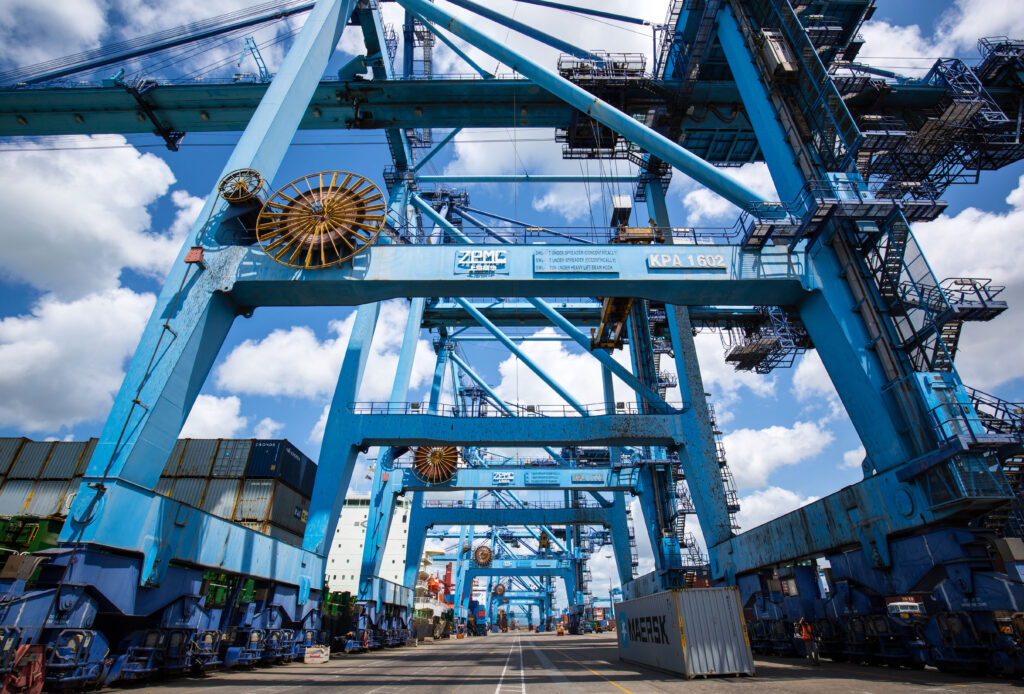
What the new customs and tax procedure codes change
The reform amends Mozambique’s customs tariff and its preliminary instructions, introducing new Harmonised System subheadings across multiple tariff headings. KPMG confirmed that Law No. 8/2025 made the new rules effective from the first day of 2026.
DLA Piper’s Mozambique desk noted the law added new HS subheadings under headings including 35.06, 38.10, 39.20, 70.07, 74.08, 76.04, 76.12, 84.51, 84.61, 84.79, 84.86, 85.36, 85.41, 87.02, 87.03, 87.04, 87.16, 90.31 and 95.07. It also removed tariff position 87.04 from Class k.
For travellers, the calculation method has shifted. If an item exceeds the permitted allowance, tax is now applied only to the difference between the item’s value and the allowed limit, rather than the full value.
AfCFTA and the tariff dismantling schedule
PLMJ, a law firm tracking Lusophone Africa, reported that the reform set Mozambique’s tariff dismantling schedule for 2025–2033 under the African Continental Free Trade Area. Imports from AfCFTA signatories now follow this phased reduction calendar.
Finance Minister Carla Loveira said the revised customs tariff supports the government’s effort to update the national legal framework to the 2022 version of the Harmonised System approved by the World Customs Organisation. The schedule also covers tariff dismantling under the European Union Economic Partnership Agreement and the United Kingdom Economic Partnership Agreement.
The government expects gradual customs-duty reductions under these schedules, reaching as low as 1.7 percent to 17 percent in 2026 before falling to zero by 2033 in some cases. This positions Mozambique inside a contested trade architecture where African integration and European market access must be balanced against domestic revenue protection.
The revenue arithmetic behind the reform
The customs changes are one element of a wider fiscal package designed to repair Mozambique’s revenue base. The tax authority expected the overall 2026 reform package to add roughly 15 billion meticais, equivalent to about €200 million.
The International Monetary Fund noted in its 2025 Article IV consultation that Parliament approved late-2025 revisions to value-added tax, corporate income tax and personal income tax for implementation in 2026. Those revisions included stronger capital-gains taxation.
Financial Afrik reported in January 2026 that Mozambican customs had recovered €81.5 million between 2021 and 2025 through anti-smuggling efforts. Planned reforms include digitalisation, staff training and infrastructure upgrades, reinforcing the government’s narrative of easier lawful trade alongside tighter enforcement.
Modernising trade administration
The World Trade Organisation’s Trade Policy Review on Mozambique noted that the country revised tariff and customs-clearance legislation and continued developing its Electronic Single Window, known as the JUE. In December 2023, Mozambique eliminated mandatory customs brokers for imports, exports and transit, allowing traders to file declarations on their own behalf.
The 2026 tariff reform builds on that foundation. It is not only about rates but also about reducing friction in border administration and making customs more digitally manageable for compliant firms.
Back in the December 2022 debate on the predecessor customs tariff law, then Minister of Economy and Finance Max Tonela said the tariff changes were intended to standardise goods descriptions and facilitate application of international conventions. He also framed the reform as a measure to strengthen controls on imports and exports that pose public-health risks.
Who gains and who loses
Importers bringing goods from AfCFTA signatories stand to benefit from the phased tariff reductions, which could reach zero by 2033. State institutions may also gain from customs-duty exemptions or reductions on motor vehicles under tariff codes 87.02 and 87.04 when imported under government agreements or treaties for state projects.
Travellers receive a clearer, fairer tax treatment on excess goods. Smugglers and those under-declaring imports face a tightening enforcement environment, as the government pairs liberalisation with stronger anti-smuggling capacity.
The broader business community must now navigate a more complex but more predictable tariff nomenclature. The new HS subheadings require updated compliance processes, but the alignment with the 2022 Harmonised System brings Mozambique closer to global norms.
What to watch next
The tariff dismantling schedule runs to 2033, making this a long-term structural shift rather than a one-off adjustment. Investors should watch for the implementing regulations on state-project vehicle exemptions, which remain subject to future government action.
The revenue performance of the broader 2026 fiscal package will be a key test. If the 15-billion-meticais target is met, it would strengthen Maputo’s hand in future negotiations with the International Monetary Fund and other partners.
Mozambique’s balancing act between African integration, European market access and domestic revenue protection mirrors choices facing many frontier economies. The outcome will shape the country’s investment climate for years to come, a dynamic explored in our pillar coverage of Africa: The New Scramble.
Frequently Asked Questions
When did Mozambique’s new customs and tax procedure codes take effect?
The new codes took effect on 1 January 2026, after Parliament approved Law No. 8/2025 on 12 December 2025, and it was promulgated on 29 December 2025.
How does the reform change traveller allowances at Mozambican customs?
Tax is now applied only to the difference between an item’s value and the permitted limit, rather than the full value of the item.
What is Mozambique’s AfCFTA tariff dismantling schedule?
The schedule runs from 2025 to 2033, with some customs duties falling as low as 1.7 percent to 17 percent in 2026 and reaching zero by 2033.
Connected Coverage
For deeper analysis of how trade reforms and great-power competition are reshaping the continent, read our pillar Africa: The New Scramble.
Sources
This article was produced by The Rio Times’ automated newsroom system. How we use AI · Report an error
LatAm Markets: Live Signals → — real-time movers, turnover leaders and FX across Latin America.
Read More from The Rio Times
- Africa Intelligence Brief — Wednesday, September 23, 2026
- Issawa Music, the Sufi Brotherhood Repertoire of Morocco, Reaches a Casablanca Concert Stage on 17 October 2026 at 200 Dirhams a Ticket
- Moroccan Philharmonic Orchestra Opens Its 30th Season With Beethoven in Rabat, Morocco, on 8 October 2026, Then Casablanca and Tangier