Milei Wants Argentina to Be the First Home for AI-Run Firms
Politics
Key Facts
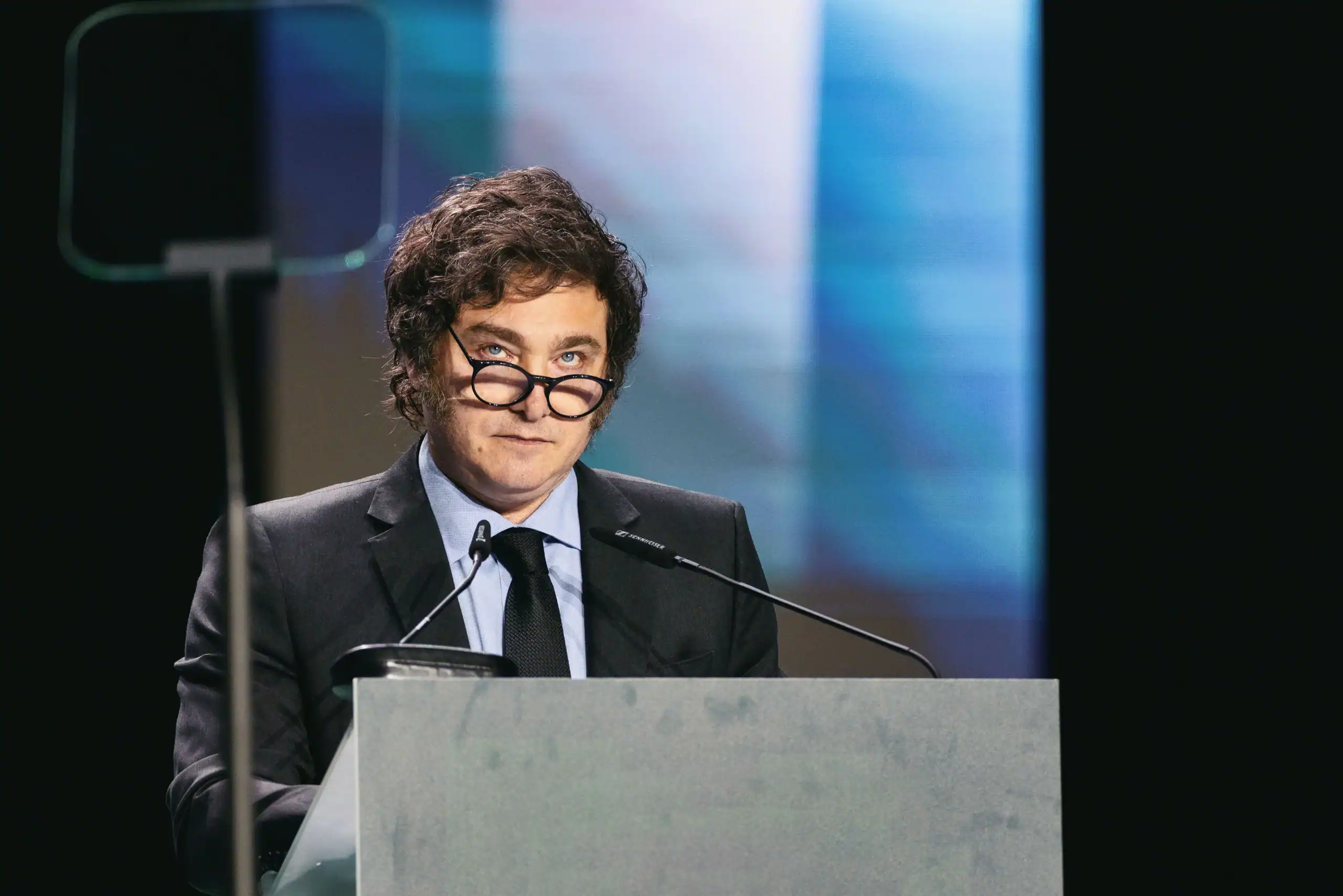
—The bill. President Javier Milei sent Congress a draft on May 29 that would let a company be run by artificial intelligence, replacing a corporate law in force since 1972.
—The catch. Despite the “non-human” branding, the draft still requires a human administrator to oversee the firm, and the company itself is liable for damage its AI causes.
—The pitch. Milei laid it out in a Financial Times op-ed with deregulation minister Federico Sturzenegger, framing Buenos Aires as a low-tax, light-touch base for AI startups.
—The pushback. Historian Yuval Noah Harari and Microsoft AI chief Mustafa Suleyman warned the idea removes human accountability and invites regulatory arbitrage.
—The status. The measure is a draft in Congress, not law, and officials say no firms or investment commitments are yet tied to it.
Argentina is trying to become the first country to let a non-human corporation exist in law. That means a company run by an artificial-intelligence system rather than a person. Read the draft, though, and the machine still needs a human standing behind it.
President Javier Milei sent the bill to Congress on May 29. It would rewrite the General Companies Act that has governed Argentine business since 1972. The headline idea is a new legal category, the “automated company,” that could run on algorithms or AI agents. Human shareholders would be allowed but no longer required.
Milei set out the logic in a Financial Times opinion piece written with his deregulation minister, Federico Sturzenegger. He reached back to the 1602 founding of the Dutch East India Company. Limited liability, he argued, was the legal breakthrough of the age of sail, and the AI era now needs its own version.
The rest of his message was blunter. “We are open for business,” he declared, pitching Argentina as a place where AI firms would face low corporate tax and little regulation.

Why the non-human corporation still needs a human
The branding runs ahead of the text. A July analysis by Reuters found the automated company would still need a human administrator to oversee operations. The firm would also be liable for damage caused by its AI or algorithmic systems.
The most autonomous format in the draft leans on people too. It is a blockchain-based structure modelled on a decentralised autonomous organisation. Legal analyses note it still needs a human legal representative to sign binding acts. It also needs a human promoter who answers without limit for the company’s obligations at formation.
Where anti-money-laundering rules apply, a human compliance officer is required as well. In short, the accountable person never fully disappears. That matters for any foreign investor weighing how much real risk shielding the structure would offer.
Diego Duprat, a law professor who co-wrote the text, said automated businesses already exist in limited forms. He pointed to cashier-less supermarkets. Lawrence Cunningham of the University of Delaware called the proposal bold but modest in practice. It recognises you might run a business without any human resources department, he said, rather than reinventing the company itself.
A bid to become the Delaware of AI
The commercial logic is a package deal aimed at one customer. That customer is the founder building autonomous, agent-based businesses. Argentina is offering a tailored legal container, limited liability, low taxes and a hands-off regulator. It hopes to attract company formations the way US states like Delaware attract incorporations.
Foreign minister Pablo Quirno and the wider Milei team have tied the idea to a broader campaign. They want to sell Argentina as an AI base, citing cheap Patagonian power and cold weather suited to data centres. It sits alongside the “Super RIGI” incentive bill, which offers thirty years of tax and currency stability to large new projects.
The timing is deliberately contrarian. The US, the European Union and China are all tightening AI oversight. Argentina is betting that a lighter regime can pull in capital that stricter countries may push away.
Investors reading from London or Munich should treat the signal carefully. One Silicon Valley venture partner told Reuters that regulation alone will not turn the country into a hub. The deciding factor, the partner said, is whether AI talent actually relocates there.
The accountability fight the non-human corporation has started
The proposal drew a sharp international response. In a counter op-ed, historian Yuval Noah Harari warned that AI-run firms could become expert in regulatory arbitrage. The ultimate deterrent for human executives, prison, means nothing to software, he added.
Harari turned Milei’s own comparison against him. He noted that the Dutch East India Company burned the port of Jayakarta in 1619 and ruled as a private empire. Buenos Aires, he cautioned, risked becoming a new Batavia rather than a new Amsterdam.
Microsoft AI chief Mustafa Suleyman agreed, writing that AI agents deserve no more legal standing than a laptop. Milei replied on social media that a defined legal category would make these entities easier to regulate, not harder. Authorities could point at a named structure instead of software operating in the shadows, he said.
What is a non-human corporation under Milei’s bill?
It is a proposed new legal category, called an automated company. It could run on artificial intelligence or algorithms rather than requiring human owners or staff. The draft still requires a human administrator to oversee the firm. The company would be legally liable for damage its AI systems cause.
Has Argentina passed the law yet?
Not yet. The measure was submitted to Congress on May 29, 2026 and remains a draft that must be debated and voted on. It would replace the General Companies Act in force since 1972, so it is a full rewrite rather than a minor tweak.
Why does the plan matter to foreign investors?
Argentina is trying to position itself as a low-tax, light-regulation base for AI companies. That comes as larger economies tighten their rules. For investors, the open questions are how much liability protection the structure truly offers and whether AI talent and capital actually move to the country.
Frequently Asked Questions
What exactly is the 'automated company' proposed in Argentina's draft bill?
An 'automated company' is a new legal category proposed by President Javier Milei. It would let a firm be run by algorithms or AI agents, with human shareholders permitted but no longer required. The bill was sent to Congress on May 29 and would replace Argentina's General Companies Act, in force since 1972.
Does the proposed law truly remove all human involvement from these AI-run companies?
No. Despite the 'non-human' branding, the draft still requires a human administrator to oversee the firm. The company itself would also be held liable for any damage its AI causes.
Who has criticized the proposal and what are their concerns?
Historian Yuval Noah Harari and Microsoft AI chief Mustafa Suleyman warn that the idea removes human accountability and invites regulatory arbitrage. The measure remains a draft in Congress and has not yet become law. Officials confirm no firms or investment commitments are currently tied to it.
This article was produced by The Rio Times’ automated newsroom system. How we use AI · Report an error · Editorial responsibility: Matthias Camenzind, Editor-in-Chief
In depth
LatAm Markets: Live Signals → — real-time movers, turnover leaders and FX across Latin America.