Mexico’s 2027 Budget Quietly Loosens the Target It Set in April
Key Facts
- — What happened. Mexico’s finance ministry delivered the 2027 economic package to Congress on 8 September.
- — The headline number. The public sector borrowing requirement is set at 3.9% of GDP for 2027.
- — The catch. April guidance promised 3.5%. The package is four tenths of a point looser.
- — What debt does. The broad debt measure rises from 54% of GDP this year to 55% next year.
- — On taxes. The package creates no new taxes and raises no excise duties on food or drink.
- — What growth is assumed. The ministry forecasts growth of 1.5% to 2.5%, down from an earlier 1.9% to 2.9%.
Mexico met its constitutional deadline and handed Congress the 2027 budget. The numbers inside it are looser than the ones the same ministry published in April.
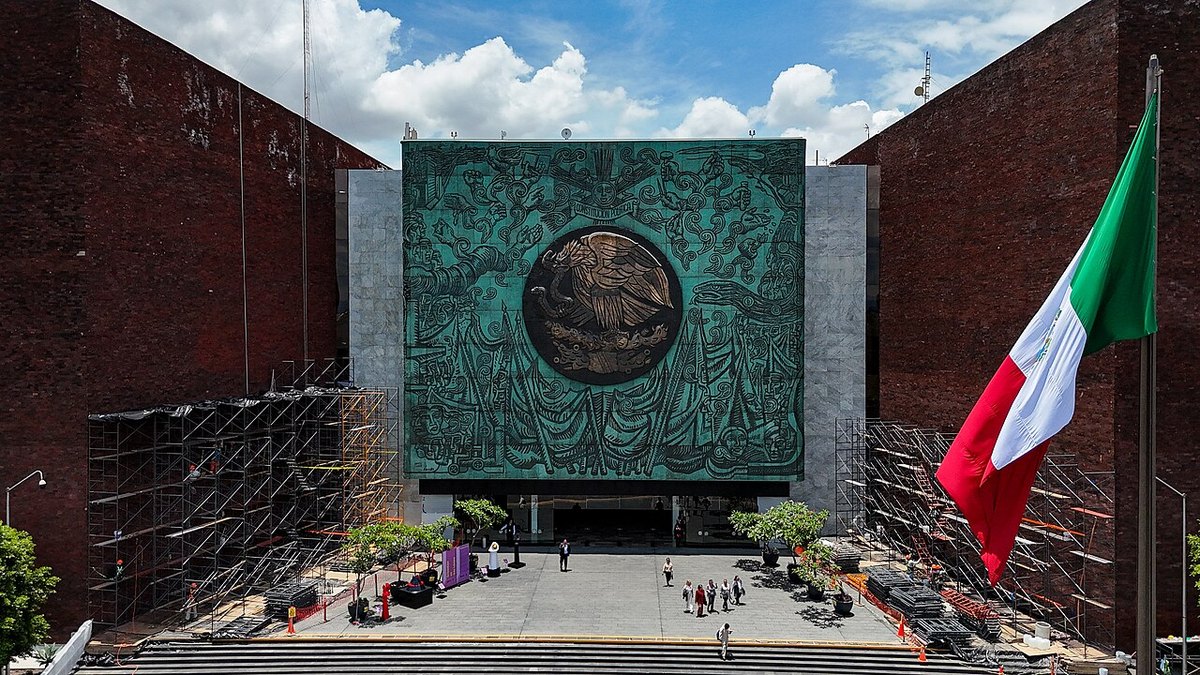
The delivery was covered everywhere. The assumptions were not public that evening, and they are the part that matters.
The Delivery
Finance Secretary Édgar Amador Zamora handed the package to the Chamber of Deputies on 8 September.
That is the constitutional deadline in a year without a presidential transition. The package went in on time.
It was received by the chamber’s presiding officer. The detailed assumptions came out with the documents.
Two of the three big rating agencies have already moved on Mexico this year. That is the backdrop to every number below.
The Deficit, and Which Deficit
The package sets public sector borrowing requirements at 3.9% of GDP for 2027. That is the broad measure.
For 2026 the same measure is estimated at 4.1%. So the package narrows the gap by two tenths of a point.
In April the ministry’s own pre-budget guidance pointed to 3.5% for 2027. The delivered package abandons that target.
Anyone still quoting 3.5% is quoting the April document, not the budget. The difference is four tenths of a point of Mexican GDP.
There is a second number, and it is not the same one. The traditional budget balance is 3.4% of GDP.
That narrower figure is what Congress actually votes on. The gap between the two covers state power company obligations and pension liabilities.
Debt Goes Up, Not Sideways
The broad debt measure is projected at 55.0% of GDP in 2027. The estimate for the end of this year is 54.0%.
That is a rise of a full percentage point. Headlines describing debt as stable have the direction wrong.
The ministry frames the package as fiscal consolidation. Both things are true at once, because the deficit narrows while the stock of debt grows.
Growth, Oil and the Peso
The growth forecast for 2027 is a range of 1.5% to 2.5%. The revenue estimate uses a point estimate of 2.0%.
That range was cut from the 1.9% to 2.9% published in April. The 2026 range was also revised, to 1.0% to 2.0%.
The oil price assumption is US$61.80 a barrel for the Mexican export mix. That is well below the roughly US$78 estimated for 2026.
Production is assumed at 1.80 million barrels a day of liquid hydrocarbons.
The macroeconomic frame assumes 18.0 pesos to the US dollar at the end of 2027. The peso traded at 16.9120 on 8 September 2026, the Banxico reference rate.
Those are two different concepts and should not be compared as a forecast of decline in the next few weeks.
Spending Is a Record Only in Nominal Terms
Total net spending is set at 10,636,488.1 million pesos. That is about US$629 billion at the September rate.
The figure approved for 2026 was 10,193 billion pesos, or about US$603 billion. The increase is about 4.3%.
Inflation is assumed at 3.0%, so the real increase is closer to 0.7%. Calling it a record is accurate in nominal pesos only.
One outlet reports net spending as 10,515.1 billion pesos, about US$622 billion. That is a narrower measure, and we use the larger figure.
No New Taxes, Whatever You Read Last Week
The package creates no new taxes. It contains no increase in excise duties on sugary drinks, tobacco or videogames.
Its revenue strategy is enforcement. That means tightening income tax rules against aggressive deductions and invoice-mill companies.
It also extends fuel traceability rules aimed at fuel theft and tax fraud in the fuel chain.
Proposals circulating in the first week of September were legislators’ ideas ahead of the package. Several outlets reported them as if they were in it.
Those included raising the snack food levy from 8% to 20% and a new duty on instant soups. None of that is in the delivered documents.
Plan México, and What the 5.7 Trillion Covers
The package restates Plan México, the government’s infrastructure programme. It directs 5.7 trillion pesos to water, energy and transport.
That is about US$337 billion, spread over 2026 to 2030. Physical investment for 2027 alone is 2.6% of GDP.
The important qualifier is often dropped. The figure covers public and private investment together, not government money alone.
Conversions in this article use 16.9120 pesos to the US dollar, the Banxico reference rate for 8 September 2026.
Two Things Happening Alongside
US Commerce Secretary Howard Lutnick was due in Mexico City on 9 September to meet President Claudia Sheinbaum.
Economy Minister Marcelo Ebrard announced the visit. The subjects are tariffs on cars, steel and aluminium.
It is not a formal round of the North American trade agreement review. No account of the meeting had been published as this was written.
Separately, a committee of the Chamber of Deputies approved a constitutional change on 8 September by 26 votes to 5.
It would bar dual nationals from the presidency, a state governorship or the mayoralty of Mexico City. It applies from the 2028 elections and does not touch anyone now in office.
Frequently Asked Questions
What deficit does Mexico’s 2027 budget assume?
Public sector borrowing requirements of 3.9% of GDP, against an estimated 4.1% this year. The narrower budget balance that Congress votes on is 3.4%.
Is that the target the ministry promised earlier?
No. Pre-budget guidance in April pointed to 3.5% of GDP for 2027, so the delivered package is four tenths of a point looser.
Are there new taxes in the package?
No. It creates no new taxes and no excise increases on food, drink or tobacco, relying instead on tighter enforcement against evasion.
How much does the government plan to spend?
Total net spending of 10,636,488.1 million pesos, about US$629 billion, a nominal record but only about 0.7% higher in real terms.
Sources: Reuters, the growth and deficit projections, El Financiero, the 3.9% figure, Excélsior, the growth range, El Cronista, the spending increase, Excélsior, no new taxes in the package, El Heraldo de México, Plan México infrastructure, El Sol de México, the delivery to Congress, Infobae, the dual nationality committee vote
This article was produced by The Rio Times’ automated newsroom system. How we use AI · Report an error
In depth
LatAm Markets: Live Signals → — real-time movers, turnover leaders and FX across Latin America.
Read More from The Rio Times