Argentine Industry Falls 4.9% as Markets Rally, a Warning for Milei
Key Facts
Nearly three years into President Javier Milei’s free-market overhaul, Argentina’s financial markets are calm while its factories shrink. On 8 September the statistics agency reported industrial output down 4.9% in a year, as stocks rose.
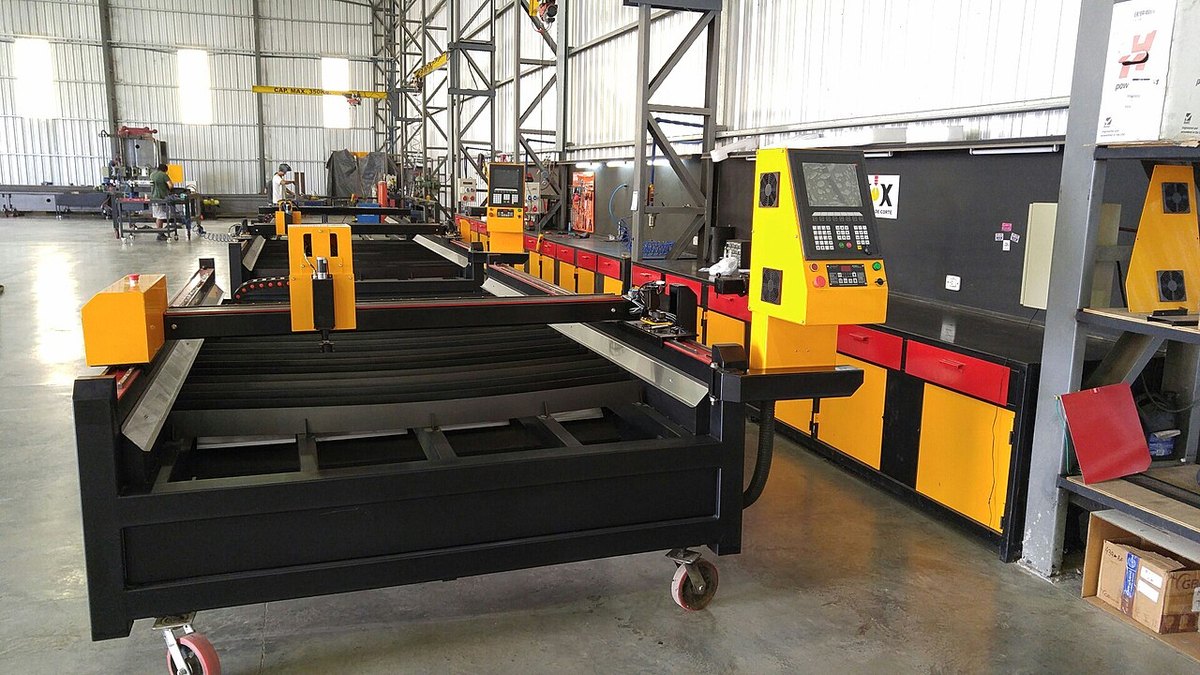
INDEC, Argentina’s national statistics institute, said on 8 September that manufacturing output fell 4.9% in July against a year earlier. The same afternoon the S&P Merval, the main Buenos Aires stock index, rose 1.36% on energy shares.
Why This Matters
Javier Milei, a libertarian economist, became president in December 2023, after annual inflation had reached 211.4%. Bringing prices down has since been the main yardstick for his government at home and abroad.
In April 2025 the IMF, the International Monetary Fund, approved a 48-month US$20 billion programme for Argentina. Days later the government lifted most currency controls and let the peso trade inside a band.
In October 2025 his party, La Libertad Avanza, won the midterm elections with over 40% of the vote. Before that vote, the Trump administration offered a US$20 billion currency swap with Argentina’s central bank, NPR reported.
Investors now judge Argentina on whether that stability turns into growth before the October 2027 presidential election. Factories and building sites matter here because they hold many formal jobs, unlike the financial markets.
Live Market IntelligenceArgentina — Live Market Board
Rio Times · Live Market Intelligence
Argentina — Live Market Board
—
176,608.23
-13.88%
69,647.80
-0.33%
10,575.59
-1.59%
3,017,221
—
2,505.04
-1.38%
57,093.72
+0.04%
| Instrument | Last | Change | YoY | Prev. | High | Low | Volume |
|---|---|---|---|---|---|---|---|
| MERVAL | 3,017,221 | — | +30.51% | 3,022,485 | 3,042,365 | 2,991,150 | — |
| USD/ARS | 1,493 | +0.10% | +12.96% | 1,491 | 1,494 | 1,480 | — |
| YPF | 7,810 | +0.26% | +72.84% | 7,790 | 7,850 | 7,600 | 1,763,858 |
| GGAL | 6,980 | -0.78% | +1.82% | 7,035 | 7,115 | 6,920 | 1,564,062 |
| PAMPA | 5,115 | +0.69% | +26.70% | 5,080 | 5,140 | 5,000 | 721,190 |
| TXAR | 747.50 | -2.35% | +18.67% | 765.50 | 770.00 | 742.50 | 771,892 |
| ALUAR | 938.00 | -1.21% | +29.83% | 949.50 | 951.00 | 932.50 | 135,426 |
| TGS | 8,870 | -0.17% | +15.05% | 8,885 | 9,075 | 8,720 | 143,546 |
| CEPU | 2,156 | +1.84% | +28.36% | 2,117 | 2,165 | 2,086 | 404,146 |
| MIRGOR | 1,650 | -1.20% | -92.90% | 1,670 | 1,670 | 1,635 | 20,877 |
| COME | 40.93 | -0.73% | -30.47% | 41.23 | 41.60 | 40.50 | 4,258,884 |
| LOMA NEGRA | 3,130 | +0.08% | +5.80% | 3,128 | 3,205 | 3,090 | 182,992 |
| BYMA | 275.00 | -1.70% | +35.14% | 279.75 | 282.50 | 272.00 | 1,409,575 |
| TELECOM ARG | 4,233 | -0.70% | +55.19% | 4,263 | 4,335 | 4,160 | 31,896 |
| GLOBANT | 38.10 | -2.26% | -49.65% | 38.98 | 38.70 | 36.77 | 793,552 |
| MERCADOLIBRE | 1,870 | -3.59% | -20.71% | 1,940 | 1,927 | 1,870 | 329,640 |
The Numbers
INDEC released both figures on 8 September, with July as the reference month. Manufacturing output fell 4.9% against July 2025 and 5.0% against June, seasonally adjusted.
Construction activity fell 4.5% year on year and 4.6% month on month, seasonally adjusted. Twelve of sixteen industrial divisions were down against the same month a year earlier.
Over the first seven months, industry is down 2.6% against the same period of 2025. Construction, by contrast, is still up 1.7% over the same seven months.
What the Sixteen-Month Line Does and Does Not Mean
Local media, including the daily Ámbito, called this industry’s worst monthly fall in sixteen months. On the industrial series that holds, because the last worse month was March 2025, when output fell 5.8%.
For construction the same framing understates the case, since nothing worse than 4.6% appears since October 2024. That makes it a twenty-one-month low for building activity rather than a sixteen-month one.
Why Markets Went the Other Way
The S&P Merval rose 1.36% on 8 September, usually reported as 1.4%, led by energy stocks. Oil trading near US$99 a barrel drove the move, amid tension in the Strait of Hormuz.
Country risk, the extra yield investors demand over US Treasuries, closed at 494 basis points. That is below the 500 mark, though the measure rose slightly that day rather than falling.
So the two stories are not a contradiction. Financial assets are reacting to oil and to the election calendar, not to July factory output.
Who Is Calling for a Change of Course
One outlet reported that economists close to the government are now asking for policy changes. The named voices include a former central bank vice-president from a previous administration, who is not a government ally.
A second name was described as close to the governing party but is in fact a markets journalist. Better-sourced criticism came from analysts who have been critical all along.
One called the sawtooth decline the new normal in a stagnant economy. Milei answered the question in advance on 2 September, saying no when asked to loosen monetary and fiscal policy.
What the Senate Is Voting On
Senate committees opened debate this week on two bills the lower house has already passed. The first rewrites the charter of the BCRA, Argentina’s central bank, narrowing its mandate to preserving the peso’s value.
Employment and equitable social development would come out of that mandate. Direct and indirect financing of the Treasury would be banned outright.
Removing the bank’s president or board would need grave cause and a two-thirds majority in both chambers. The second bill is a tax amnesty called Inocencia Fiscal II, or Fiscal Innocence II, aimed at undeclared savings outside banks.
The lower house passed the central bank reform on 26 August by 144 votes to 102. The government wants both bills through before the 2027 budget debate.
The Peso and the Exchange Rate
The wholesale exchange rate was 1,512 pesos per US dollar on 8 September, the central bank’s published rate. Retail rates at Banco Nación, the state-owned bank, were 1,480 pesos to buy and 1,530 to sell.
The informal parallel rate was a little above both, a small gap by recent Argentine standards. Any peso figures in this article convert at 1,512 pesos to the dollar, the rate for 8 September 2026.
The Falklands Dispute Running Alongside
The same day, the government announced sanctions on fifteen more people and companies over Falklands oil. Argentina calls the islands the Malvinas and claims them, while Britain governs them as an overseas territory.
The total now stands at sixty, after the first forty-five were named in early September. The legal basis is a 2011 law covering oil work in the North Malvinas Basin under British licences.
The fifteen new names have not been published, and the announcement came through the presidency’s social media account. An analyst said this week that the Sea Lion field equals about 1% of Vaca Muerta, Argentina’s giant shale formation.
On production the ratio is nearer 8 or 9%, and on reserves it is low single digits. Treat that comparison as rhetoric, not a statistic.
What It Means If You Invest in or Trade With Argentina
For investors, Argentine assets are trading on oil, politics and policy credibility rather than on domestic demand. Energy companies led the stock market, while factories selling at home are on the other side of that line.
For exporters and importers, a steadier peso lowers currency risk but does not by itself revive orders. For workers, twelve shrinking industrial branches point to continued pressure on formal factory jobs.
What Is Not Yet Known
It is not known whether July marks a low point or the start of a longer industrial slide. The Senate has not yet voted on the central bank reform or the tax amnesty.
The government has not announced any change of course, and Milei ruled one out on 2 September. The fifteen newly sanctioned names in the Falklands case remain unpublished.
Frequently Asked Questions
Why does this matter?
Argentina’s markets have calmed under President Javier Milei, but its factories keep shrinking. Investors want to know whether stability will turn into growth before the 2027 election.
How far did Argentine industry fall?
Manufacturing output was down 4.9% in the year to July and 5.0% against June, seasonally adjusted. Twelve of sixteen divisions shrank.
Why did the stock market rise on the same day?
The Merval gained 1.36% on energy shares, with oil near US$99 a barrel. Country risk closed at 494 basis points.
What is the Senate debating?
A rewrite of the central bank’s charter and a tax amnesty called Inocencia Fiscal II. Both passed the lower house in late August.
Sources: INDEC, industrial production report, INDEC, construction activity report, Ámbito, the sixteen-month framing, El Cronista, the Merval and country risk, Parlamentario, the Senate committee schedule, Infobae, the lower house vote on the two bills, La Nación, the Falklands sanctions list, Banco Central de la República Argentina, exchange rates, Buenos Aires Times, 2023 inflation of 211.4%, IMF, the US$20 billion extended arrangement, Wikipedia, economic reforms of Javier Milei, NPR, Milei’s midterm win and US support, Wikipedia, the 2027 Argentine general election, Wikipedia, the Falkland Islands
This article was produced by The Rio Times’ automated newsroom system. How we use AI · Report an error · Editorial responsibility: Matthias Camenzind, Editor-in-Chief
In depth