Mexico finds itself in a precarious position as it attempts to maintain its appeal to Chinese investors. This comes in the wake of Donald Trump’s recent tariff threats, which have sent shockwaves through the North American trade landscape.
The Mexican government now faces the challenge of reassuring Chinese businesses while navigating the uncertain waters of future U.S. trade policies.
Santiago Toledo, a commercial counselor at the Mexican embassy in China, has taken center stage in this diplomatic effort. He advises Chinese companies to remain calm and wait for the dust to settle after Trump takes office.
Toledo emphasizes that under current Mexican law, any foreign company establishing operations in Mexico is treated as a local manufacturer.
This stance reflects Mexico‘s broader strategy of positioning itself as a key player in the North American supply chain. The country aims to attract foreign investment while maintaining its crucial trade relationships with both the United States and China.
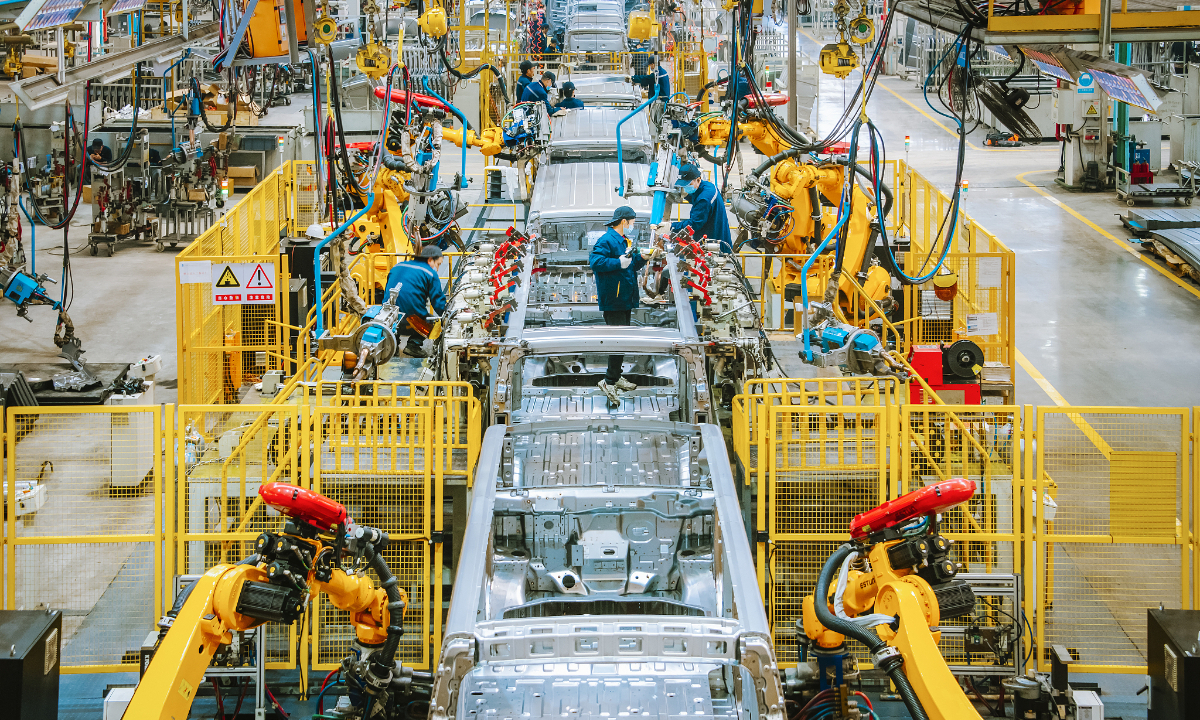
However, this balancing act has become increasingly difficult in recent months. Chinese investment in Mexico has shown signs of slowing down. This trend coincides with Trump’s repeated threats to impose tariffs on Chinese-funded factories in Mexico.
Mexico’s Trade Strategy
The president-elect’s proposed 25% tariff on all Canadian and Mexican imports has further complicated matters. Additionally, he plans to levy an extra 10% tariff on Chinese goods.
Mexican President Claudia Sheinbaum has responded to these pressures with a plan to reduce Chinese-imported parts in products destined for the U.S. and Canada.
She aims to replace these components with those made by North American companies. This move seeks to address concerns about Chinese companies using Mexico as a backdoor into the U.S. market.
Despite these challenges, Mexico remains heavily dependent on Chinese trade and investment. Victor Cadena, executive vice-president of the Mexican Chamber of Commerce in China, highlights this reality.
He argues that excluding Chinese investment would make it impossible for Mexico to maintain a smooth-functioning supply chain. The situation underscores the complex nature of global trade relationships in today’s interconnected world.
Mexico must carefully navigate these waters to protect its economic interests. The country seeks to maintain its attractiveness to foreign investors while adhering to its commitments under the United States-Mexico-Canada Agreement (USMCA).
As the global trade landscape continues to shift, Mexico’s ability to adapt will be crucial. The country’s leaders must balance the demands of its largest trading partner, the United States, with the opportunities presented by Chinese investment.
This delicate dance will likely shape Mexico’s economic future in the years to come. The upcoming review of the USMCA in 2026 adds another layer of complexity to this situation.
Mexico, along with its North American partners, will need to reassess and potentially renegotiate the terms of their trade relationship.
This process will undoubtedly be influenced by the ongoing tensions between the U.S. and China. In the meantime, Mexican officials continue to emphasize their country’s openness to foreign investment.
They stress that the origin of investment matters less than its contribution to the local economy. This approach aims to create a more integrated North American supply chain, capable of competing on a global scale.
Key Facts
— Deep Dive
— For the complete picture, read our in-depth guide: Mexico Economy 2026: GDP, Peso, Nearshoring, Banxico and Trade
More: Mexico news in English, every day from The Rio Times.
This article was produced by The Rio Times’ automated newsroom system. How we use AI · Report an error
In depth
Read More from The Rio Times