Mexico AI Servers Drive a US$82.9 Billion Export Surge as Car Exports Stall
Mexico · Economy
Key Facts
- —The headline number Mexico exported US$82.9 billion of computer and server equipment in the first half of 2026, up 172.1% on the year, according to S&P Global Market Intelligence.
- —The customer 93.9% of those shipments went to the United States, feeding the American data-center build-out.
- —The contrast INEGI puts Mexico’s first-half automotive exports at US$92.26 billion, up just 1.0%, while non-automotive manufacturing exports jumped 37.6% to US$263.64 billion.
- —The factory Foxconn is spending about US$900 million near Guadalajara on what it calls the world’s largest assembly plant for Nvidia GB200 AI server racks.
- —The tariff gap US Section 232 duties of 25% hit imported cars, while US Customs has ruled that an Nvidia GB300 server rack enters free of duty and qualifies under the USMCA.
Almost 94% of that hardware goes to the United States. Which taxes Mexican-built cars at 25% but lets qualifying servers cross the border duty-free.
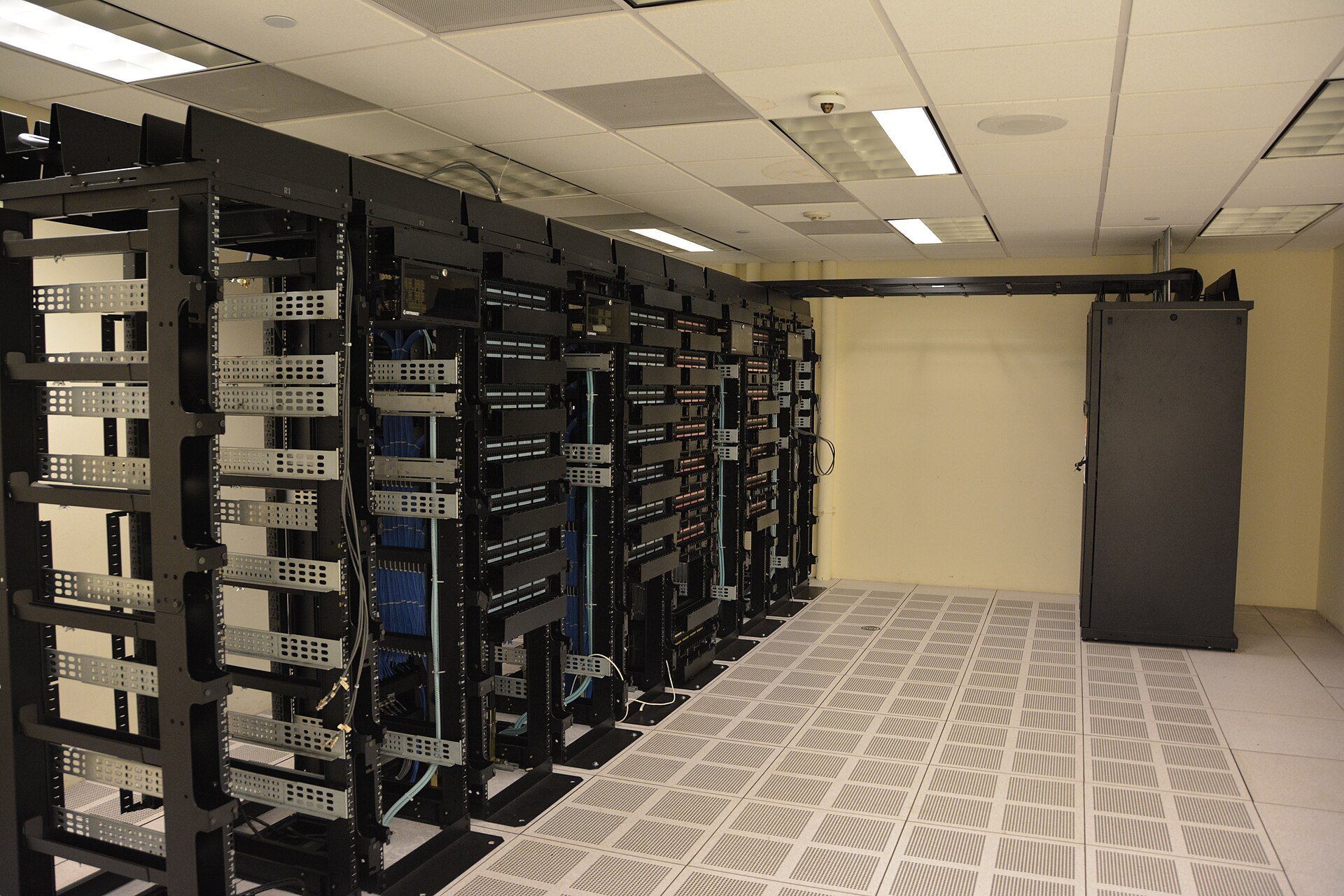
Mexico AI servers have quietly become the country’s fastest-growing export. In the first half of 2026, computer and server equipment shipments reached US$82.9 billion, up 172.1% from a year earlier.
Over the same six months, car exports barely moved.
The Number That Rewrote Mexico’s Export Mix
S&P Global Market Intelligence counted US$82.9 billion of Mexican computer-equipment exports in the first half of 2026. That is a jump of 172.1% from the same period a year earlier.
Mexican daily El Economista summarised the report on 11 August 2026. It found that 93.9% of those shipments went to the United States.
In short, this is a one-customer boom. For scale, the same S&P work put Mexico’s car and car-parts exports at US$74.8 billion over the same months.
Computers had overtaken cars.
Why Mexico AI Servers Took Off So Fast
The trigger is the American artificial-intelligence build-out. Cloud companies are buying racks of Nvidia chips faster than factories can bolt them together.
Those racks are heavy, expensive and urgently needed. Because of that, assembling them a two-day truck ride from Texas beats shipping them across the Pacific.
So the contract manufacturers that build the world’s laptops and servers moved a slice of that work to Mexico. Mexico AI servers are the result: a product category that barely registered three years ago.
Foxconn’s Jalisco Bet
In October 2024, Reuters reported that Foxconn was building the world’s largest manufacturing facility for Nvidia’s GB200 superchips, in Guadalajara. It was the first clear signal of what was coming.
In March 2025, Bloomberg reported Jalisco governor Pablo Lemus saying Foxconn would invest close to US$900 million. The project expands an existing plant in El Salto and adds a new one nearby.
The money has kept arriving since then. Taiwan exchange filings show Foxconn’s Singapore arm put US$45 million into its Mexican unit on 13 August 2025.
A further US$168 million followed on 25 August. Taiwan’s Central News Agency reported another US$136 million injection in March 2026.
Foxconn does not break out Mexican output. Yet its cloud and networking division reached 42% of group revenue in the third quarter of 2025.
The Rest of the Taiwanese Cluster
Foxconn is not alone. Quanta Computer committed US$1 billion to Nuevo Leon with about 2,500 jobs, and its Monterrey operations have expanded since.
Wistron told investors in May 2025 it would spend up to US$16.7 million on its Ciudad Juarez plant. The upgrade supports future AI server work.
Pegatron said its Mexican AI server lines would begin mass production in the third quarter of 2025. Together these firms have turned Jalisco, Nuevo Leon and Chihuahua into a North American hardware corridor.
That is a genuinely new industrial map for Mexico.
Car Exports Are Not Collapsing, They Are Flatlining
The auto industry is still Mexico’s biggest single manufacturing block. INEGI put automotive exports at US$92.26 billion in the first half of 2026, but growth was only 1.0%.
Non-automotive manufacturing exports, the bucket that holds servers, rose 37.6% to US$263.64 billion over the same period. The gap is hard to miss.
June 2026 made it starker still. Automotive exports rose 7.6% that month, while non-automotive manufacturing exports climbed 48.8%.
In unit terms, Mexico shipped 1,689,245 light vehicles abroad in the first half, up 1.4%. Yet June alone saw 301,009 units, down 9.2% from a year earlier.
What Happened to Autos in 2025
Last year was already weak. INEGI figures reported by Expansion put 2025 automotive export value at US$185.79 billion, a fall of 4.2%.
Light-vehicle export volumes came in at about 3.39 million units, roughly 3% below 2024. Meanwhile non-automotive manufacturing exports grew 17.3% that year.
So the switch did not begin in 2026. It began when tariffs landed on cars and AI demand landed on servers, at almost the same moment.
The Tariff Gap Behind the Switch
Washington imposed 25% Section 232 tariffs on imported vehicles from April 2025 and on many auto parts from May. For USMCA-compliant vehicles, the duty applies only to the non-US content.
Even so, the burden is real. Economy Secretary Marcelo Ebrard has pressed Washington to cut the headline rate for Mexico.
He notes that Japan, South Korea and Germany face 15%. Servers travel a different road.
A US Customs ruling classifies an Nvidia GB300 NVL72 AI server rack under tariff heading 8471.50. The duty rate is Free, and the rack qualifies for USMCA preference from Mexico.
That is the quiet subsidy behind the boom. One product crosses the border taxed, the other does not.
Where Washington’s Chip Tariff Fits
There is a catch, although a narrow one. On 14 January 2026, the White House imposed a 25% Section 232 duty on certain advanced computing chips.
It also covers products containing them, and it took effect the next day. The measure covers only chips above defined performance thresholds.
It also carries broad use-based exemptions, including hardware destined for US data centers. As a result, most complete AI racks built in Mexico for American cloud operators still clear customs without that duty.
Still, the rule shows how quickly the ground can move.
Record Headline Numbers, A Narrow Base
The server boom has flattered Mexico’s whole trade account. Total exports hit a record US$389.72 billion in the first half of 2026, up 24.6%.
June alone brought US$72.55 billion, up 34.4%. Mexico remains the largest goods trading partner of the United States.
US Census data show record American imports from Mexico of US$534.9 billion in 2025. Yet the growth is concentrated.
Strip out computers and the export picture looks far more ordinary.
What Could Go Wrong
Three risks stand out. The first is the AI spending cycle itself, since a single pause in data-center orders would hit Mexico harder than any tariff.
The second is trade policy. After the USMCA joint review on 1 July 2026, the treaty moved to annual reviews.
As a result, rules of origin and tariff lines are in permanent negotiation. The third is value added.
Assembling imported chips into racks creates jobs and export receipts. Still, it adds less local value than the auto supply chain built over 30 years.
For instance, a car plant pulls in hundreds of Mexican parts suppliers. A server line often bolts together components that arrive from Asia.
What This Means on the Ground
For workers in Jalisco, Nuevo Leon and Ciudad Juarez, the hiring is real. Electronics plants are recruiting while some auto lines slow down.
For the peso and the federal budget, the export surge is a cushion against tariff pressure. Overall, though, it leaves Mexico tied to one industry and one buyer.
For anyone living in or investing in Mexico, the practical lesson is simple. The country’s economic story is no longer told only in cars.
Frequently Asked Questions
How much does Mexico export in computer and server equipment?
S&P Global Market Intelligence counted US$82.9 billion in the first half of 2026, up 172.1% year on year. Almost 94% of it went to the United States.
Are Mexico AI servers really bigger than car exports now?
By the S&P measure, yes. Computer equipment came to US$82.9 billion against US$74.8 billion of cars and parts in the first half of 2026.
Which companies build AI servers in Mexico?
Foxconn is the largest, with a roughly US$900 million project near Guadalajara for Nvidia GB200 racks. Quanta, Wistron and Pegatron also run server operations in Nuevo Leon and Ciudad Juarez.
Why are car exports growing so slowly?
US Section 232 tariffs of 25% on vehicles took effect in April 2025, applied to non-US content for USMCA-compliant cars. Automotive export value fell 4.2% in 2025 and grew just 1.0% in the first half of 2026.
Connected Coverage
Sources: INEGI; S&P Global Market Intelligence; El Economista; Reuters; Bloomberg; US Customs and Border Protection; US Census Bureau.
This article was produced by The Rio Times’ automated newsroom system. How we use AI · Report an error
In depth
Read More from The Rio Times