Mato Grosso Cotton Margins Narrow as Full Costs Outrun the Price
Brazil · Agriculture
Key Facts
- —What happened Cotton in Mato Grosso is selling above its cash cost of production but below its full cost, IMEA says.
- —The catch Covering every cost, including depreciation and a return on capital, needs R$147.47 an arroba of lint (about US$28.68).
- —Where this is Mato Grosso is a vast state in central Brazil, and the country’s biggest producer of cotton, soy and maize.
- —Its share of the crop Mato Grosso grows close to 70 percent of Brazil’s cotton, and Bahia about 21 percent, the US Agriculture Department says.
- —Why it matters abroad Brazil is the world’s largest cotton exporter, shipping a record 3.37 million tonnes in the year to July 2026.
- —What the currency is worth Brazil’s real traded at a rate of 5.1414 to the US dollar on 23 September 2026, on Banco Central PTAX data.
Growers in Brazil’s biggest farm state are covering what they spend in cash, but not what a hectare truly costs. The institute that tracks the numbers calls the margin tight.
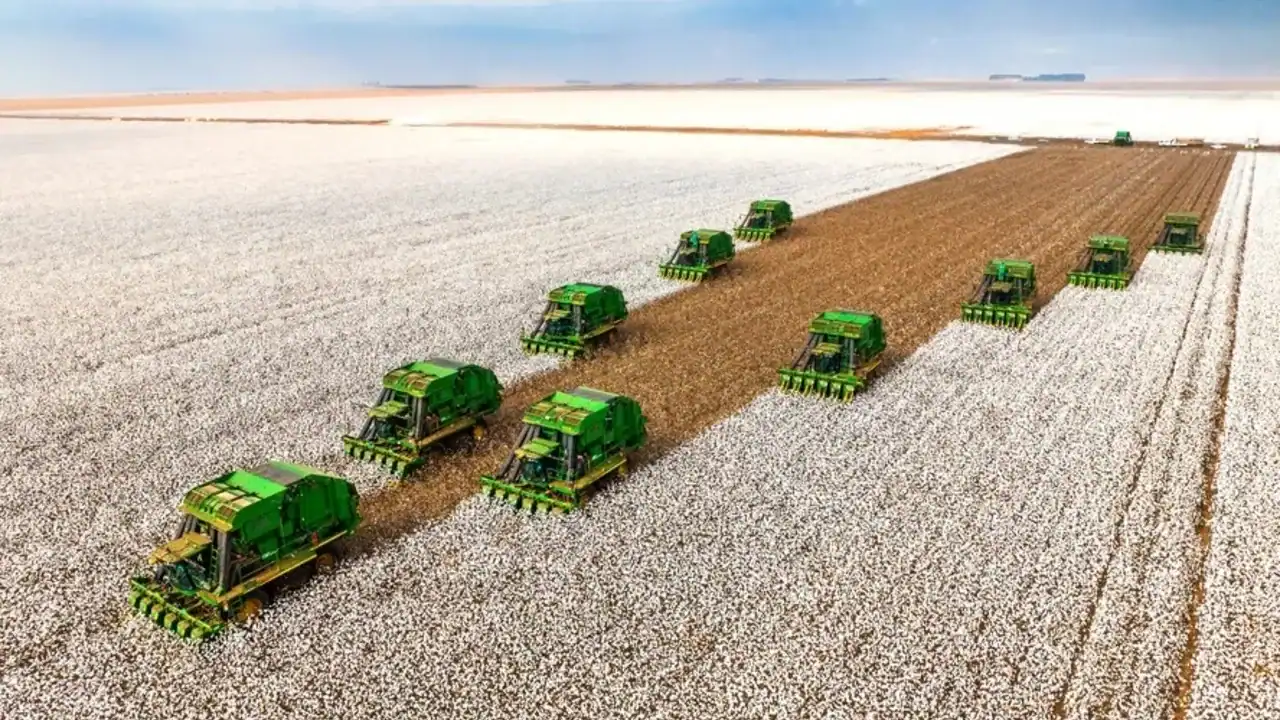
Mato Grosso cotton is selling for enough to cover what growers spend in cash, and little more. The state’s farm-economics institute published that arithmetic this week.
That matters well beyond Brazil. Mato Grosso cotton margins help decide how much fibre the world will have to spin next year.
Brazil is the largest cotton exporter on earth, and this one state is its engine. The state grows close to 70 percent of national output, the United States Department of Agriculture says.
The numbers behind the squeeze
The Instituto Mato-Grossense de Economia Agropecuária, known as IMEA, tracks farm costs across the state. Its August reading for the 2026/27 season puts the full cost of a hectare at R$18,709.02 (about US$3,639).
That figure includes depreciation and a return on the capital tied up in land and machinery. The effective operating cost, the cash a grower pays out, is R$15,250.61 (about US$2,966).
Forward sales of the 2026/27 crop have averaged R$129.67 an arroba of lint (about US$25.20). An arroba is a Brazilian weight unit of 15 kilograms, or 33.07 pounds.
Covering the operating cost needed R$120.06 an arroba (about US$23.35). Covering every cost needed R$147.47 (about US$28.68).
Conversions use the Banco Central do Brasil closing quote of 23 September 2026, a rate of 5.1414 to the US dollar. At that rate the lint price is near 76 US cents a pound.
Full cost, on the same conversion, sits near 87 cents. Sales are running about 12 percent below that full-cost line.
Cotton costs are not the problem
The squeeze is real, but its cause is not a cost explosion. IMEA’s July comparison put this season’s spending on inputs 1.44 percent below last season’s.
Full cost rose only 1.04 percent on the same comparison. Soybeans, the state’s other great crop, saw input spending rise 3.35 percent.
What did jump was rent. Payments to landlords rose 4.72 percent in August alone, IMEA said.
Fertiliser is the other pressure point. In July a tonne of ammonium sulphate cost 19.43 arrobas of lint, 18.73 percent above the three-year average.
In February 2026 that ratio sat just below the average. Growers now hand over more fibre for the same sack of nutrients.
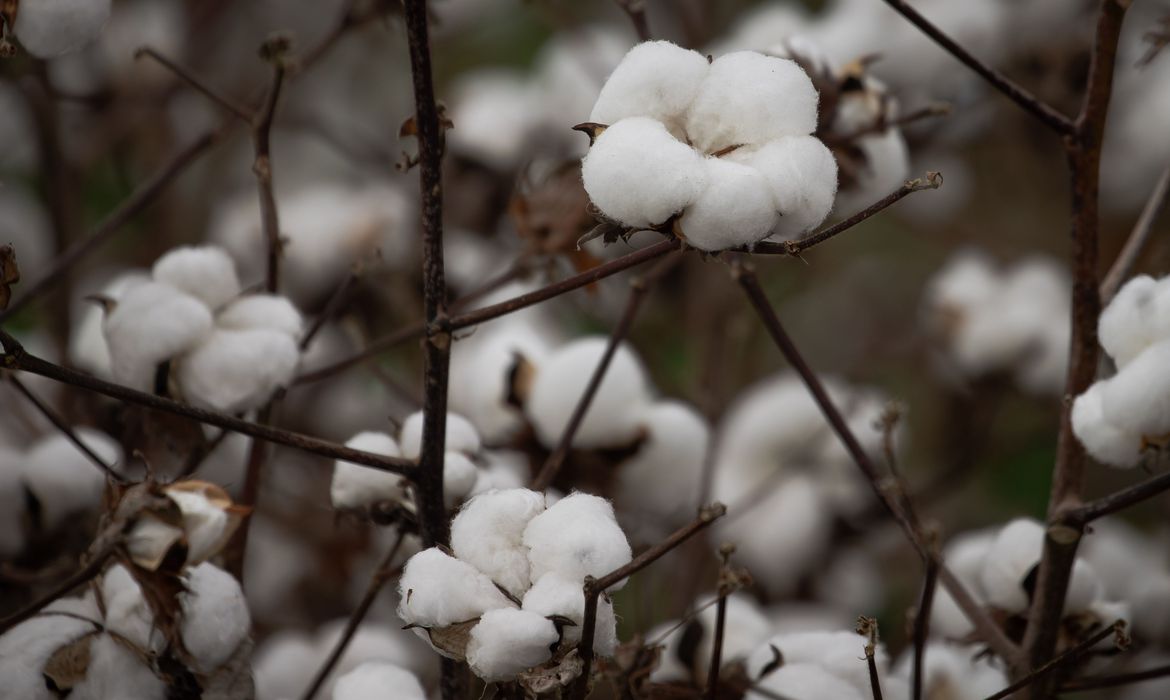
Why the crop grows in soy’s shadow
Most cotton here is a second crop, IMEA data show. Farmers take off their soybeans first, then plant cotton into the same field in the same season.
That makes timing everything. A late soy harvest pushes cotton sowing past its best window and costs yield.
It also ties the two crops together financially. The same fertiliser, diesel and chemicals feed both, and one rent cheque covers both.
Soy sowing for the coming season has only just begun in the state. IMEA put it at 1.15 percent of the area on Friday 18 September 2026.
In the state’s south-east the earliest sowers were irrigated farms and cotton growers, the institute said. Cotton itself goes in after the soy harvest, gathering pace in January.
Growers already cut back once
The pressure showed up in the ground last season. The Mato Grosso cotton area fell 11.18 percent, to 1.37 million hectares.
IMEA blamed high costs and unattractive prices at the moment growers were deciding. It measured the area by satellite mapping of planted fields.
The weather then rescued the harvest. Yields reached a state record of 323.37 arrobas of seed cotton per hectare.
Even so, state output fell 8.86 percent, to 6.67 million tonnes of seed cotton. Nationally, the federal crop agency Conab logged a record 4.14 million tonnes of lint.
Where next season is heading
Every published projection for 2026/27 points up rather than down. Conab expects Brazil’s cotton area to reach 2.09 million hectares.
That would be 3.68 percent more than this season, Conab says. Mato Grosso would add more hectares than any other state, a rise of 3.38 percent.
Conab also expects national yields to fall 3.23 percent. It cites uncertainty over El Niño, the Pacific warming pattern that shifts Brazilian rainfall.
Agroconsult, a consultancy that advises the farm sector, is more bullish. It told the Brazilian Cotton Congress in Belo Horizonte on Wednesday 23 September 2026 that area could reach 2.22 million hectares.
André Pessoa, a director of Agroconsult, put that rise at about 7 percent. He pointed to prices above 80 US cents a pound and much heavier trading.
What the world buys from here
Brazil shipped a record 3.37 million tonnes of lint in the year to July 2026. That was 19 percent more than the year before, according to Abrapa.
Abrapa is the Brazilian Association of Cotton Producers, the growers’ own national body. Its figures put United States exports at about 2.66 million tonnes and Australia at 1.24 million.
The Brazilian sales earned US$5.3 billion. China was the largest single buyer.
The New York cotton benchmark stood near 83 US cents a pound on Thursday 24 September 2026, on Trading Economics data. That is roughly 30 percent above a year earlier, and about 6 percent below a month ago.
So the fibre is dearer than it was, and the hectare still barely pays. That tension will decide how much cotton the world gets in 2027.
More: Brazil coverage, every day from The Rio Times.
Frequently Asked Questions
Why should a shopper abroad care about one Brazilian state?
Brazil is the world’s largest exporter of cotton lint, and Mato Grosso cotton makes up close to 70 percent of the Brazilian crop, according to the United States Department of Agriculture. Bahia is next, at roughly 21 percent. What growers in Mato Grosso decide to plant therefore moves a large slice of the raw material that mills in China, Bangladesh, Vietnam and Turkey spin into cloth. Thin margins now can mean less fibre, and dearer fibre, a year later.
What do IMEA’s cost measures actually mean?
IMEA publishes three layers. The effective operating cost is the cash a grower actually pays out in a season, including seed, fertiliser, chemicals, fuel, labour and land rent. The total operating cost adds depreciation on machinery and buildings. The total cost adds a return on the capital tied up in the business. A crop that covers the first two but not the third is paying its bills while slowly eating its own balance sheet.
Is Brazil really ahead of the United States in cotton exports?
Yes, and not narrowly. Abrapa, using Brazilian customs data and United States Department of Agriculture figures, puts Brazilian shipments at 3.37 million tonnes in the commercial year to July 2026, against about 2.66 million tonnes for the United States and 1.24 million for Australia. USDA’s own annual report on Brazil, published on 6 April 2026, says Brazil is set to keep that lead.
Will there be more Brazilian cotton next year or less?
Both published forecasts point to more area. Conab, the federal crop agency, projects 2.09 million hectares for 2026/27, up 3.68 percent, with Mato Grosso adding the most hectares of any state. Agroconsult, a private consultancy, told the 15th Brazilian Cotton Congress in Belo Horizonte on 23 September 2026 that the figure could reach 2.22 million hectares, a rise of about 7 percent. Both are projections, and Conab expects average yields to fall because of El Niño.
Sources: Revista Cultivar on IMEA’s August cost and break-even figures, Mais Soja reproducing IMEA’s weekly cotton bulletin, Notícias Agrícolas on IMEA’s year-on-year cost comparison, Agrolink on fertiliser spending and the exchange ratio, Agrolink on the 11.18 percent cut in planted area, Conab’s 12th crop survey of 15 September 2026, Conab’s outlook for the 2026/27 season, Abrapa on record cotton exports, Portugal Têxtil on the world export ranking, CNN Brasil on the export record and its destinations, USDA Cotton and Products Annual for Brazil, Boca Notícias on Agroconsult’s congress projection, CenárioMT on IMEA’s soy sowing report, Trading Economics on the New York cotton benchmark, Banco Central do Brasil for the exchange rate
This article was produced by The Rio Times’ automated newsroom system. How we use AI · Report an error
Read More from The Rio Times