
Rio Times · Guides
Key Facts
—Mandate Luiz Inácio Lula da Silva is serving a third term from 2023 to 2026 after winning the 2022 runoff with 50.90% of valid votes.
—Fiscal Rule A new framework replaced the spending cap in 2023, tying spending growth to 70% of revenue growth with multi-year surplus targets.
—Tax Reform Constitutional Amendment 132 created a dual VAT system (CBS and IBS) phasing in from 2026 to 2033, replacing five complex levies.
—2023 GDP Brazil’s economy grew 2.9% in 2023, driven by agriculture and services, while inflation closed the year at 4.62%.
—FDI Inflows Foreign direct investment surpassed US$60 billion in 2023, making Brazil a top global destination despite regulatory complexity.
—Africa Policy Lula has reactivated South-South diplomacy, expanding cooperation agreements and credit lines with African nations.
Lula’s third term weaves a familiar social-developmentalist thread through Brazil’s vast economy—balancing expanded welfare and green industrial ambitions with a new fiscal anchor and a historic tax overhaul that begins reshaping business conditions right now.
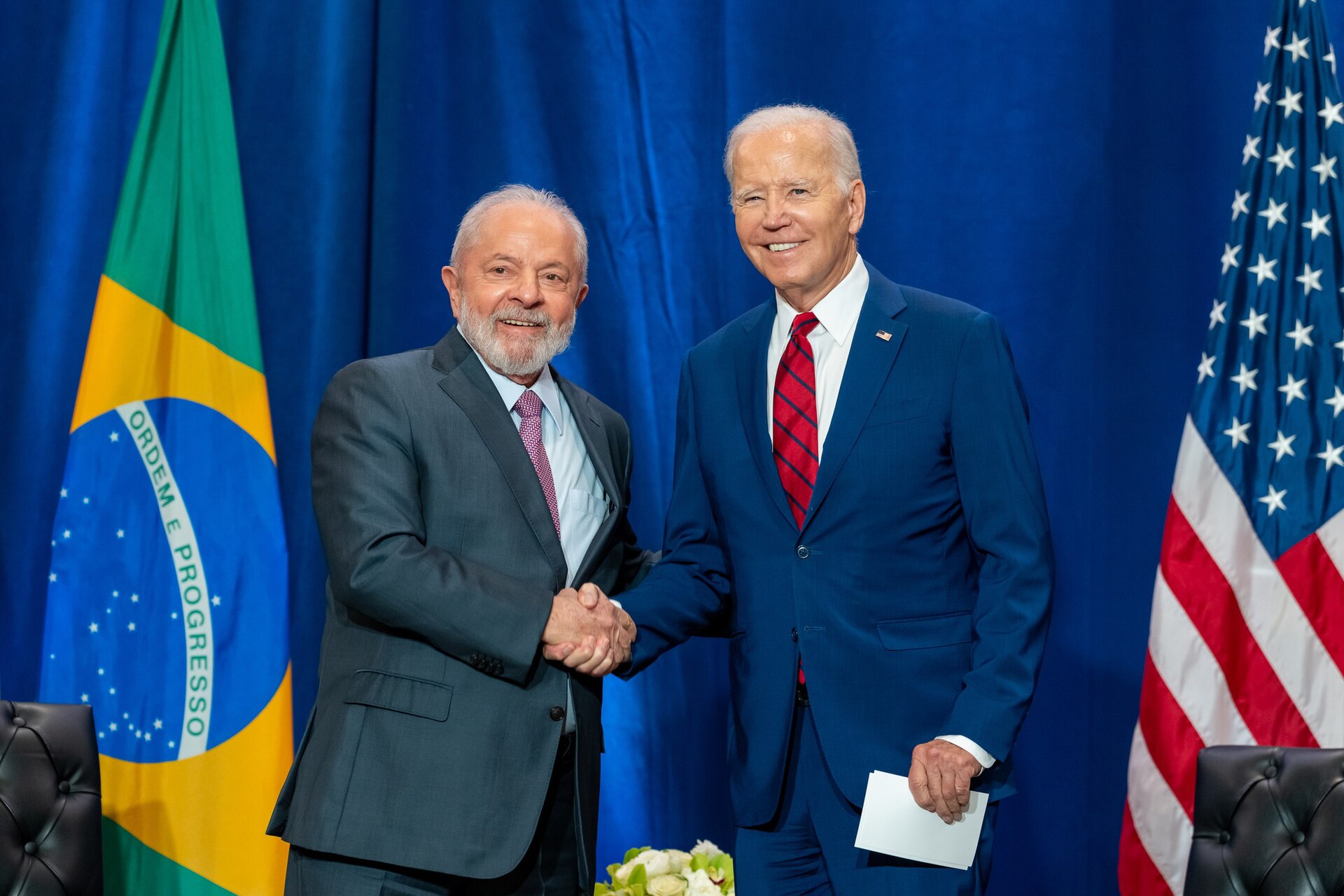
Who governs Brazil today and what is the mandate?
Luiz Inácio Lula da Silva returned to the Planalto Palace on 1 January 2023 for a third presidential term after a razor-thin victory. The Superior Electoral Court confirmed he won 50.90% of valid votes against Jair Bolsonaro’s 49.10% in the 2022 runoff—the tightest margin in modern Brazilian history.
His current four-year mandate runs until 2026 under the 1988 Constitution. Congress remains highly fragmented, forcing the government to build broad coalitions with centrist and right-leaning parties to pass legislation.
What is Lula’s economic policy orientation?
Finance Minister Fernando Haddad calls the approach ‘social-developmentalist.’ It pursues primary fiscal surplus targets while expanding social transfers and public investment.
The government has three stated pillars: reducing poverty and inequality, reindustrializing Brazil with a green focus, and rebuilding state capacity after years of austerity. These priorities shape everything from tax policy to infrastructure concessions.
How did the fiscal framework change?
Complementary Law 200/2023, enacted in August, buried the constitutional spending cap that had constrained federal expenditure since 2016. The new rule links real primary spending growth to 70% of real net revenue growth, with predefined bands.
The 2025 Budget Guidelines Law projects a primary surplus of 0.5% of GDP, rising to 1% by 2028. Missing these targets triggers automatic spending limitation mechanisms, though constitutionally protected social outlays remain shielded.
What does the 2023 tax reform mean for business?
Constitutional Amendment 132, promulgated in December 2023, represents the most profound tax overhaul in decades. It merges five existing levies—PIS, Cofins, IPI, ICMS and ISS—into a federal Contribution on Goods and Services (CBS) and a sub-national Tax on Goods and Services (IBS).
A transition period began in 2026 with test rates while legacy taxes phase out through 2033. For foreign firms, this means managing parallel regimes, renegotiating contracts and recalibrating supply-chain pricing for several years before the promised simplification fully arrives.
What income and payroll tax changes are under debate?
After passing consumption tax reform, Lula’s economic team tabled proposals to simplify personal income tax brackets, tax dividends above certain thresholds and revise payroll taxes. As of mid-2026, these income-side reforms remain stalled in congressional debate.
The discussion includes reducing corporate income tax rates to keep Brazil competitive and lowering labour costs on formal employment. Investors should monitor these proposals because their final shape will directly affect talent costs and repatriation of profits.
What are the key macroeconomic numbers?
Brazil’s real GDP grew 2.9% in 2023, powered by bumper harvests and resilient services. The Central Bank’s June 2024 Inflation Report projected growth around 2.1% for that year.
Annual inflation measured by the IPCA index closed 2023 at 4.62%, inside the tolerance band but above the 3.25% target. The National Monetary Council set inflation targets at 3% from 2024 onward, shifting to a continuous target in 2025. The benchmark Selic rate, which the Central Bank had lowered to 10.50% in 2024, was then raised steadily through 2025 to a peak of 15% to fight a renewed inflation and currency shock; by mid-2026 the Copom had begun a cautious easing cycle, trimming the rate to 14.25% by June 2026 with markets betting on further small cuts.
How are public debt and fiscal results evolving?
Gross public debt stood at 74.3% of GDP at end‑2023, up from 72.9% a year earlier because of higher interest costs and fiscal pressures. The central government posted a primary deficit in 2023 despite aiming for balance, as expanded social transfers and revenue shortfalls bit.
These dynamics keep credit rating agencies watchful. For investors, the trajectory underlines why the new fiscal framework matters: it is the credibility anchor that underpins longer-term bets on Brazil.
Which social policies are reshaping consumer markets?
The relaunched Bolsa Família programme, enshrined in Law 14.601/2023, now reaches around 21 million low-income families. Benefit amounts increased and supplements for children, pregnant and breastfeeding women were added.
This expansion directly shapes demand for mass-market goods, basic services and informal retail across Brazil’s interior—a detail foreign consumer-goods and fintech firms cannot afford to ignore when sizing the addressable market.
What is the industrial and green-transition agenda?
In January 2024, the government unveiled ‘Nova Indústria Brasil,’ a new industrial policy centred on six missions including digital transformation, health complex, agribusiness, bioeconomy and defence. It signals indicative public-private investment targets of roughly R$300 billion (about US$55 billion) over a decade.
Alongside it, the Ecological Transformation Plan aims to mobilise green finance for energy transition, low-carbon agriculture and forest conservation. Brazil is positioning itself as a clean-energy and critical-minerals powerhouse—a long-term play that resonates with ESG mandates globally.
What is happening with privatisation and state-owned enterprises?
Lula halted several privatisation plans from the previous administration, notably removing Petrobras from the divestment programme in 2023. The government signals a stronger state role in energy and logistics.
Yet it continues to support infrastructure concessions and public-private partnerships in highways, ports and sanitation. The Investment Partnerships Program still offers long-term contracts attractive to foreign operators who can stomach the political noise.
What is the regulatory climate for foreign investors?
Brazil remains broadly open to foreign direct investment, with sectoral restrictions limited to nuclear energy, postal services and parts of media. Lula’s administration has not erected major new ownership barriers.
However, enforcement of environmental and labour rules has tightened. Foreign firms must also navigate complex registration with the Central Bank and reporting obligations for portfolio investments—paperwork that can feel overwhelming but is entirely navigable with local counsel.
How are relations with African countries developing?
Lula has made reconnecting with Africa a foreign-policy priority. Diplomatic visits, cooperation agreements and credit lines through Brazilian development institutions have expanded, especially in infrastructure, agriculture and health.
The emphasis on Lusophone nations such as Angola and Mozambique creates a natural bridge for investors structuring joint ventures that link South American and African markets through shared language and growing trade corridors.
What role is Brazil playing in the Latin American region?
Brazil under Lula has revived regional integration mechanisms like UNASUR and strengthened Mercosur’s political dimension. Talks on the long-stalled Mercosur-European Union deal continue, albeit with added environmental conditions.
This activism matters for investors because Mercosur membership—covering Argentina, Paraguay, Uruguay and soon Bolivia—offers preferential tariffs and rules of origin that can turn Brazil’s large consumer market into a regional production hub.
How stable is the political environment?
The 8 January 2023 attacks on government buildings by Bolsonaro supporters exposed deep polarisation. Strong institutional responses followed, including Supreme Court investigations and prosecutions that reaffirmed democratic guardrails.
Still, episodic political crises can trigger short-term market volatility. For long-term investors, the takeaway is that core macroeconomic institutions—the Central Bank, the judiciary, the Treasury—have so far absorbed the shocks.
Which officials should investors track?
Finance Minister Fernando Haddad drives fiscal and tax reform. Planning Minister Simone Tebet and Vice-President Geraldo Alckmin, who also heads the Industry Ministry, shape industrial and infrastructure strategy.
Environment Minister Marina Silva holds enormous sway over licensing for energy, agribusiness and infrastructure. Her decisions can make or break project timelines, so smart investors monitor her public statements closely.
What are the currency, monetary and investment-flow mechanics?
The real floats freely, with occasional Central Bank interventions to smooth excessive volatility. Foreign direct investment inflows exceeded US$60 billion in 2023, concentrated in manufacturing, energy and services.
Cross-border operations require registration with the Central Bank and, for financial-market investors, specific non-resident investor procedures through authorised institutions. It is a well-worn path, but not a shortcut.
What practical steps must a foreign company take?
First, check whether a double-taxation agreement or investment treaty exists between Brazil and your home country. Then register a local entity and obtain a CNPJ corporate tax number from the Federal Revenue Service.
Labour and social security obligations kick in immediately. For large projects, environmental licensing and indigenous land-rights consultations are critical and can cause delays if mishandled. Compliance with Brazil’s anti-corruption law (Law 12.846/2013) is non-negotiable.
What changed in 2026?
The most tangible shift is the tax-reform transition entering its live phase: CBS and IBS test rates began applying while legacy taxes start their gradual retreat. This forces every business with a Brazilian supply chain to rethink pricing, invoicing and contracts.
The Selic rate easing from its 15% peak to 14.25% by mid-2026 also changes the arithmetic for leveraged investments. Borrowing costs remain high, but the start of an easing cycle and a more predictable fiscal framework, however imperfect, are gradually altering the risk-reward profile.
Common mistakes foreign investors make
Underestimating the transition cost of the dual VAT system is the biggest trap. Many firms budget for eventual simplification but overlook the multi-year period when old and new taxes coexist, raising compliance bills.
Another frequent error is treating Brazil as a single regulatory space when state and municipal rules—especially on tax and environment—vary enormously. Ignoring local politics in Congress can also scupper deals dependent on legislative approval.
Background: Braskem Bond Tender Rejected Amid $9.4B Debt Crisis.
Frequently Asked Questions
What are the most important Lula government economic policies for foreign investors?
The most important are the new fiscal framework replacing the spending cap, the 2023 consumption tax reform creating CBS and IBS, the expanded Bolsa Família programme, and the New Industrial Policy with its green-transition plan aimed at infrastructure and innovation investment.
How has Lula’s government changed Brazil’s fiscal rules?
Complementary Law 200/2023 replaced the constitutional spending cap with a rule limiting real primary spending growth to 70% of real net revenue growth, paired with multi-year primary surplus targets and automatic adjustment mechanisms when targets are missed.
What does Brazil’s 2023 tax reform mean for doing business?
It launches a long transition from 2026 to a dual VAT system (CBS and IBS) replacing multiple levies. In the long run compliance should simplify and cascading taxes should fall, but during the transition firms must manage parallel regimes and adjust pricing and supply chains.
Sources: Planalto – Luiz Inácio Lula da Silva biography, TSE – 2022 presidential election results, Planalto – Complementary Law 200/2023 (fiscal framework)
This article was produced by The Rio Times’ automated newsroom system. How we use AI · Report an error · Editorial responsibility: Matthias Camenzind, Editor-in-Chief
Read More from The Rio Times