Latin America’s Arms Wave: Who Is Buying What, and Why Now
Latin America · Defense · Analysis
— Key Facts
Several Latin American governments are placing their biggest weapons orders in years, almost at once, but the wave is narrower than it looks: a cluster of large, headline defense deals rather than a region-wide spending boom.
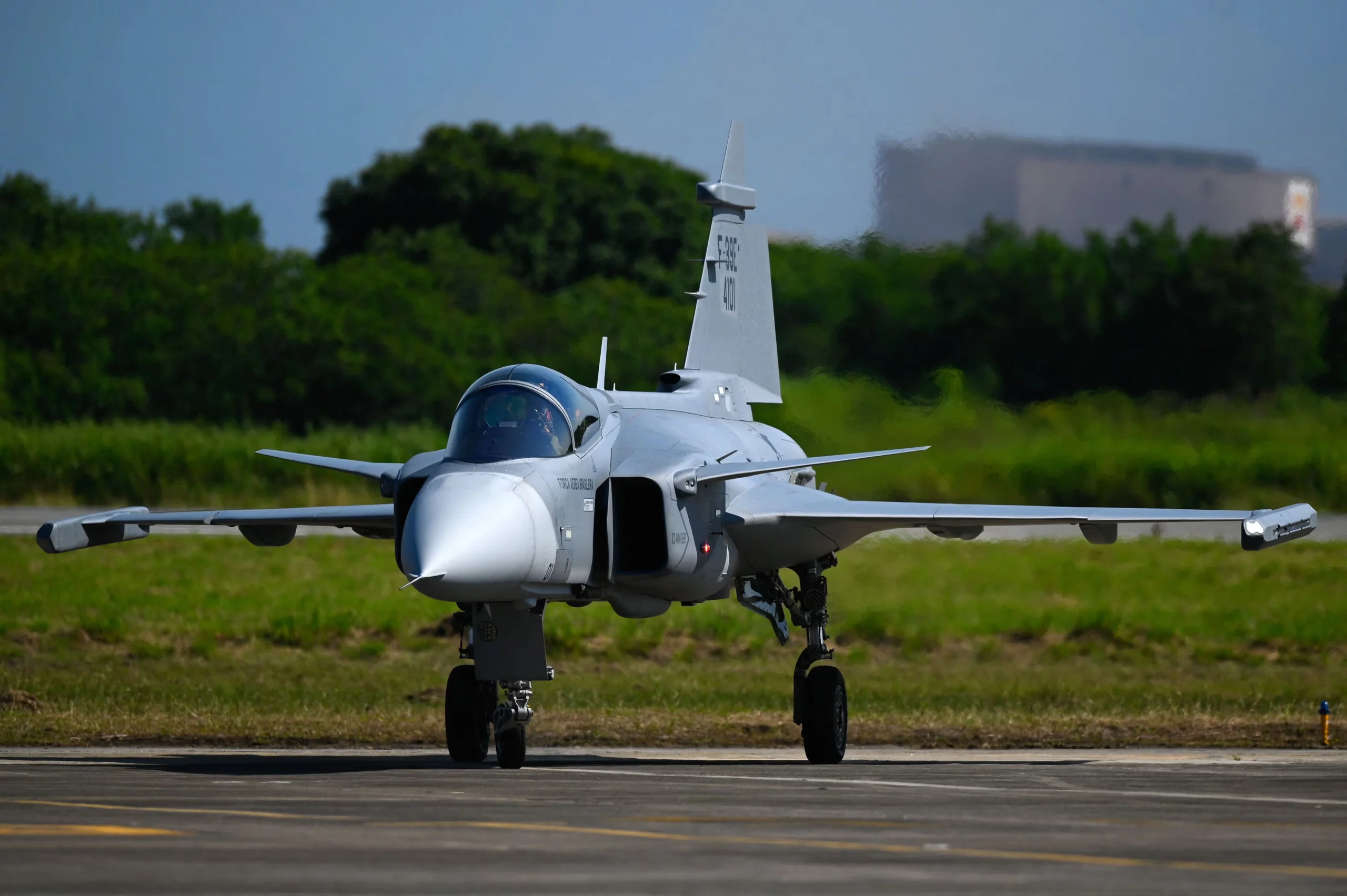
In the space of a few months, several Latin American governments have committed to their biggest weapons purchases in years. Fighter jets, transport planes and missile deals have piled up across the region.
It looks like a regional arms race. The fuller picture, based on budget documents and defense data, is more selective and more interesting than that.
The Latin America arms buildup, country by country
Brazil leads by sheer size. Its 2026 defense budget runs to about 142 billion reais, roughly 26 billion dollars, the largest in eight years and now bigger than the rest of South America combined.
That money funds flagship programs: new stealth frigates, Swedish-designed Gripen fighters built partly at home, and a long-running nuclear-powered submarine effort. Brazil is building capability, not just buying it.
Peru made the most dramatic single move. After an eighteen-month contest, it chose two dozen Lockheed Martin F-16 fighter jets in a deal worth around 3.5 billion dollars.
The choice triggered a political crisis in Lima, with two ministers resigning. The jets are meant to replace aging Mirage and MiG aircraft that date back decades.
Colombia, for its part, signed a roughly 3.1-billion-euro contract for Swedish Gripen jets, with first deliveries expected from late 2026. It is also shopping for new transport planes after a deadly crash.
Why now: aging fleets and outside pressure
The simplest driver is age. Much of the region flies fighters and transport aircraft from the Cold War era, and several fleets are reaching the point where replacement can no longer be deferred.
Politics adds urgency. Washington has leaned on partners to buy American and to keep Chinese suppliers out, and it named Peru a major non-NATO ally as the F-16 deal closed.
There is also a sharp industrial contest underneath the headlines. Brazil’s Embraer is pushing its C-390 transport plane against Lockheed Martin’s long-dominant C-130 Hercules.
Embraer is in active talks with Colombia and Chile, having recently won an order in the Gulf. A regional sale would be a milestone for the plane.
Brazil is so far the C-390’s only Latin American operator. Winning a neighbor would help turn a home-built aircraft into a genuine export product.
The catch: not the boom it appears
Here the data cuts against the easy story. According to figures from the Stockholm peace-research institute, South America’s overall military spending has been close to flat, not surging.
By that measure the region remains one of the world’s least militarized. Argentina spent about half of one percent of its economy on defense last year, the lowest share in South America.
That is the backdrop to Argentina’s new approach. President Javier Milei signed a decree channeling a large share of state asset-sale proceeds into the military, a way to rearm without raising the budget.
So the wave is best read as a cluster of big-ticket purchases by a few governments, not a broad arms race. For investors and analysts abroad, the contest between suppliers may matter more than the totals.
There is a quieter strategic layer too. Several governments frame new hardware around drug-trafficking, border control and natural-resource protection rather than the threat of war between states.
That framing matters for who wins the orders. It favors transport planes, drones and patrol vessels over pure fighter power.
It also widens the field beyond the traditional suppliers. American and European names now compete with Brazilian, Chinese and Gulf-based vendors for the same contracts.
What is driving the Latin America arms buildup?
Three forces overlap: aging Cold-War-era fleets that need replacing, pressure from Washington to buy American and shun Chinese suppliers, and a commercial contest between Brazil’s Embraer and US and European makers. Several governments are placing large orders at once as a result.
Is Latin America really in an arms race?
Not in spending terms, since South America’s overall military outlay has been close to flat and the region remains among the world’s least militarized. The “wave” is a run of big individual purchases rather than a broad surge.
Which deals are the biggest?
Peru’s roughly $3.5bn order for F-16 fighters and Colombia’s 3.1-billion-euro Gripen contract are the headline jet deals. Brazil’s 142-billion-reais ($26bn) defense budget is the largest single pot, funding frigates, fighters and a submarine program.
Frequently Asked Questions
How large is Brazil's 2026 defense budget and how does it compare to the rest of the region?
Brazil's 2026 defense budget is approximately 142 billion reais (about billion), the largest in eight years. It is now bigger than the rest of South America combined.
What major fighter jet deal did Peru recently sign?
Peru signed a deal worth roughly .5 billion for two dozen Lockheed Martin F-16 fighter jets. This represents one of the largest arms purchases in the country's recent history.
Is Latin America experiencing a true region-wide defense spending boom?
No, experts describe the current activity as a cluster of big-ticket purchases rather than a genuine region-wide spending surge. Several governments are making large headline deals almost simultaneously, but overall regional spending is not broadly booming.
Connected Coverage
Peru’s F-16 Crisis: Two Governments, Two Ministers Out
Argentina’s Defense Spending: Milei’s Plan ARMA vs Empty Coffers
This article was produced by The Rio Times’ automated newsroom system. How we use AI · Report an error
Read More from The Rio Times