LATAM Airlines Approves Buyback of Up to 5% of Its Shares
Markets: Santiago
Key Facts
—Decision. LATAM Airlines shareholders approved a new program to repurchase up to 5% of the group’s stock — about 28.71 billion shares — at an extraordinary meeting held on 3 August 2026.
—Scale. With a market value of roughly US$15.5 billion at the end of 2025, the 5% ceiling implies a program worth on the order of US$780 million at recent prices.
—Terms. The board may execute purchases over a period of up to five years, set minimum and maximum prices, and later resell the repurchased shares.
—Turnaround. LATAM emerged from US Chapter 11 bankruptcy on 3 November 2022 and returned to the New York Stock Exchange in July 2024.
—Listings. The Chile-anchored group trades on the Santiago Stock Exchange and, since the relisting, on the NYSE under the ticker LTM.
LATAM Airlines shareholders on 3 August approved a buyback of up to 5% of the Chile-anchored group’s stock, a rare capital-return move from a Latin American carrier barely three years out of bankruptcy.
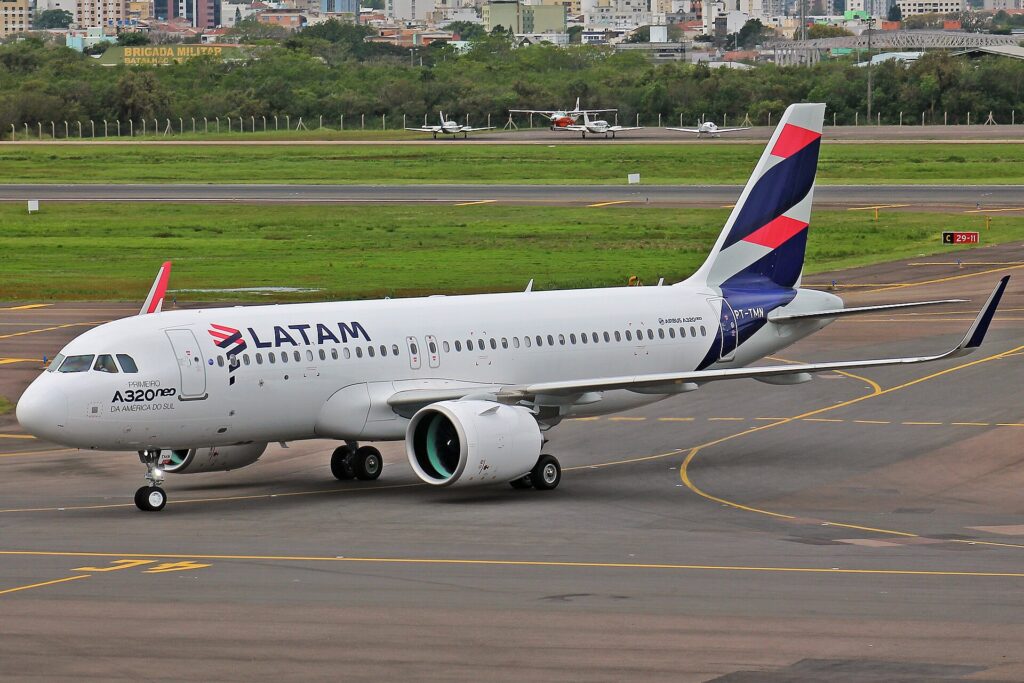
A Rare Capital-Return Move in Latin American Aviation
The approval, granted at an extraordinary shareholders’ meeting in Santiago, authorizes LATAM to buy back as much as 5% of its subscribed and paid shares. For a company that was in bankruptcy protection only a few years ago, committing capital to repurchase its own stock is a pointed statement about the strength of its balance sheet.
Share buybacks are common among mature US and European carriers but unusual in Latin America, where airlines have historically been thinly capitalized and prone to crises. LATAM’s willingness to return cash to owners sets it apart from regional peers still focused on cutting debt or raising fresh capital.
For a foreign reader, the signal matters as much as the mechanics. A buyback reduces the number of shares outstanding, which can lift earnings per share, and it tells the market that management sees the stock as undervalued and its cash flows as durable.
What Shareholders Actually Approved
The program covers up to 5% of LATAM’s stock, equivalent to roughly 28.71 billion shares. Under Chilean corporate law, the board is empowered to set the timing, the minimum and maximum purchase prices, and the size of each tranche, executing purchases through the exchange over a window of up to five years.
The authorization also lets LATAM resell the repurchased shares later, giving management flexibility to use the stock for future financing or employee plans rather than simply cancelling it. That structure is standard for Chilean issuers and keeps the company’s options open.
LATAM has not fixed a headline dollar amount, because the value depends on the price paid over time. Measured against the group’s market capitalization of about US$15.5 billion at the end of 2025, a full 5% program would be worth roughly US$780 million at recent prices.
Live Company IntelligenceLATAM Airlines Approves Buyback of Up to 5% of Its Shares — the full investor dossier
LATAM Airlines Group S.A., together with its subsidiaries, provides passenger and cargo air transportation services in Chile, Argentina, Peru, Colombia, Ecuador, Brazil, the United States, other Latin American countries, the Caribbean, Europe, and Oceania. As of December 31, 2024, the company provides passenger transport services to…
Net income rose to $1.5 bn in 2025, from $581.8 mn in 2023.
From Chapter 11 to a Buyback in Under Four Years
LATAM filed for Chapter 11 protection in a New York court in May 2020, as the pandemic grounded fleets around the world. The Chile-based group was the largest airline in Latin America and one of the highest-profile corporate casualties of the crisis in the region.
A US court confirmed its reorganization plan in mid-2022, and LATAM formally emerged from bankruptcy on 3 November 2022, having raised billions in new equity and convertible debt to recapitalize. The restructuring wiped out much of the old debt load and reset the company’s finances.
The speed of the turnaround is what makes the buyback notable. Moving from a bankruptcy exit to returning capital to shareholders in under four years is faster than many restructured airlines manage, and it underscores how strongly demand and margins have recovered in the region.
Where LATAM Trades Today
LATAM’s primary listing is on the Santiago Stock Exchange in Chile, where the group is headquartered and where most of its trading volume sits. The company is one of the largest constituents of the Chilean equity market.
In July 2024, LATAM returned to the New York Stock Exchange, relisting its American Depositary Shares under the ticker LTM after a four-year absence. Each ADS represents 2,000 underlying shares, and the relisting was paired with a secondary offering that let existing holders sell down stakes.
The dual presence in Santiago and New York gives LATAM access to both regional and global investors, and it is part of why the group’s governance and disclosure now resemble those of a large international carrier rather than a purely local one.
Still Ahead of US Peers on Capital Returns
Several large US airlines suspended dividends and buybacks during the pandemic and, in some cases, are only cautiously restoring them as they repair balance sheets stretched by pandemic-era borrowing. Against that backdrop, a Latin American carrier authorizing a 5% buyback reverses the usual hierarchy.
LATAM’s position reflects both the depth of its restructuring, which left it with a lighter debt load, and the strength of travel demand across South America. Robust yields on domestic and international routes have translated into the cash generation that makes a buyback feasible.
The move does not make LATAM immune to fuel-price swings, currency volatility or a regional downturn. But it does place the group in the unusual position of leading, rather than trailing, its northern peers on shareholder returns.
What It Means for Investors and the Region
For shareholders, the program is a flexible tool rather than a fixed commitment: LATAM can buy aggressively when it judges the stock cheap or hold back if it prefers to conserve cash. The five-year window gives management room to time purchases around market conditions.
For the wider region, LATAM’s confidence is a useful barometer. As the largest airline group in Latin America, its capital decisions are watched as a proxy for the health of regional air travel and, more broadly, for discretionary spending by a recovering middle class.
The open question is execution. An authorization is not the same as money spent, and how much of the 5% LATAM actually repurchases — and at what prices — will show whether the buyback is a genuine capital-return strategy or mainly a signal of intent.
More: Chile news in English, every day from The Rio Times.
Frequently Asked Questions
What did LATAM Airlines shareholders approve?
At an extraordinary meeting on 3 August 2026, shareholders approved a program allowing LATAM to buy back up to 5% of its stock — about 28.71 billion shares — over a period of up to five years.
How big is the LATAM buyback in US dollars?
LATAM has not set a fixed dollar figure. Against a market value of roughly US$15.5 billion at the end of 2025, a full 5% program would be worth on the order of US$780 million at recent prices.
When did LATAM exit bankruptcy and relist?
LATAM emerged from US Chapter 11 bankruptcy on 3 November 2022 and relisted its ADSs on the New York Stock Exchange in July 2024 under the ticker LTM, alongside its Santiago listing.
Sources
LATAM Investor Relations · The Globe and Mail · StockTitan · FlightGlobal
Connected Coverage
LatAm Markets & Aviation
Sources: LATAM Airlines Investor Relations; The Globe and Mail; FlightGlobal.
This article was produced by The Rio Times’ automated newsroom system. How we use AI · Report an error
In depth
Read More from The Rio Times