Why Nubank’s Founder Advising Colombia’s President Matters for Borrowers
Key Facts
Colombia’s new right-wing government wants a smaller state, and it is turning to a billionaire banker for ideas. On 18 September the president named Nubank’s founder his adviser, hours after the banker attacked the legal cap on lending rates.
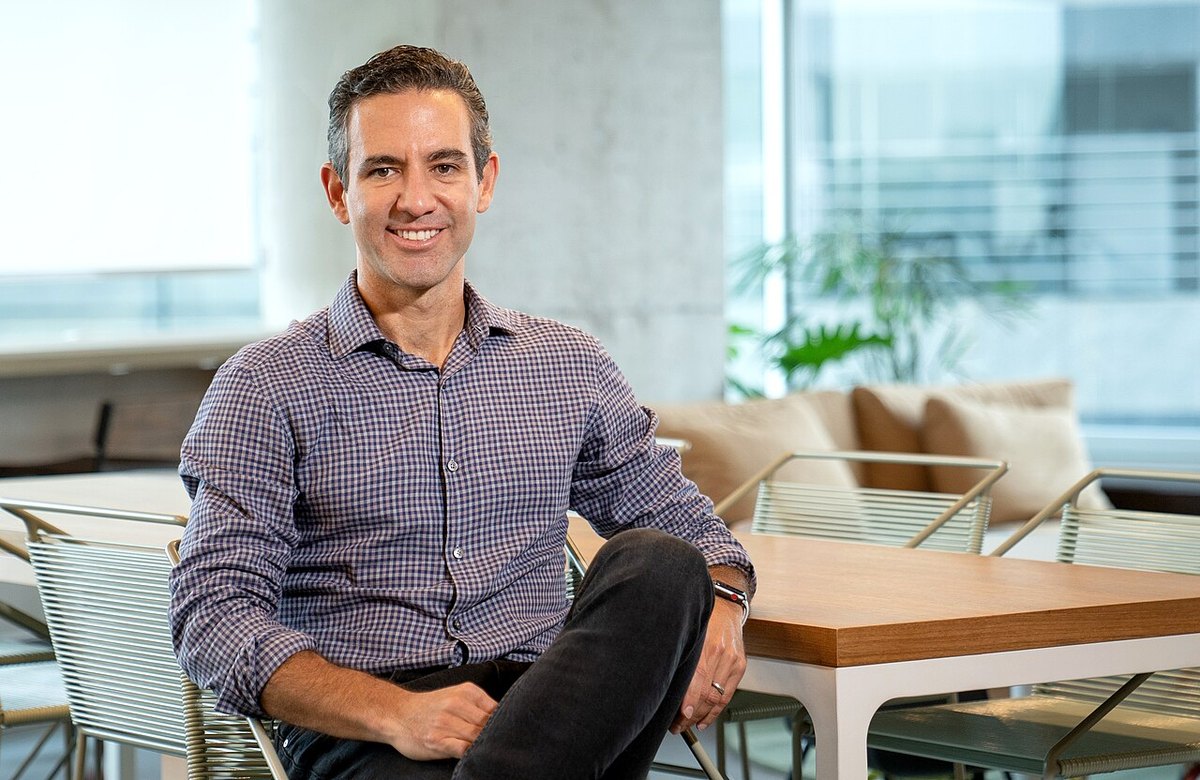
On 18 September 2026, President Abelardo de la Espriella named David Velez his principal unpaid adviser on artificial intelligence. Velez founded Nubank, Latin America’s largest digital bank, and runs its parent company, Nu Holdings.
Why This Matters
Colombia is Latin America’s fourth-largest economy, and it has just changed direction politically. De la Espriella, a far-right lawyer and businessman, beat leftist senator Ivan Cepeda in a runoff on 21 June.
He won 49.66 percent against 48.70 percent, the narrowest margin in a Colombian presidential election. He has promised a leaner state, and he now wants a private-sector star to help design it.
Velez is that star, and Infobae describes him as Colombia’s second-richest man, worth about US$14.5 billion. Nu Holdings reported 138.9 million customers in Brazil, Mexico and Colombia at the end of June.
The appointment matters because Velez is also an outspoken advocate of one policy change. He wants Colombia to scrap or overhaul its usury cap, the legal maximum interest rate on loans.
That change would let lenders, including his own, charge riskier borrowers more than the law now allows. The peso amounts below use the official market rate of 3,151.73 pesos per US dollar for 18 September.
Live Company IntelligenceNu Holdings Ltd — the full investor dossier
Wall Street view
Valuation & profitability
Price & risk
$11.2052-wk high
$18.98
Revenue trend · 6y
Ownership
Dividend
What The President Announced
De la Espriella announced the role on X after meeting Velez for more than three hours. The meeting took place at the presidential headquarters in Barranquilla, a Caribbean port city, El Heraldo reported.
The president wrote that Velez would be his principal ad honorem adviser to lead the artificial intelligence revolution. Ad honorem is a Latin term meaning the post is unpaid.
El Tiempo reported three priorities, namely a smaller and more efficient state, education reform and better targeting of welfare. Velez replied on social media that he was happy to help Colombia win in this new technological revolution.
In a video the president posted, Velez said Colombia must be Latin America’s first country native in artificial intelligence. That means reinventing the government and the state, with the citizen at the centre, he added.
What The Role Is, And Is Not
No decree formalising the appointment had been reported by 19 September. The only public record so far is the president’s post and the coverage that followed it.
Cambio, a Colombian news site, reported that Velez’s team will present a project to turn the vision into state policy. No budget, staff or deadline for that project has been published.
El Espectador reported that Vice President Jose Manuel Restrepo leads the work on state efficiency. Finance Minister Miguel Gomez leads the reduction and merger of ministries, the paper added.
Velez remains founder and chief executive of Nu Holdings, which is listed in New York. Nothing reported so far suggests he will step back from the company.
How He Came Close To The New Government
A magnitude 7.4 earthquake struck the western department of Choco on 10 August, three days after the inauguration. La Republica, a business daily, reported 287 deaths and more than 4,000 injured.
Velez and his wife Mariel Reyes pledged 100,000 million pesos, about US$32 million, for reconstruction. He said the money would first go to rebuilding schools and education spaces in Choco.
La Silla Vacia, a political news site, said Velez approached the executive after that donation. It also noted that Joaquin Gutierrez, a close ally of the president, attended the three-hour meeting.
The Investment Plan, In Pesos
Nu Colombia, the local unit, said it plans to invest about 5 trillion pesos (US$1.6 billion) between 2026 and 2030. That equals about US$1.6 billion at the 18 September market rate.
In Spanish, a billon is a million million, so 5 billones means 5 trillion in English. Reading it as US$5 billion overstates the plan roughly threefold.
Portafolio, a business daily, listed technology, artificial intelligence, data, new products and team growth as the main uses. The figure covers Nu Colombia’s operations, not a wider group or personal commitment by Velez.
In May 2026 Nu announced a smaller plan of 473,000 million pesos, about US$150 million. El Tiempo reported that plan when Nu Colombia marked five years of operation.
Nu’s Place In Colombia
The Superintendencia Financiera, Colombia’s financial regulator, approved Nu Colombia as a financing company in January 2024. That licence lets it take savings deposits, but it is not a full commercial bank licence.
Nu said in May 2026 that it had passed 5 million customers in Colombia. El Colombiano, a Medellin newspaper, reported 6 million customers on 18 September.
Portafolio put deposits in savings accounts and term certificates at about 11 trillion pesos, or US$3.5 billion. El Colombiano reported a 10 percent share of credit cards and 7 percent of personal deposits.
Elsewhere, Nu’s Mexican unit won approval to operate as a bank on 10 July 2026. The group also launched accounts and a credit card in the United States this month, Bloomberg Linea reported.
What Velez Said About The Usury Rate
Velez spoke on 18 September at the Latam Fintech Market conference in Barranquilla. He called the usury rate the biggest obstacle to inclusion in Colombia, El Colombiano reported.
He added that it is the main reason credit penetration is so low. Because banks cannot price risk, they end up simply telling the customer no, he said.
He said only 20 percent of the population has real access to credit. That pushes the other 80 percent towards gota a gota, the informal daily-repayment loan sharks.
There, he said, rates run to 500, 1,000 and 2,000 percent, with criminality and no protections. Portafolio reported that he offered two options, either calculating the cap per product or abolishing it entirely.
This is not a new position for him. In September 2024 he told La Republica that Colombian lenders were operating with the handbrake on.
How Colombia’s Usury Cap Works
Each month the regulator certifies an average lending rate called the interes bancario corriente, or current bank rate. The usury ceiling is set at 1.5 times that certified rate.
Charging above it is a crime under Article 305 of the Penal Code. The same framework also caps late-payment interest under Article 884 of the Commercial Code.
For September 2026, Resolution 1260 set the rate for consumer and ordinary credit at 19.49 percent a year. That puts the usury ceiling at 29.24 percent, down from 29.66 percent in August.
It was the first monthly fall of the year, La Republica reported. Separate, higher ceilings apply to small consumer loans and several categories of productive credit.
Questions Of Interest
Nu Colombia is supervised by the same state whose president Velez now advises. Lifting the usury cap would let lenders, including Nu, charge riskier borrowers more.
The Rio Times found no public conflict-of-interest objection from opposition figures or watchdogs by 19 September. The advisory brief as announced covers artificial intelligence, state efficiency and education, not financial regulation.
Neither the presidency nor Nu has said whether Velez will recuse himself from matters touching financial services. There is no suggestion of wrongdoing by Velez, and his supporters see an unpaid role as public service.
What It Means If You Borrow Or Invest In Colombia
For borrowers, nothing changes yet, because the usury ceiling is set by law and certified monthly. Any move to scrap it would need legislation, and no bill has been announced.
For card holders, 29.24 percent is the maximum effective annual rate in September. A repeal could widen credit access but would also remove that price limit for riskier customers.
For investors in Nu Holdings, the Colombian plan adds to spending in Mexico and the United States. About US$1.6 billion over five years is a statement of intent, not a disclosed allocation in a filing.
For Colombian banks, a digital competitor with direct access to the president is a new variable. How much influence the unpaid role carries will depend on what the promised policy project contains.
What Is Not Yet Known
It is not known whether a decree or contract will formalise Velez’s role. The terms of any confidentiality or conflict-of-interest arrangement have not been published.
The government has not said whether it supports lifting or changing the usury cap. The finance ministry and the regulator had not commented on Velez’s remarks by 19 September.
Nu has not published a year-by-year breakdown of the 5 trillion peso plan. The date for presenting the artificial intelligence policy project has not been set.
Frequently Asked Questions
Why does this matter?
Velez runs a lender that could gain if Colombia loosened its interest-rate cap. He now advises the president on reshaping the state, though his announced brief does not cover financial rules.
Is Nubank investing US$5 billion in Colombia?
No, Nu Colombia’s plan is about 5 trillion pesos (US$1.6 billion) between 2026 and 2030. That is about US$1.6 billion at the 18 September 2026 market rate of 3,151.73 pesos.
What is the usury rate in Colombia now?
For September 2026 the ceiling for consumer and ordinary credit is 29.24 percent a year. It equals 1.5 times the 19.49 percent rate certified by the Superintendencia Financiera.
Is David Velez paid for the adviser role?
No, the president described the post as ad honorem, meaning unpaid. No decree setting out its terms had been reported by 19 September.
Sources: El Tiempo, De la Espriella names David Velez as unpaid adviser, El Heraldo, the president’s post and Velez’s video remarks, El Espectador, Restrepo and Gomez roles, Cambio, what the president and Velez discussed, Infobae, Velez accepts adviser role, La Silla Vacia, the appointment and the earthquake donation, La Republica, Velez pledges 100,000 million pesos after the Choco earthquake, Wikipedia, Abelardo de la Espriella and the 2026 runoff, El Colombiano, Velez on the usury rate and the investment plan, Portafolio, Nu Colombia’s 5 trillion peso plan to 2030, Portafolio, Velez’s two options for the usury cap, El Tiempo, Nu’s 473,000 million peso plan in May 2026, La Republica, Velez on the usury cap in 2024, Actualicese, Superfinanciera Resolution 1260 for September 2026, La Republica, first fall in the usury rate this year, La Republica, Nu’s 2024 approval as a financing company, Nu Holdings via Stock Titan, second-quarter 2026 results, Cadena Politica, Nu Mexico’s bank licence, Bloomberg Linea, Nubank’s United States launch, RTA Noticias, market rate for 18 September 2026
This article was produced by The Rio Times’ automated newsroom system. How we use AI · Report an error
LatAm Markets: Live Signals → — real-time movers, turnover leaders and FX across Latin America.
Read More from The Rio Times