Key Facts
- Benchmark price: 62% Fe iron ore fines for China delivery settled at US$99.57 per tonne, up 0.15%.
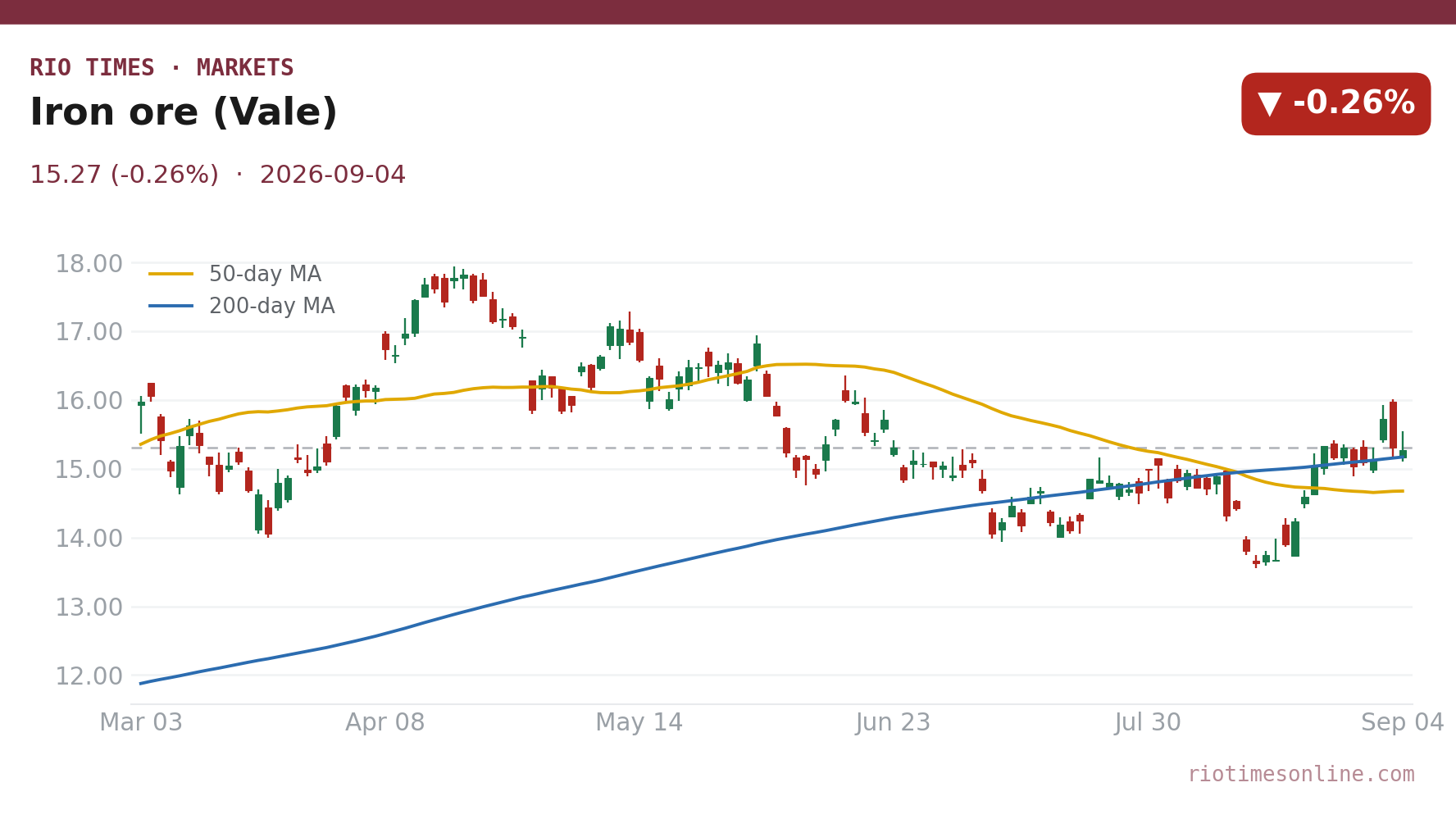
- Vale slips: Vale, Brazil’s biggest mining company, saw its New York-listed stock close at US$15.27, down 0.26%.
- Rio gains: Rio Tinto, a global mining company, added 0.42% to US$103.27 in New York trading.
- Steel output: Chinese mills produced 2.09 million tonnes of crude steel per day in early September, up 7.8% year-on-year.
- Rebar futures: Chinese steel rebar futures rose 0.45% to CNY 3,129 per tonne, near 11-week highs.
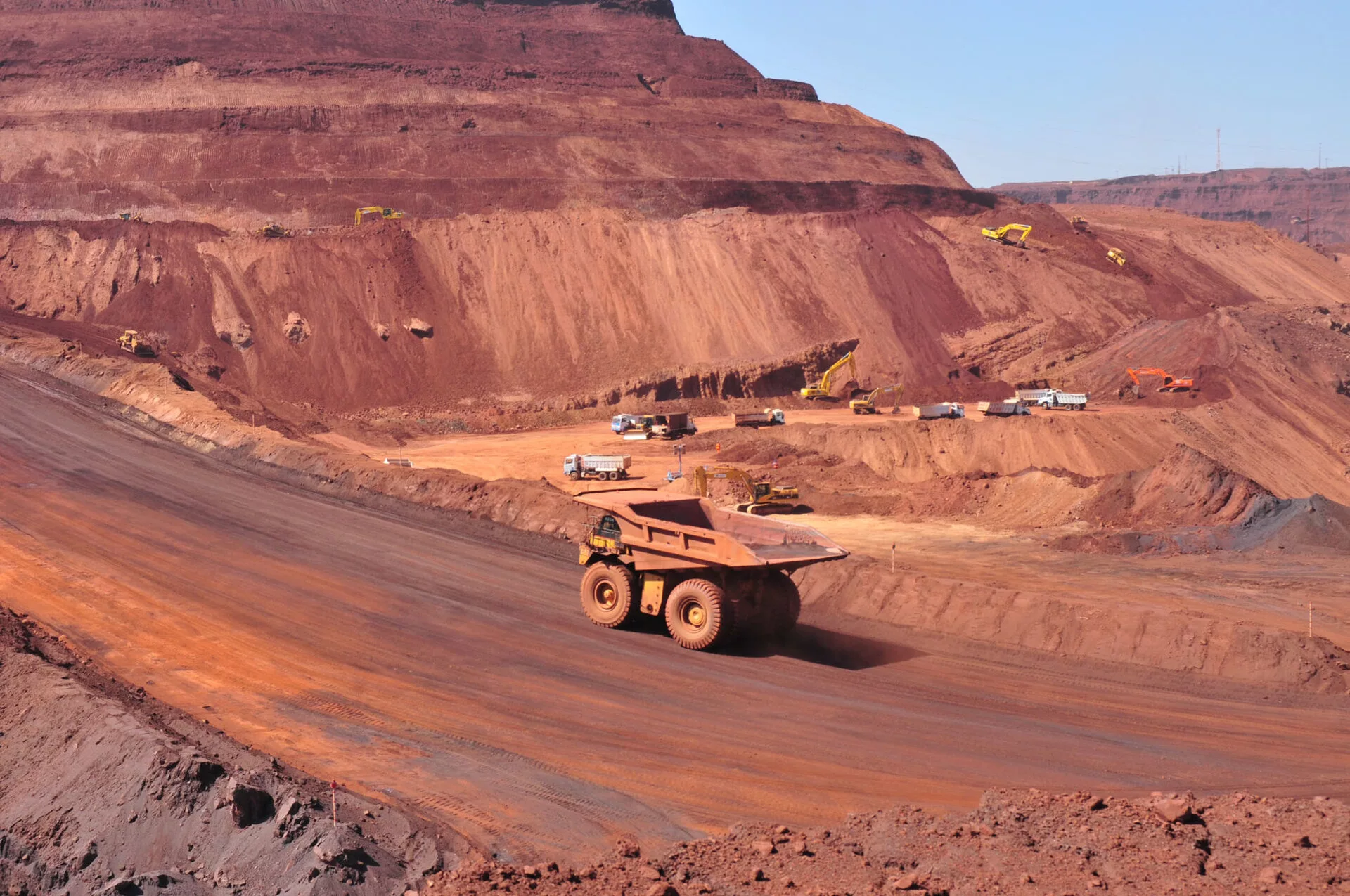
- The catch: Vale restarted Capanema mine in Minas Gerais, adding 15 million tonnes per year, but shares fell.
- CSN laggard: CSN Mineração’s shares fell 1.05% to R$6.59 (US$1.29) in São Paulo trading.
Today’s Focus
Iron ore’s seaborne benchmark held almost flat on Friday. It settled at US$99.57 per tonne for 62% Fe fines delivered to China, a gain of just 0.15%.
The stability came as firm Chinese steel output and restocking demand offset persistent margin pressure at mills. Vale’s New York shares slipped 0.26% to US$15.27.
Rio Tinto’s New York-listed shares added 0.42% to US$103.27. Brazil’s CSN Mineração fell 1.05% to R$6.59 (US$1.29) in São Paulo.
It was the weakest of the three iron ore stocks tracked by The Rio Times. Chinese steelmakers made 2.09 million tonnes of crude steel per day in early September.
That is up 7.8% from a year earlier. This keeps iron ore use strong, even though weak building activity hurts domestic demand.
Rebar futures rose 0.45% to CNY 3,129 per tonne. Vale restarted its Capanema mine in Minas Gerais.
This adds 15 million tonnes of high-grade ore each year. Brazil remains the world’s second-largest exporter to China.
What matters today. Chinese steel mills are still buying iron ore at a fast pace, even though their profits are thin.
That keeps the price of ore shipped by sea just under US$100 per tonne.
01 The session in one read
Iron ore’s seaborne benchmark barely moved on Friday. It settled at US$99.57 per tonne for 62% Fe fines delivered to China.
That was a gain of just 0.15% from the previous session. The steadiness reflects a tug-of-war between strong Chinese steel production and deepening margin pain at mills.
Mills are paying more for coal and ore. Vale’s New York-listed shares edged down 0.26% to US$15.27, while Rio Tinto’s New York-listed shares rose 0.42% to US$103.27.
Brazil’s CSN Mineração, the iron ore arm of steelmaker CSN, was the laggard. It fell 1.05% to R$6.59 (US$1.29) in São Paulo.
Iron ore prices are steady near US$100 a tonne. Chinese steel output is surprisingly strong, and mills are restocking.
But weak property demand and higher raw-material costs limit gains. These costs squeeze mill profits.
Vale’s shares fell slightly. Investors are not rewarding the Capanema restart with higher stock prices.
Watch Chinese weekly steel inventory data. If finished steel piles up, ore demand may weaken.
Live Market IntelligenceCommodities — Live Market Board
Rio Times · Live Market Intelligence
Commodities — Live Market Board
-0.03%
| Instrument | Last | Change | YoY | Prev. | High | Low | Volume |
|---|---|---|---|---|---|---|---|
| GOLD | 4,461 | +1.78% | +33.20% | 4,383 | 4,503 | 4,421 | 139,824 |
| SILVER | 65.59 | +1.26% | +73.05% | 64.77 | 66.98 | 64.81 | 46,406 |
| BRENT | 88.88 | -0.03% | +34.42% | 88.91 | 90.07 | 88.12 | 29,713 |
| WTI | 83.11 | -0.11% | +31.57% | 83.20 | 84.35 | 82.40 | 166,848 |
| COPPER | 6.61 | +0.03% | +46.70% | 6.61 | 6.71 | 6.61 | 39,543 |
| LITHIUM | 75.20 | +1.47% | +62.95% | 74.11 | 75.80 | 75.08 | 89,275 |
| IRON ORE | 161.91 | — | +58.10% | 161.91 | 161.91 | 1 | |
| SOY | 1,184 | +3.20% | +17.05% | 1,148 | 1,199 | 1,168 | 163,179 |
| CORN | 480.50 | +10.02% | +29.34% | 436.75 | 480.75 | 459.50 | 341,248 |
| WHEAT | 655.00 | +3.93% | +29.70% | 630.25 | 657.75 | 631.50 | 128,793 |
| COFFEE | 317.25 | -5.51% | +0.67% | 335.75 | 321.20 | 313.55 | 21,747 |
| SUGAR | 16.43 | -1.79% | -3.01% | 16.73 | 17.11 | 16.22 | 171,992 |
| COCOA | 5,719 | +3.18% | -34.96% | 5,543 | 5,779 | 5,574 | 26,773 |
| ORANGE JUICE | 138.55 | -0.47% | -45.38% | 139.20 | 141.05 | 137.50 | 703 |
| COTTON | 85.03 | +2.33% | +26.78% | 83.09 | 82.90 | 81.96 | 16,546 |
| BEEF | 223.60 | -3.93% | -5.18% | 232.75 | 226.40 | 223.00 | 16,126 |
| CATTLE | 339.10 | -3.16% | -1.82% | 350.17 | 345.50 | 338.60 | 10,164 |
| USD/BRL | 5.16 | +0.01% | -5.13% | 5.16 | 5.18 | 5.14 | — |
Live Company IntelligenceVale SA ADR — the full investor dossier
Wall Street view
Valuation & profitability
Price & risk
$10.5252-wk high
$17.44
Revenue trend · 6y
Ownership
Dividend
02 The board
The three iron ore proxies tracked by The Rio Times split directions on Friday. Vale’s US-listed stock slipped to US$15.27, a drop of 0.26%, reflecting mild caution even as the underlying commodity held firm.
Rio Tinto rose 0.42% to US$103.27. Some investors liked its lower exposure to Brazil’s logistics and costs.
CSN Mineração dropped 1.05% to R$6.59 (US$1.29). That was the biggest fall among the three stocks.
The Brazilian miner has higher costs. So it is more at risk from worries about profit margins.
| Asset | Level | Change |
|---|---|---|
| Iron ore (Vale) | US$15.27 | -0.26% |
| CSN Mineração | R$6.59 (US$1.29) | -1.05% |
| Rio Tinto | US$103.27 | +0.42% |
Source: RT close, 2026-09-04. Where a commodity has no spot feed, an exchange-traded tracker or leading producer is shown as a labelled proxy.
That output is driving mills to restock imported iron ore fines. This happens even as weak property and construction demand hurts domestic steel sales.
Steel rebar futures in China rose 0.45% to CNY 3,129 per tonne, near 11-week highs. But mills face higher coal costs and tight supply.
That deepens their losses and limits how far they can push ore prices.
04 The Latin American read
Brazil’s Vale restarted the Capanema mine in Minas Gerais. It adds 15 million tonnes of high-grade ore each year.
The mine had been shut for 22 years. This extra supply strengthens Brazil’s position as the world’s second-largest iron ore exporter.
Brazil is a key supplier to Chinese blast furnaces. For Latin American investors, the stable sea price near US$99.57 a tonne is mildly good for export income.
But Vale’s flat New York share price shows the market is not yet expecting a big profit boost from new supply. CSN Mineracao’s sharper drop shows the cost problem for smaller, pricier Brazilian producers.
05 The names to watch
Vale is the top pick for Latin American iron ore. Its New York shares trade at US$15.27.
The Capanema restart adds high-grade ore for China. Rio Tinto rose 0.42% to US$103.27.
Diversified miners are doing better despite rising costs.
CSN Mineração closed at R$6.59 (US$1.29). It is a riskier bet on Brazilian iron ore.
Its price moves more with Chinese demand and freight costs. On Friday, it fell 1.05%.
That drop shows caution about high-cost miners. Iron ore prices stay below US$100 per tonne.
06 The outlook
The seaborne benchmark’s 0.15% uptick to US$99.57 per tonne suggests iron ore is consolidating rather than breaking out in either direction. Chinese steel output remains surprisingly strong, but weak property demand and rising raw-material costs are squeezing mill margins.
The next test will be whether Chinese mills sustain their early-September production pace or begin trimming output to protect profits. Any pullback in daily crude steel production would quickly translate into softer ore restocking and renewed pressure on the seaborne price.
07 What to watch
- Chinese weekly steel inventory: a build in finished steel stocks would signal weaker downstream demand and pressure iron ore restocking.
- Vale’s Capanema ramp-up: faster output growth could lift Brazilian export volumes but also cap seaborne prices if demand softens.
- Coal and coking costs: rising raw-material prices are squeezing Chinese mill margins and could force steel output cuts.
- China property indicators: any stabilisation in construction activity would support steel demand and reinforce the iron ore floor near US$100.
This keeps demand for iron ore strong, even though home building is weak.
What does Vale’s Capanema restart mean for supply?
A mine in Minas Gerais has restarted after 22 years.
It adds 15 million tonnes of high-grade iron ore each year.
This boosts Brazil’s ability to export to China.
Why did CSN Mineração fall more than Vale and Rio Tinto?
CSN Mineração fell 1.05% to R$6.59 (US$1.29). Investors worry that higher-cost Brazilian miners face thinner profits.
Rising coal and freight costs squeeze their margins more than cheaper rivals.
Is Chinese steel demand actually healthy?
Rebar futures rose 0.45% to CNY 3,129 per tonne. That is near an 11-week high.
But steel mills are losing money because raw materials cost more. This limits how much iron ore prices can rise.
Market data: RT
This article was produced by The Rio Times’ automated newsroom system. How we use AI · Report an error · Editorial responsibility: Matthias Camenzind, Editor-in-Chief
LatAm Markets: Live Signals → — real-time movers, turnover leaders and FX across Latin America.