Grains Wrap: Soy Rises, Wheat Slides on China and Black Sea
Key Facts
- Soybeans up: SOYB, an exchange-traded fund tracking soybean prices, rose 0.62% to US$27.79 on Friday, September 4.
- Wheat down: WEAT, a wheat-tracking fund, slid 2.66% to US$27.12 as Russia-Ukraine ceasefire talks eased Black Sea worries.
- Corn slips: CORN, a corn-tracking fund, eased 0.25% to US$20.17 as Brazil’s second-crop corn harvest reached 96% completion.
- The catch: Traders pointed to weaker Chinese buying, but soybeans still rose.
- Currency effect: A weaker real or peso makes grain cheaper for buyers, but no rate was given.
- Export engine: Brazil and Argentina kept exporting heavily, especially corn, on Friday.
Today’s Focus
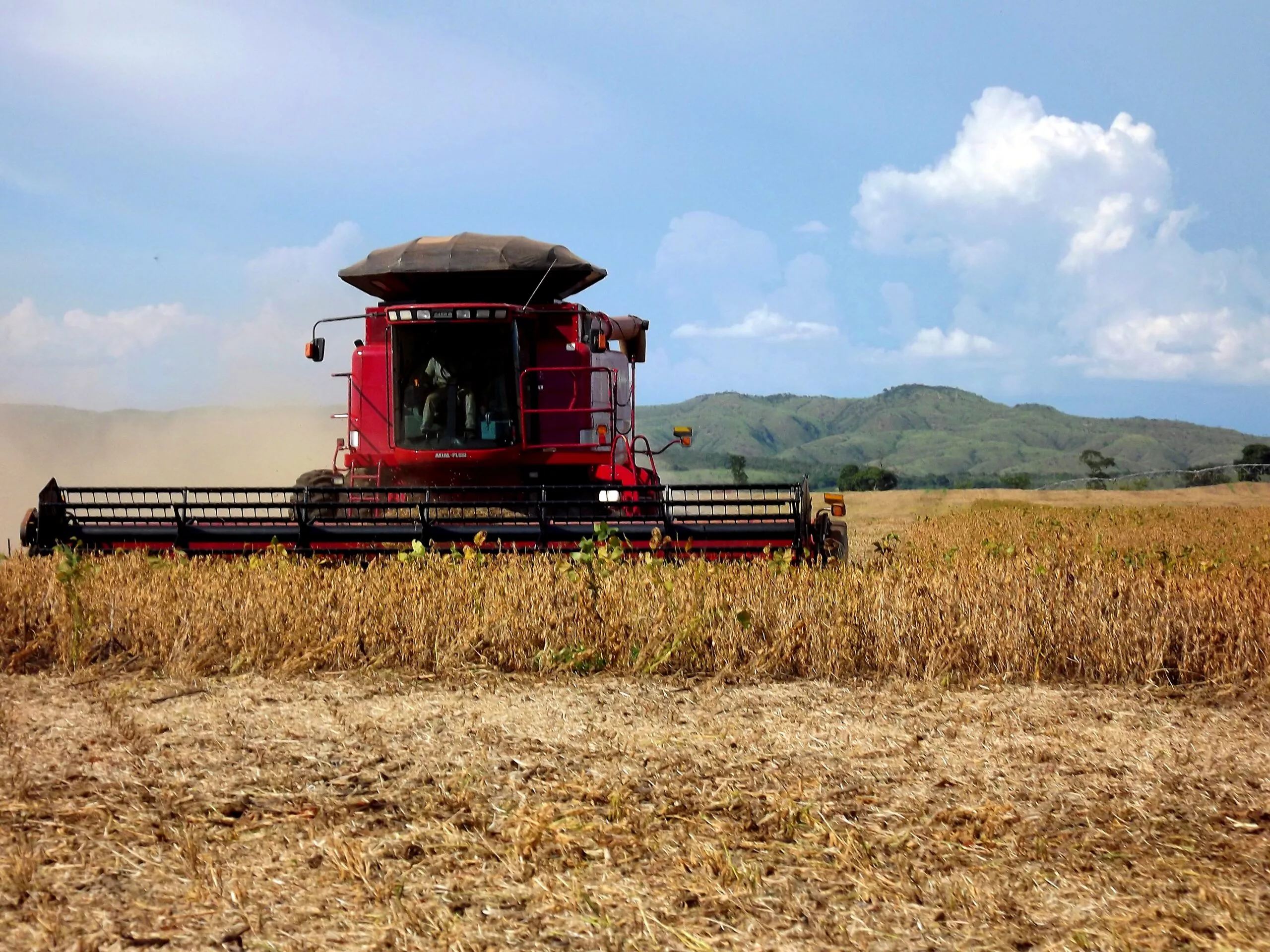
Soybeans (SOYB) rose 0.62% to US$27.79 on Friday, September 4. They defied a broader grain retreat as South American supply stayed dominant.
Corn (CORN) slipped 0.25% to US$20.17. Wheat (WEAT) fell 2.66% to US$27.12.
Traders pointed to weaker Chinese buying as the main drag on the market. Brazil’s second-crop corn harvest had also reached 96% completion, adding to supply.
Wheat fell the most. Traders said easing worries about Black Sea supply, tied to Russia-Ukraine ceasefire talks, drove the drop.
The currency channel still matters. A weaker Brazilian real or Argentine peso makes grain cheaper for foreign buyers.
That usually boosts export volumes. No exchange-rate figure was available for this session.
What matters today. Whether Chinese buying returns quickly enough to absorb a dominant South American export pipeline, especially in corn and soy.
01 The session in one read
Soybeans resisted the pull lower on Friday, September 4, with the SOYB tracker settling at US$27.79, a gain of 0.62%. Corn and wheat could not hold, as CORN slipped 0.25% to US$20.17 and WEAT dropped 2.66% to US$27.12.
The difference came from two forces. Traders said Chinese buying got weaker, which hurt grain prices.
Wheat also fell because worries about Black Sea exports eased, traders said. Ukraine ceasefire talks made the Russia-Ukraine shipping route look less risky.
This session showed how fast a demand dip in China can expose heavy supply from Brazil and Argentina.
Brazil’s northern second-crop corn harvest is just under 90% done, and exports are heavy.
So the market has little room for demand disappointment.
Watch whether Chinese import bookings rise before the next US and South American shipment data.
02 The board
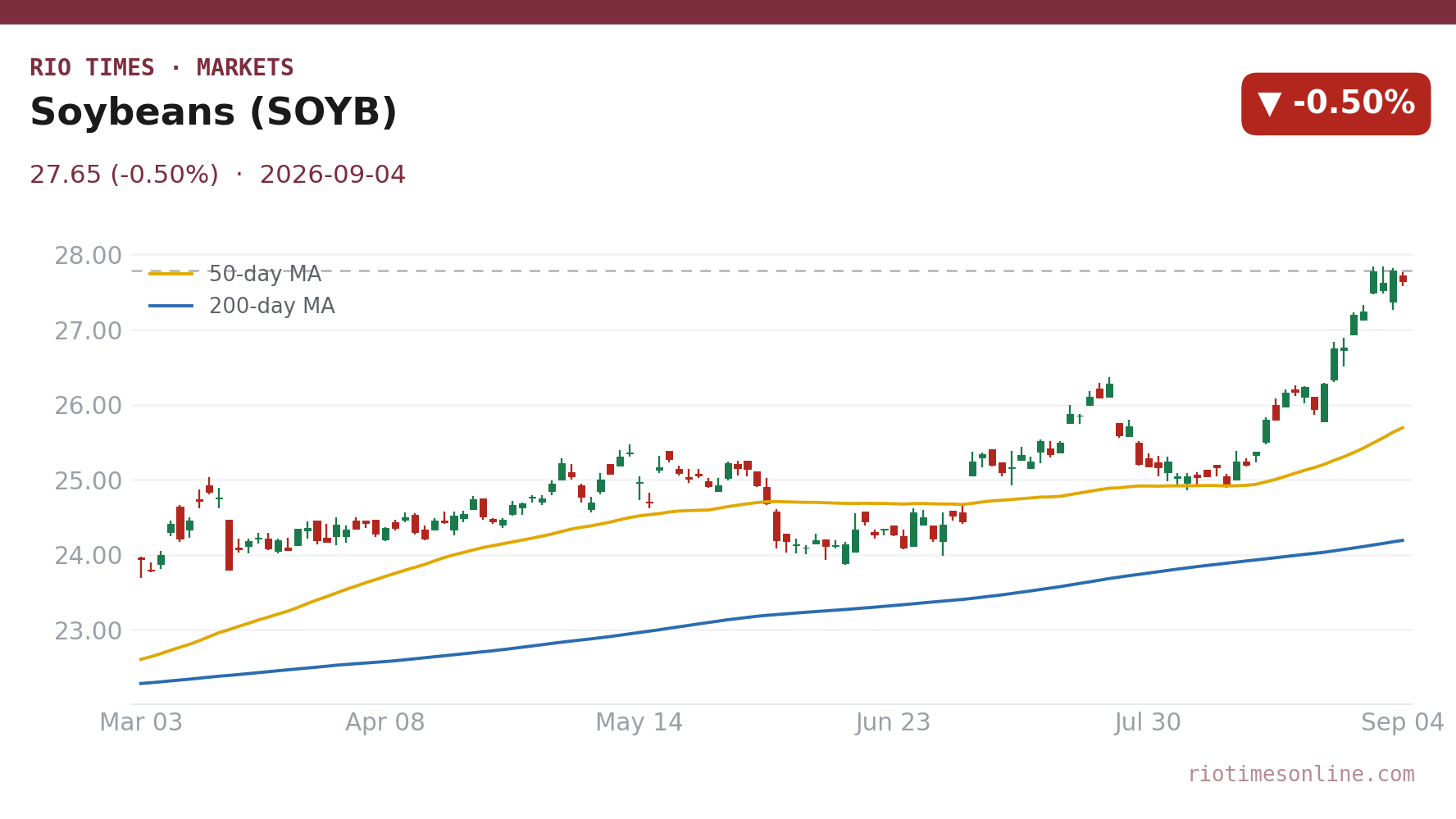
The tracker board showed mixed results. SOYB, a soybean fund, rose 0.62% to US$27.79.
It was the only gainer among three grain funds. This reflected strength in soybeans while other grains fell.
Corn closed at US$20.17, down 0.25%. Traders took profits before the three-day US weekend.
Brazil’s advancing harvest also weighed on prices. Wheat fell the most, ending at US$27.12, down 2.66%.
That drop shows how quickly geopolitical risk can fade.
| Asset | Level | Change |
|---|---|---|
| Soybeans (SOYB) | US$27.79 | +0.62% |
| Corn (CORN) | US$20.17 | -0.25% |
| Wheat (WEAT) | US$27.12 | -2.66% |
Source: RT close, 2026-09-04. Where a commodity has no spot feed, an exchange-traded tracker or leading producer is shown as a labelled proxy.
Live Market IntelligenceThe live market board
Rio Times · Live Market Intelligence
Latin America — Cross-Market Board
| Instrument | Last | Change | YoY | Prev. | High | Low | Volume |
|---|---|---|---|---|---|---|---|
| IBOV | 204,120.12 | -1.15% | +21.85% | 206,495.23 | 168,310 | 167,142 | — |
| IPSA | 10,780.31 | -1.88% | — | 10,987.14 | 11,210 | 10,984 | 1,513,213,483 |
| IPC MEX | 69,889.73 | -0.51% | +12.17% | 70,249.54 | 66,121 | 65,405 | 108,886,187 |
| MERVAL | 3,017,221 | — | +30.51% | 3,022,485 | 3,042,365 | 2,991,150 | — |
| COLCAP | 2,528.42 | -1.25% | — | 9.04 | 9.05 | 9.02 | 4,133 |
| BVL PERÚ | 59,561.23 | -4.26% | — | — | — | — | — |
| USD/BRL | 5.16 | +0.01% | -5.13% | 5.16 | 5.18 | 5.14 | — |
| EUR/BRL | 5.95 | +1.01% | -5.83% | 5.89 | 5.98 | 5.94 | — |
| USD/MXN | 17.06 | -0.24% | -8.58% | 17.10 | 17.08 | 17.01 | — |
| USD/CLP | 913.98 | +0.04% | -5.67% | 913.65 | 915.11 | 906.68 | — |
| USD/COP | 3,140 | +0.03% | -22.04% | 3,139 | 3,141 | 3,105 | — |
| USD/PEN | 3.36 | -0.66% | -4.82% | 3.38 | 3.38 | 3.35 | — |
| USD/ARS | 1,493 | +0.10% | +12.96% | 1,491 | 1,494 | 1,480 | — |
| USD/UYU | 40.27 | +1.24% | +1.80% | 39.77 | 40.27 | 40.23 | — |
| USD/PYG | 5,939 | +1.68% | -19.54% | 5,841 | 5,939 | 5,925 | — |
| USD/BOB | 11.64 | -0.76% | +72.04% | 11.73 | 11.72 | 11.64 | — |
| USD/DOP | 58.34 | +1.25% | -3.44% | 57.62 | 58.34 | 58.04 | — |
| USD/CRC | 445.92 | +0.89% | -9.71% | 441.97 | 448.50 | 445.92 | — |
03 What moved it
Traders said the dominant driver was weaker Chinese demand, which left South American supply without enough buying to support prices. That pressure hit corn and wheat most visibly, while soybeans managed a modest advance.
Wheat prices changed direction again. Traders turned their attention to Ukraine peace talks.
They also saw the Black Sea shipping route as safer. That removed the extra cost that had been building.
The extra cost had come from fears of supply problems.
04 The Latin American read
Brazil and Argentina still lead world farm exports. That shaped Friday’s trading.
Brazil keeps shipping lots of corn abroad. Its northern second crop is just under 90% harvested, while the national safrinha corn harvest has reached 96%.
This confirms the region as a flexible supplier.
That usually encourages shipments. No exchange-rate figure was published for this session.
05 The names to watch
The three grain trackers are the clearest sign of the market. SOYB, a soybean fund, is at US$27.79, holding firmer than other crops.
CORN, a corn fund, is at US$20.17, showing harvest pressure and caution before the weekend. WEAT, a wheat-tracking fund, is at US$27.12.
Traders read this as the clearest sign that geopolitical risk is being priced lower. For those watching Latin American exporters, the key question is simple.
Will these price signals slow Brazilian farmer selling or Argentine forward bookings?
06 The outlook
The next few sessions will test whether weaker Chinese buying is a pause or a shift. With Brazil’s second-crop corn nearly harvested and Argentine supply still competitive, any sustained demand recovery would tighten the export pipeline quickly.
Wheat prices depend on Ukraine war talks. If talks continue, the risk premium may fall.
Fresh disruption news could raise prices again. Grain traders will watch the CFTC’s weekly report on speculative bets, which may shift market direction.
07 What to watch
- Chinese import bookings: Whether China returns to the market will determine if South American supply finds enough demand support.
- Brazil second-crop corn progress: With the national harvest 96% finished, the pace of remaining northern fieldwork will shape near-term export flows.
- Black Sea corridor headlines: Any fresh disruption risk around the Russia-Ukraine export route could revive wheat volatility quickly.
- Currency moves in Brazil and Argentina: A weaker real or peso makes regional grain cheaper for foreign buyers. That supports export volumes.
Frequently Asked Questions
Why did wheat fall more than corn and soybeans?
Wheat fell 2.66% to US$27.12. The WEAT fund tracks wheat prices.
Fears of Black Sea supply problems eased. That cut the risk premium from the Russia-Ukraine export route.
How did soybeans perform on Friday, September 4, 2026?
Soybeans tracked by SOYB rose 0.62% to US$27.79, holding firmer than the rest of the grains market despite weaker Chinese buying.
What role are Brazil and Argentina playing in this market?
Brazil and Argentina are the world’s export engine. Brazilian corn shipments stay heavy, with the national second-crop harvest 96% finished and the northern region just under 90%.
Why does the currency matter for South American grains?
A weaker Brazilian real or Argentine peso against the US dollar makes grain cheaper for foreign buyers, which typically supports export demand.
Market data: RT
This article was produced by The Rio Times’ automated newsroom system. How we use AI · Report an error · Editorial responsibility: Matthias Camenzind, Editor-in-Chief
LatAm Markets: Live Signals → — real-time movers, turnover leaders and FX across Latin America.