Investing in Morocco as a Foreigner 2026: Property, Casablanca Stocks
Guides · Morocco
—The door. Foreigners can buy titled urban property and Casablanca-listed shares. Agricultural land outside city limits is closed to them unless it is reclassified for a project.
—The money. Bring funds from abroad through a Moroccan bank and keep the paperwork. That record is what lets income and sale proceeds leave the country again.
—The purchase cost. Expect about 6% to 7% on top of the price for a resale home: 4% registration duty, 1.5% land registry fee and notary fees, before agency commission.
—The taxes. Property gains are taxed at 20%, with a minimum of 3% of the sale price. Dividends carry an 11.25% withholding in 2026.
—The incentives. The 2022 Investment Charter offers cash premiums of up to 30% of eligible investment for qualifying business projects, not for private property purchases.
—The catch. Owning property or shares does not create a right to live in Morocco. Stays beyond 90 days need a residence card from the police.
Morocco lets foreigners buy homes, companies and listed shares on largely equal terms. The rules that matter most sit in the exchange-control file opened when money first arrives.
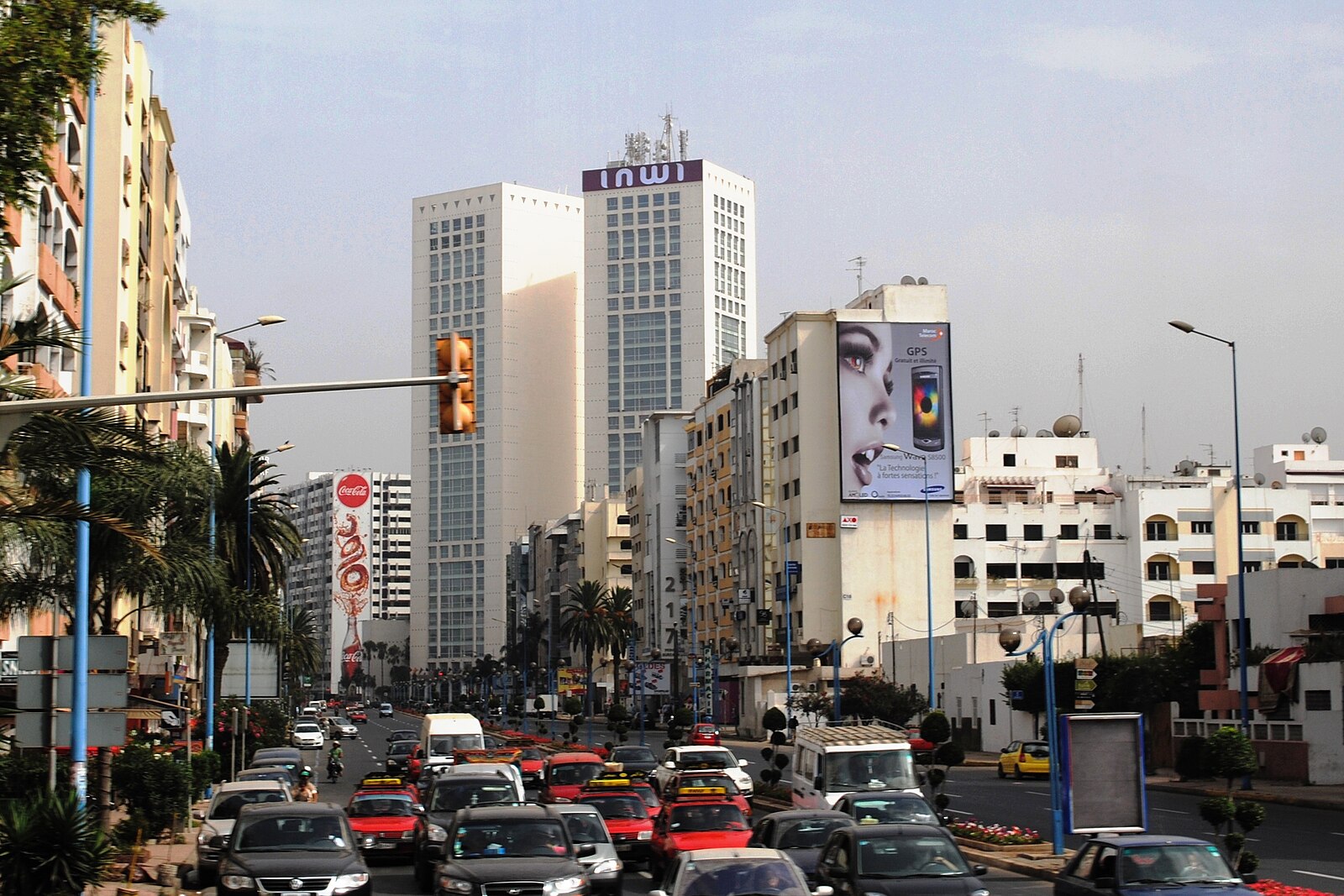
Investing in Morocco as a foreigner is mostly a matter of paperwork rather than permission. Non-Moroccans can buy apartments, villas, company shares and stocks on the Casablanca Stock Exchange without a local partner. The exceptions are narrow but important, and the exchange-control file decides whether money can later leave.
This guide sets out the rules as of September 2026. Local amounts are converted into US$ at 9.5 dirhams to the dollar, from market reference rates on 21 September 2026. The Moroccan dirham is not freely convertible, which is why the currency rules below matter as much as the tax rules.
Property: what foreigners can and cannot buy
A foreign individual or company can buy residential and commercial property in Morocco with the same ownership rights as a Moroccan buyer. There is no minimum price and no special approval for an ordinary apartment or house. Buyers do need to check the title carefully before signing.
Registered land carries a titre foncier, a title recorded by the land registry agency, ANCFCC (Agence Nationale de la Conservation Foncière, du Cadastre et de la Cartographie). Unregistered land held under traditional deeds, known as melkia, gives weaker protection against competing claims. Lawyers generally advise foreigners to buy titled property or to have the title registered before completion.
The main restriction concerns farmland. A 1973 law, Dahir 1-73-213, bars foreign individuals and non-Moroccan companies from acquiring agricultural land located wholly or partly outside urban areas. Rural plots offered to foreigners outside city limits, including around Marrakech, therefore need checking before any deposit is paid.
The route around it is a certificate of non-agricultural use, known as the VNA or AVNA. The regional governor, or wali, issues it on the advice of the unified regional investment commission.
The certificate is tied to a specific project such as a guesthouse or a factory. A provisional certificate comes first, and the final one follows once the project is built and inspected.
Buying costs and the new cash rule
Transfer costs on a resale home usually add 6% to 7% to the price, before any estate agency commission, which in Marrakech is commonly 3% including VAT. Registration duty is 4% for built property and 5% for bare land. The land registry charges 1.5% plus small fixed fees, and notaries typically charge about 1% plus 10% VAT.
On a 2 million dirham apartment (about US$210,500), registration duty would be 80,000 dirhams (about US$8,400). The land registry fee would add 30,000 dirhams (about US$3,160). Notary fees and VAT would add roughly 22,000 dirhams (about US$2,300), for a total near 6.6% of the price.
Since 1 July 2026, a supplementary registration duty of 2% applies when a property sale above 300,000 dirhams (about US$31,600) is paid in cash. It was introduced by the Finance Law 2026 and applies only to the cash portion. Payment by bank transfer, crossed cheque, card or bank credit avoids it, and the deed must state how the price was paid.
For a foreign buyer the rule rarely bites, because paying from abroad by transfer is also what the exchange-control system requires. Moroccan banks may also lend dirhams to non-resident foreign individuals for a home, up to 80% of the price, with the rest brought in foreign currency. The borrower signs a sworn statement that they own no other residence in Morocco.
Moving money in and out through the Office des Changes
The Office des Changes, Morocco’s foreign-exchange regulator, runs a separate regime for foreign investors. When an investment is financed in foreign currency, the investor may transfer its income and the proceeds of sale or liquidation abroad without limit. This convertibility guarantee is the main protection a foreign buyer has.
In practice the guarantee depends on the bank record made when money arrives. The funds should come from an account abroad, be converted by an authorised Moroccan bank, and be documented with the bank’s foreign-exchange certificate. The notary uses that record in the deed, and the same documents are needed years later to send the sale proceeds home.
Non-residents can also hold a convertible dirham account, a bank account in dirhams fed from abroad whose balance stays transferable. Investments may be financed by debiting such an account as well as by fresh foreign currency. Money earned locally, or cash deposited in Morocco, does not carry the same transfer right.
A new general exchange-control instruction, known as IGOC 2026, took effect on 1 January 2026.
Under it, foreign residents holding an investment for over ten years may transfer up to 2 million dirhams a year (about US$210,500) of its income. They need not prove how it was first financed. Larger transfers still rely on the original paperwork.
Casablanca Stock Exchange access
Foreigners can buy shares listed on the Casablanca Stock Exchange, known locally as the Bourse de Casablanca. Orders go through a licensed brokerage firm, called a société de bourse, or through a bank that collects orders for one. Securities are held in custody at Maroclear, the central depository.
The market regulator is the AMMC, the Autorité Marocaine du Marché des Capitaux, which licenses brokers and supervises listed companies. The main benchmark index is the MASI, which tracks all listed shares. Opening a securities account requires identity documents and, for non-residents, usually an account funded from abroad.
The currency rules apply here too. Shares bought with foreign currency, recorded by the bank at purchase, can be sold and the proceeds sent abroad along with dividends. Investors who buy with dirhams earned inside Morocco lose that automatic right.

Taxes on property, shares and dividends
Gains on property sales are taxed at 20% of the profit. A minimum tax of 3% of the sale price applies even when there is little or no gain. The purchase price is uplifted by official revaluation coefficients, and acquisition costs are deductible.
A home used as the owner’s main residence for at least six years is exempt. The notary usually collects the property gains tax at completion.
Under the Finance Law 2026, non-resident companies selling Moroccan property must declare the gain within 30 days after the end of the month of sale. The tax clearance is also a condition for repatriating the proceeds.
Dividends from Moroccan companies carry a withholding tax of 11.25% on distributions made in 2026, falling to 10% in 2027. Tax treaties can lower the rate for non-residents who present a certificate of tax residence. Some older guides still quote 15%, which is out of date.
For Moroccan tax residents, gains on listed shares are taxed at 15% and gains on unlisted shares and bonds at 20%. Non-resident companies are exempt from Moroccan tax on gains from Casablanca-listed shares, except shares in companies whose assets are mainly real estate. Non-resident individuals should check the tax treaty with their home country before selling.
Rental income is taxable in Morocco whether or not the owner lives there. Individual landlords pay income tax on gross rent at 10% below 120,000 dirhams a year (about US$12,600) and 15% above that. A separate 5% withholding from 1 July 2026 covers rent paid to companies and professional landlords, not private owners.
The Investment Charter and business incentives
The Investment Charter, a framework law adopted in 2022 and applied from March 2023, replaced older incentive rules with cash grants. It is aimed at business projects such as factories, hotels and service centres, not at private property purchases. Foreign and Moroccan companies investing in Morocco have equal access.
The main support scheme covers projects creating more than 150 stable jobs. It also covers projects of at least 50 million dirhams (about US$5.3 million) creating at least 50 jobs. Grants combine common premiums for jobs, gender balance, skills, sustainability and local sourcing with territorial and sectoral top-ups.
The total is capped at 30% of eligible investment.
A separate scheme for very small, small and medium enterprises launched in November 2025. It covers projects of 1 million to 50 million dirhams (about US$105,000 to US$5.3 million), with a minimum equity contribution of 10% and a similar 30% ceiling. Projects of at least 2 billion dirhams (about US$210 million) can qualify for a strategic-project track.
Applications go through the Regional Investment Centres, or CRIs, which also handle company registration.
Casablanca Finance City and corporate tax
Casablanca Finance City, or CFC, is a status regime for financial firms, regional headquarters and professional service providers. Companies with CFC status receive a five-year corporate tax exemption on export turnover, after which a reduced 20% rate applies. The status is granted by the CFC authority on application.
For ordinary companies, corporate income tax is 20% where taxable profit is below 100 million dirhams (about US$10.5 million) and 35% where it reaches that level. Banks and insurers pay 40%. A minimum contribution of 0.25% of turnover applies in most cases, with an exemption for the first 36 months of activity.
Residency and what investment does not buy
Morocco does not attach a residence right to a property purchase or share portfolio. Citizens of the United States, most European Union countries and many others may stay up to 90 days without a visa. A longer stay requires a residence card, the carte d’immatriculation, issued by the foreigners’ office of the local police.
Applicants generally show proof of address, such as a title deed or lease, and proof of income or savings. Owning a home helps the file, but it is not a separate visa category. Tax residence follows a permanent home, the centre of economic interests, or more than 183 days in any 365-day period.
Tax residents are taxed on worldwide income at progressive rates of up to 37%. People investing in Morocco after moving there, while keeping investments abroad, should check the relevant tax treaty before becoming resident. Under the Finance Law 2026, residents receiving foreign dividends, interest or securities gains not taxed at source must file an annual return before 1 April.
What this means for your money
For most foreigners, investing in Morocco starts with a titled apartment or house in a city, bought with money wired from abroad. Keep every bank certificate, the notarised deed and the tax receipts in one file. Those documents decide whether the sale proceeds can leave the country years later.
Budget about 7% on top of the price, plus any agency commission, and pay from a foreign account to avoid the 2% cash duty. Allow for the 20% gains tax, or its 3% minimum, when you sell. Farmland, riad plots outside city limits and untitled melkia land need a lawyer and, often, a VNA before any deposit is paid.
Casablanca shares are a simpler route for smaller sums, with a local broker and foreign-funded account. Business owners should talk to the Regional Investment Centre before committing capital, since Investment Charter premiums must be agreed in advance. None of these routes provides residence, so plan the residence card separately.
More: Africa coverage from The Rio Times.
Sources: Office des Changes: foreign investment in Morocco, Office des Changes: IGOC 2026 press release, Office des Changes: questions and answers, PwC Tax Summaries: Morocco individual income determination, PwC Tax Summaries: Morocco withholding taxes, PwC Tax Summaries: Morocco tax incentives, Deloitte Société d’Avocats: Morocco Finance Law 2026 measures, Médias24: the 2% duty on cash property payments, Casablanca-Settat Regional Investment Centre: Investment Charter, AMMC: guide for savers, Korte Law: real estate acquisition by foreigners, Atlas Immobilier: the non-agricultural use certificate, PwC Tax Summaries: Morocco individual tax developments, Atlas Immobilier: property acquisition costs in Morocco, US State Department: Morocco entry and residence
This article was produced by The Rio Times’ automated newsroom system. How we use AI · Report an error
Read More from The Rio Times