Instability Affects Country Risk After Impacting Stock Exchange and Dollar
RIO DE JANEIRO, BRAZIL – Since the end of Carnaval, instability in the exchange and interest markets and in the Brazilian Stock Exchange has been attributed to the impact of the coronavirus on economic activity worldwide.
Financial indicators signaled more clearly on Thursday, March 5th, that there is also a loss of investor confidence in the Brazilian economy.

Economists look not only at foreign exchange and stock markets. There was also a strong increase in Brazil’s country risk as measured by the CDS (Credit Default Swap), a type of contract that works as a gauge of investor confidence in relation to economies, particularly emerging ones.
Brazil’s five-year CDS rose 14.4 percent to 129 points. It was the highest daily percentage since the so-called Joesley Day, on May 18th, 2017, when it became public that Joesley Batista had recorded a conversation with then-President Michel Temer.
At the time, the country risk increased 29 percent to 265 points.
If the CDS climbs, it signals that investors fear the financial future of the country; if it drops, the message is reversed: it signals increased confidence in the country’s ability to pay off its debts.
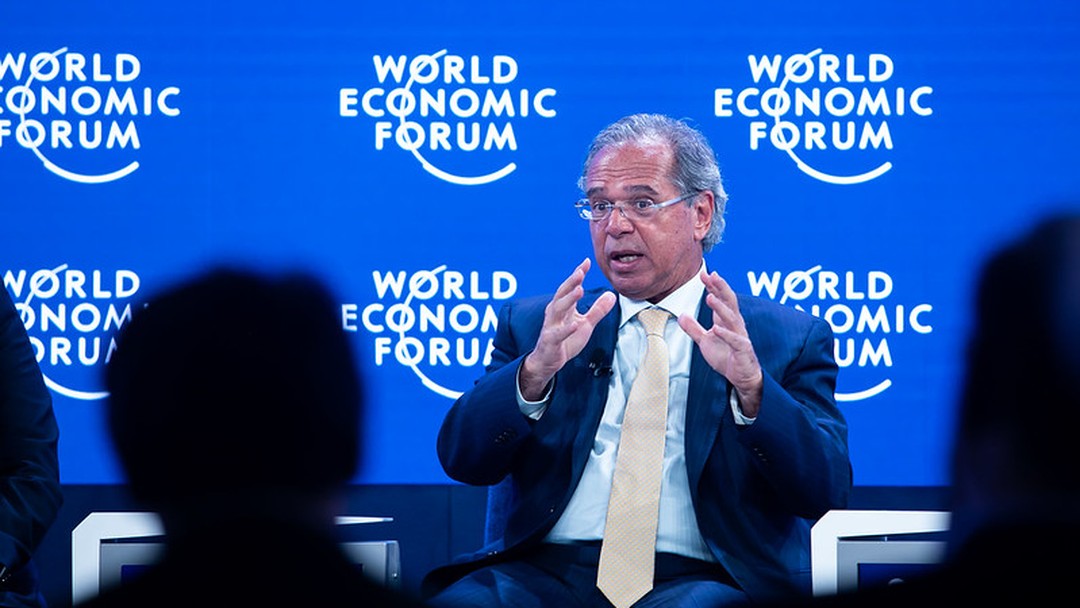
The dollar also experienced a sharp rise on Thursday, and the Brazilian Stock Exchange, following the world’s trading sessions, plummeted. Investors are monitoring lower projections for the 2020 GDP and statements by the Minister of Economy, Paulo Guedes, and Treasury Secretary, Mansueto Almeida.
According to Guedes, the dollar exchange rate may rise to R$5 should “much foolishness” occur. “Can it reach R$5? Well, if the president asks to leave if everyone asks to leave. It’s a fluctuating exchange rate, if there is a lot of foolishness, it could reach that level,” Guedes said at a FIESP event.
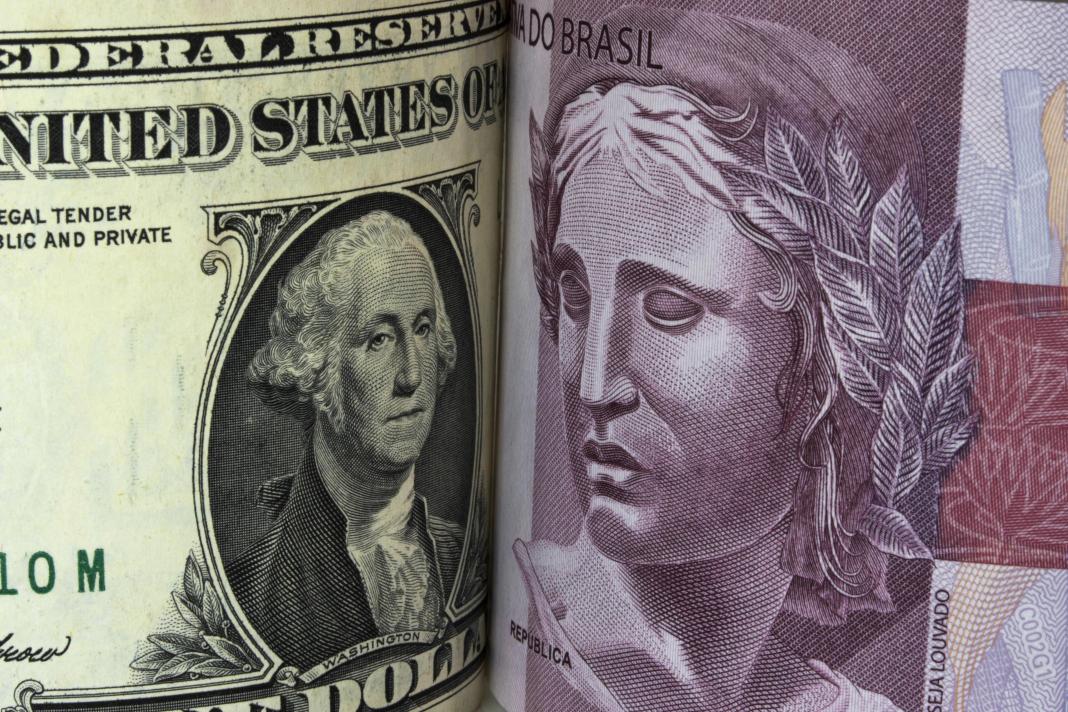
The dollar closed the day at R$4.653, up 1.57 percent. During the trading session, it reached R$4.667, but the rise slowed down with the Central Bank’s third foreign exchange swap auction on the day. The US currency hit its 11th nominal record (excluding inflation) followed by a sequence of 12 consecutive highs – the highest since January 1999, when the Central Bank ended the fixed-exchange-rate policy.
The tourism dollar stands at R$4.84 for sales. In some exchange houses, it is being sold above R$5.
In the year to date, the Brazilian currency has recorded the worst performance in the world, with a devaluation of 16 percent. Since December 30th, 2019, when the dollar was standing at R$4.014, it has increased R$0.64.
“The drop in interest rates will not impact the real economy. It’s the wrong remedy to control the coronavirus epidemic and its effects, but it’s the only thing you can do,” says Roberto Dumas, a professor at INSPER.
Indirectly, the country-risk also points to expectations in relation to other economic indicators, such as GDP (Gross Domestic Product) growth.
In this session, the Central Bank offered US$3 billion divided into three auctions of 20,000 currency swap contracts each. The measure increases the money supply in the market, since the Central Bank offers contracts that compensate investors for the exchange rate fluctuation, which helps to reduce the price of the dollar.
The strong devaluation of the real is already beginning to contaminate other markets, such as stocks and interest rates, which will require the Central Bank to take new actions to avoid an uncontrolled exchange rate fluctuation, says Otavio Aidar, chief strategist of Infinity Asset management.
“It is essential for the Central Bank to look at the exchange rate since it is out of step with the other markets. It’s starting to cause problems for the other markets. Today, what we are seeing in a good part of the yield curve, a little in the stock market, is due to this fast and disorderly rise of the exchange rate”, says Aidar.
He says that it is not up to the Central Bank to act to reverse the devaluation trend of the Real, but that the institution is acting correctly when the market becomes dysfunctional.
The Central Bank announced that on Friday, March 6th, it would offer US$2 billion in exchange rate swaps.
After the surprise 0.50 percentage point cut in the US interest rate on Tuesday, March 3rd, the market sees greater room for a reduction in the SELIC on March 18th, the Central Bank’s next monetary policy meeting. Projections point to a rate between 3.75 and 3.5 percent at the end of the year. At the moment, it is at least 4.25 percent per year.
The Stock Exchanges also experienced a sharp downturn, following the US market.
On Thursday, California declared a state of emergency with the first death in the US state by the coronavirus, which raised the tension in the stock markets.
The NASDAQ dropped 3.10 percent and the Dow Jones by 3.58 percent. The S&P 500 fell 3.39 percent. According to Bloomberg, the US index experienced its most volatile week since 2011, when the S&P rating agency reduced the credit rating of US Treasury bonds.
The IBOVESPA index closed down 4.65 percent at 102,233 points, the lowest level since October 10th, before the Social Welfare reform was approved by the Senate. However, it dropped another 6.2 percent in the afternoon.
The assessment among economists is that the local market, in addition to reflecting the decline of the stock markets abroad, now also points to the worsening of economic prospects in the country.
According to Victor Cândido, chief economist and partner of Journey Capital, the Brazilian trend is in line with a scenario of global risk aversion, in which foreign countries, because they are more risky, tend to be more strongly affected. “At this point we are in line with the rest of the world,” he says.
Chile’s five-year CDS rose 9.5 percent and Argentina’s, 11.5 percent.
Arbetman, of Ativa Investments, said the conflict between Jair Bolsonaro’s government and Congress over the tax budget is still weighing on the Brazilian scenario.
“These rumors are worrisome because communication is needed for the reforms to be approved at the required power and speed,” says the analyst.
On Thursday, markets abroad were also highly volatile. The VIX, the volatility index, rose by 23.8 percent and returned to last week’s level when the US stock markets experienced their worst week since the 2008 crisis.
On Wednesday, March 4th, Brazil’s GDP for 2019 was released, with a 1.1 percent growth, below the initial projection by the market and the economic team.
However, on Thursday Guedes minimized the responsibility of Jair Bolsonaro’s government in the result. He said that the economy had already stagnated since Michel Temer’s administration and that other factors had worsened the situation.
According to the minister, the Brumadinho tragedy and the collapse of Argentina, which impacted 60 percent of Brazil’s vehicle imports, were the main factors behind this slowdown.
His speech was opposed to that of Mansueto, to whom a GDP of one percent “is not normal”. Mansueto also advocated an increase in public investment to expedite the rebound, pointing out that it is the fiscal adjustment that will open space for this, contrary to the proposal of less state in the economy.
“Do I sleep well? I don’t. I am very worried because we are in a country with very low growth. It’s not normal for a developing country like Brazil to grow one percent per year. Is that normal? That’s not normal,” he said.
Source: Folhapress
More: Brazil news in English, every day from The Rio Times.
Live Market IntelligenceBrazil — Live Market Board
Rio Times · Live Market Intelligence
Brazil — Live Market Board
+0.54%
205,430.33
+0.54%
68,420.16
+1.12%
10,969.16
-0.02%
2,848,945
-0.35%
2,566.28
-0.55%
60,210.69
-0.91%
| Instrument | Last | Change | YoY | Prev. | High | Low | Volume |
|---|---|---|---|---|---|---|---|
| IBOV | 205,430.33 | +0.54% | +21.85% | 204,324.26 | 168,310 | 167,142 | — |
| USD/BRL | 5.16 | +0.01% | -5.13% | 5.16 | 5.18 | 5.14 | — |
| SELIC | 14.00% | — | — | — | — | — | |
| PETR4 | 41.64 | -0.05% | +35.19% | 41.66 | 41.97 | 41.15 | 41,499,400 |
| VALE3 | 72.97 | +0.83% | +30.75% | 72.37 | 73.54 | 72.66 | 17,658,000 |
| ITUB4 | 38.60 | -1.03% | +4.57% | 39.00 | 39.34 | 38.39 | 29,487,800 |
| BBDC4 | 16.85 | +0.36% | +3.50% | 16.79 | 16.90 | 16.67 | 19,416,900 |
| BBAS3 | 19.37 | +0.47% | +0.73% | 19.28 | 19.44 | 19.16 | 11,069,200 |
| B3SA3 | 14.26 | -0.21% | +12.73% | 14.29 | 14.47 | 14.11 | 33,037,800 |
| ABEV3 | 14.89 | -0.80% | +21.91% | 15.01 | 15.07 | 14.81 | 16,453,100 |
| WEGE3 | 47.59 | +0.49% | +29.99% | 47.36 | 48.08 | 47.36 | 3,364,600 |
| PRIO3 | 59.14 | -0.19% | +50.67% | 59.25 | 59.81 | 58.74 | 3,325,600 |
| SUZB3 | 41.33 | +2.35% | -23.55% | 40.38 | 41.48 | 40.35 | 3,914,900 |
| RENT3 | 34.68 | -0.09% | +0.84% | 34.71 | 34.96 | 34.35 | 7,979,100 |
| AZZA3 | 15.89 | -2.63% | -53.76% | 16.32 | 16.42 | 15.82 | 1,330,300 |
| CSNA3 | 4.30 | +0.47% | -42.65% | 4.28 | 4.41 | 4.26 | 10,076,100 |
| GGBR4 | 24.69 | +2.19% | +51.38% | 24.16 | 24.85 | 24.18 | 7,047,600 |
| ENEV3 | 24.21 | -1.38% | +70.49% | 24.55 | 24.64 | 23.99 | 9,297,000 |
This article was produced by The Rio Times’ automated newsroom system. How we use AI · Report an error · Editorial responsibility: Matthias Camenzind, Editor-in-Chief