India and EU Push for Historic Trade Pact to Redefine Global Alliances
India and the European Union (EU) have committed to concluding a long-awaited Free Trade Agreement (FTA) by the end of 2025, marking a decisive step in reshaping global trade alliances.
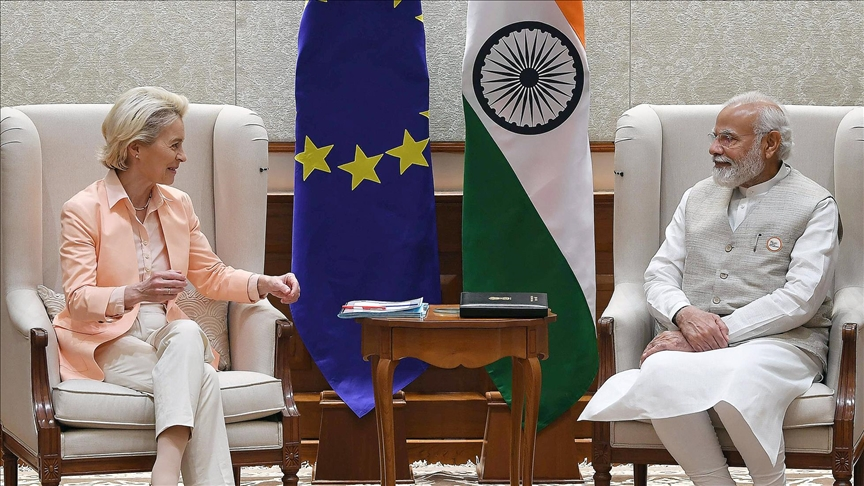
Following a meeting in New Delhi on February 28, Indian Prime Minister Narendra Modi and European Commission President Ursula von der Leyen pledged to overcome longstanding hurdles.
Their goal is to finalize what could become one of the world’s most significant trade agreements. Von der Leyen described the deal as having the potential to be “the largest of its kind.”
This agreement comes at a critical moment. The EU, India’s largest trading partner with bilateral trade reaching $137.5 billion (R$825 billion) in 2023-24, is seeking to diversify its economic partnerships amid rising protectionism from traditional allies like the United States.
Meanwhile, India is positioning itself as a key player in global supply chains, aiming to reduce reliance on China while leveraging its growing economy. For both sides, this deal represents more than just economic gains—it signals a strategic alignment in an increasingly fragmented world.
The stakes are high. The FTA promises to unlock new opportunities for businesses on both sides, but contentious issues remain unresolved. The EU is pushing for reduced tariffs on automobiles, wines, and spirits—sectors where India has traditionally maintained high barriers.
On the other hand, India seeks better access for its textiles and pharmaceuticals, which currently face steep tariffs compared to competitors like Bangladesh and Vietnam.
India-EU Trade Talks
Additionally, India has raised concerns about the EU’s Carbon Border Adjustment Mechanism (CBAM), which could impose higher costs on Indian steel and aluminum exports.
Beyond trade, this partnership carries geopolitical weight. Both India and the EU are navigating an era of shifting alliances and economic uncertainty. The EU faces potential tariffs from the U.S., while India seeks to counterbalance China’s dominance in Asia.
Their collaboration extends into defense, technology, and sustainability, signaling a broader strategic convergence rooted in shared democratic values. Negotiators face significant challenges ahead, including disagreements over labor mobility and investment protections.
However, both sides recognize what’s at stake: an opportunity to redefine global trade dynamics and strengthen their positions in an unpredictable world. If successful, this deal could serve as a blueprint for balancing economic growth with geopolitical stability—at a time when both are desperately needed.
This article was produced by The Rio Times’ automated newsroom system. How we use AI · Report an error · Editorial responsibility: Matthias Camenzind, Editor-in-Chief